Cuts & Recipes
How to Grill Pizza on Any Grill
Learn how to grill pizza on gas, charcoal, or pellet grills. Covers dough handling, two-zone setup, stone vs grate, and topping strategy.
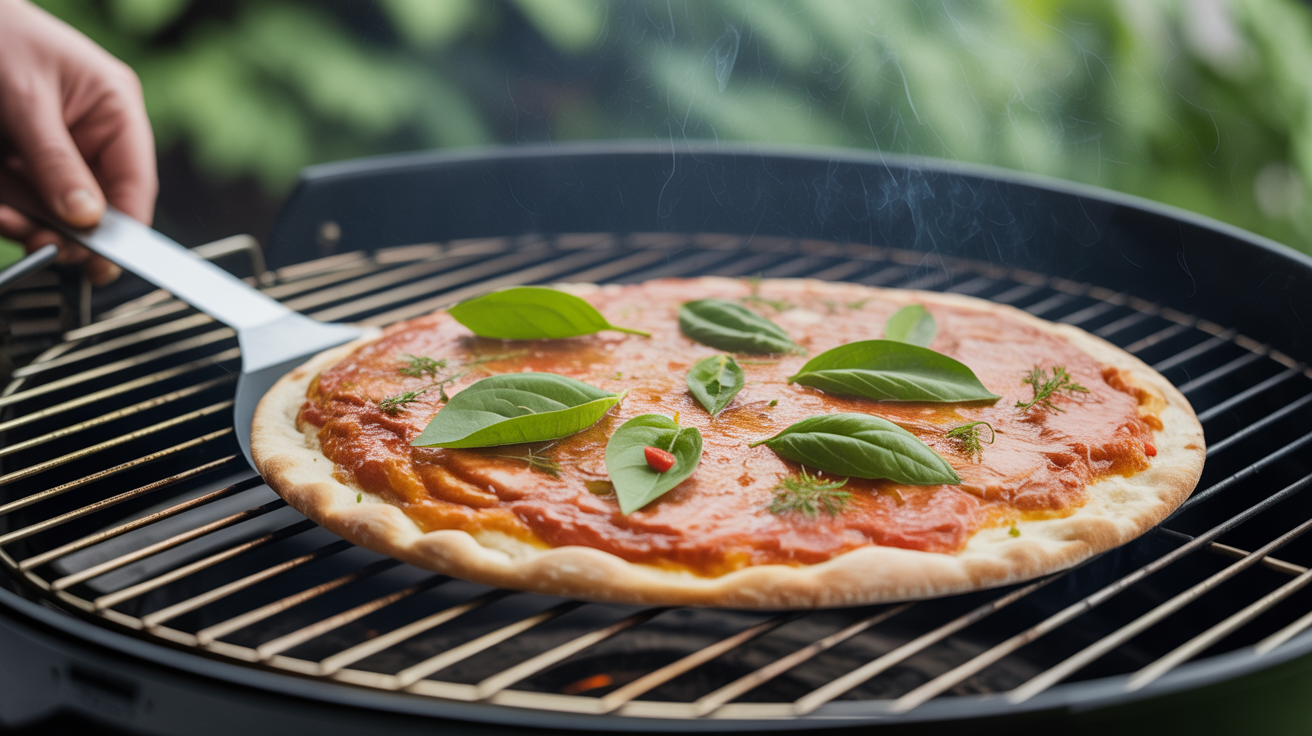
A grill can make better pizza than most home ovens because it reaches 500 to 650°F (260 to 340°C) where a standard oven tops out around 550°F (288°C) on a good day. That high heat blisters the crust fast, creates real char, and cooks the bottom in minutes instead of ten or twelve. The main challenge is keeping the bottom from burning before the toppings cook through, and that comes down to how you manage the fire.
What You Need Before the Dough Hits the Grill
Getting the prep right makes the difference between a good grilled pizza and one that tears, sticks, or flops.
Dough Temperature Matters More Than You Think
Cold dough is the most common reason grilled pizza goes sideways before it even hits the grate. Dough straight from the fridge is tight and wants to spring back every time you stretch it. Pull it out at least an hour before you plan to cook, preferably 90 minutes. It should feel soft and yield to your fingers without resistance.
Store-bought refrigerated dough works perfectly. There is no need to make your own from scratch unless you want to. Let it rest at room temperature, covered loosely with plastic wrap or a damp towel.
Stretching and Sizing
Stretch the dough on a lightly floured surface or with oiled hands. You are aiming for a circle around 10 to 12 inches across. Thicker edges, roughly three-quarters of an inch, give you a rim that puffs and chars. Thin edges burn to a crisp before the center cooks.
If the dough keeps shrinking back when you try to stretch it, stop fighting it. Cover it for another 10 minutes and try again. The gluten just needs more time to relax.
Have your toppings staged and ready before you put the dough anywhere near the grill. Once it is on the heat, things move fast.
Stone vs Grate: Both Work, Each Has Trade-offs
You have two basic options for cooking the pizza: directly on the grill grates or on a pizza stone preheated on the grill. Each method produces a different result.
Cooking Directly on the Grate
This is the faster method and adds visible grill marks and a slightly smokier char to the crust. The process works like this: brush one side of your stretched dough with olive oil and lay it oiled-side down on the clean, oiled grates. Let it cook 2 to 3 minutes without touching it. The dough will firm up and release cleanly when it is ready. If it sticks, give it another 30 seconds.
Once the bottom is set and lightly charred, use tongs to flip it. Add your toppings to the grilled side, close the lid, and cook another 3 to 5 minutes until the cheese melts and the bottom is done.
The downside of this method is that the grates cook in slats rather than evenly across the whole crust. It also leaves open gaps where toppings can drip and cause flare-ups.
Using a Pizza Stone
A preheated pizza stone radiates heat evenly across the entire bottom of the crust, which produces results closer to a wood-fired oven. No grill marks, but a more uniform crisp.
The stone needs to preheat on the grill for at least 30 to 45 minutes before you put the pizza on it. A cold stone dropped onto a hot grill can crack. Place it on the grates while the grill is still cold, then bring everything up to temperature together.
To transfer the pizza to a hot stone, use a peel or a rimless baking sheet dusted with flour or cornmeal. Before you try to slide the pizza onto the stone, give the peel a little shake to make sure the dough moves freely. A pizza that sticks to the peel halfway onto the stone is a mess to fix.
How to Set Up Your Grill for Pizza
The target for grilling pizza is 500 to 550°F (260 to 290°C) at grate level, with the lid closed to trap heat and cook the top. How you get there depends on your grill.
Gas Grill
Turn all burners to high and let the grill preheat with the lid down for 15 minutes. Once it is up to temperature, turn off or drop to low the burners directly beneath where you will cook. Leave the surrounding burners on high. This indirect zone lets heat circulate and cook the pizza top without scorching the bottom.
If you are using the flip method on a gas grill, you can grill directly over a burner for the first side, then move the pizza to the indirect zone after flipping.
The two-zone fire explained covers how to build and use these zones effectively on gas and charcoal.
Charcoal Grill
Bank your lit coals to one side of the grill so you have a hot zone and a cooler zone. For the flip method, start the first side of the dough over the coals, then move the pizza to the cooler side after flipping so the toppings can melt without burning the bottom. A full chimney of coals should get your dome temperature to 500 to 550°F (260 to 290°C).
A kettle grill with a tight-fitting lid is excellent for this. The dome shape helps circulate heat and cook the top of the pizza as if it were in an oven.
Pellet Grill
Set the temperature to 500 to 525°F (260 to 274°C) and let it run for 20 to 30 minutes with the lid closed. Pellet grills do not typically reach the higher end of the gas or charcoal range, but 500°F is enough to grill pizza well. The convection fan circulates air inside the chamber, which helps cook the top of the pizza more evenly than a conventional oven. This makes pellet grills forgiving for beginners.
Use a pizza stone if you have one, preheated with the grill. The stone compensates for the lower peak temperature by storing heat and transferring it directly to the crust.
For any grill type, understanding how to read and adjust your temperature mid-cook matters. How to control grill temperature covers vent management, damper adjustments, and other techniques that apply to pizza just as much as to a brisket.
Topping Strategy: Keep It Light
Grilled pizza and a loaded deep-dish are different things. Too many toppings create steam, soggy crust, and flare-ups from dripping fat or sauce.
Sauce
Go thin. Spread just enough sauce to cover the dough without pooling anywhere. If you use canned tomatoes, crush them and drain some of the liquid first, or reduce them in a pan for a few minutes. A few tablespoons of good olive oil with thinly sliced garlic works well as a white base. Ricotta is another clean option.
Cheese
Pre-shredded mozzarella contains added starch to prevent clumping, which slows melting. Tear fresh mozzarella and blot it dry with a paper towel before using it. Scatter pieces across the pizza rather than laying them edge to edge. You want the cheese to melt into gaps, not form one solid layer that slides off.
What Else Works Well
- Thinly sliced vegetables: zucchini, red onion, cherry tomatoes halved, roasted peppers
- Pre-cooked proteins: crumbled cooked sausage, rotisserie chicken, already-grilled shrimp
- Fresh herbs added after the pizza comes off the heat (basil, fresh oregano, arugula)
- Finishing touches like a drizzle of chili oil or a few grinds of black pepper after cooking
Raw chicken, pork, or sausage will not cook through in the few minutes a pizza is on the grill. Cook proteins first and add them as toppings.
Fixing the Two Problems Most People Run Into
Burnt Bottom, Raw Top
This is the signature failure of grilled pizza and it comes from too much direct heat with the lid open. Close the lid. Every time you open it, you let heat escape and slow the cooking of the top. Once your toppings are on and the lid is closed, check the pizza at the three-minute mark by lifting an edge with tongs. If the bottom looks good and the cheese is still not melted, slide the pizza to a cooler zone and give it another two minutes.
If you burned the bottom, pull it anyway and scrape the worst of the char off with a spatula. Most of the time it is surface char that flakes off and the crust underneath is still good.
Dough Sticking to the Grate
Dough sticks when the grates are not clean or not hot enough. Before you put any dough on, scrub the grates and then fold a paper towel, soak it in a neutral oil, and wipe the grates down with tongs. Do not use spray oil near an open flame.
The dough also needs to be oiled on the side that makes contact with the grate. If you oiled both sides and the grates are clean and hot, the dough should release in 2 to 3 minutes without help. Resist the urge to move it before it releases on its own.
Frequently Asked Questions
What temperature should my grill be for pizza?
Between 500 and 600°F (260 to 315°C) at grate level. Higher heat gives you faster char and a crisper crust. At 650°F (343°C) or above, you need to watch very closely because the window between charred and burnt narrows to around a minute.
Can I use store-bought pizza dough on the grill?
Yes, and it works well. The only requirement is that it be at room temperature before you stretch it. Cold dough from the fridge tears and springs back. An hour on the counter fixes this.
Do I need a pizza stone to grill pizza?
No. Cooking directly on oiled grates is a legitimate method and produces a different, good result with visible char marks. A stone adds more even heat and a more uniform bottom, but it is not required and adds 30 to 45 minutes of preheat time.
How long does pizza take on the grill?
With the flip method, figure 2 to 3 minutes for the first side and 3 to 5 minutes after you add toppings and close the lid. Total time is 5 to 8 minutes. On a stone at 500°F (260°C), expect 8 to 12 minutes without flipping.
My cheese is not melting before the crust burns. What is wrong?
A few possible causes: the grill is too hot, the lid is open too often, or there is too much cheese (wet mozzarella is the usual culprit). Try moving the pizza to indirect heat after the initial sear and keeping the lid closed. Also blot fresh mozzarella before using it. Less cheese melts faster and more evenly than a thick layer.