Fire & Fuel
How to Control Grill Temperature
Learn how to control grill temperature using vents, charcoal arrangement, and the two-zone setup for consistent results every time.
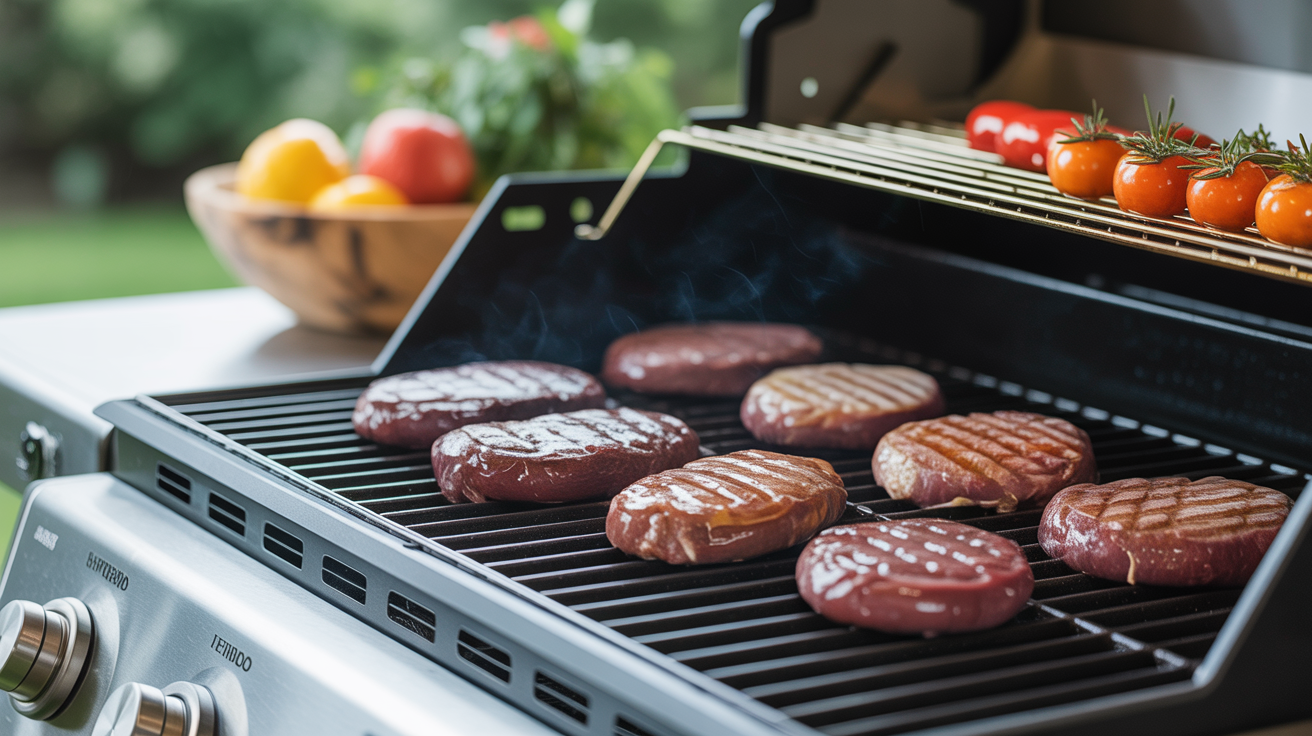
Most grilling problems trace back to one thing: not knowing what temperature you're actually cooking at. Meat dries out. Chicken burns on the outside while staying raw at the bone. Fish welds itself to the grate. All of that is a heat problem, not a skill problem.
Grill temperature control isn't a mystery once you understand what drives it. Fire needs oxygen, and you control how much oxygen the fire gets. That's the whole game on a charcoal grill. On a gas grill, the knobs do the heavy lifting, but even there, lid position and burner configuration matter more than people realize.
This article covers both fuel types, the vent mechanics that most grillers ignore, and how to build a fire that behaves the way you need it to.
How airflow controls temperature on a charcoal grill
A charcoal grill is essentially a combustion chamber with adjustable vents. Every kettle and kamado-style grill has two sets: an intake vent at the bottom (the bowl or firebox) and an exhaust vent at the top (the lid). They work together.
The intake vent pulls fresh air into the fire. More air in means more oxygen, which means hotter combustion. The exhaust vent lets hot gases escape, which draws more air through the intake. If you close the exhaust completely, combustion products build up and the fire chokes itself out even if the intake is wide open.
The practical principle: use the intake vent to set your target temperature and use the exhaust vent to regulate smoke. Keep the exhaust at least halfway open during any cook. Closing the exhaust is how you kill the fire at the end of a session, not how you lower heat mid-cook.
Here's a useful starting reference for a standard kettle with a full chimney of lit coals:
| Target temp (°F) | Intake vent | Exhaust vent | Common use |
|---|---|---|---|
| 225-250 | 10-15% open | 50% open | Low and slow: ribs, brisket |
| 300-325 | 25-30% open | 75% open | Indirect chicken, pork shoulder |
| 375-400 | 50% open | Fully open | Burgers, sausage, most direct grilling |
| 450-500+ | Fully open | Fully open | Searing steaks, pizza |
These numbers are a starting point, not a guarantee. The actual temperature depends on how much charcoal you're running, outside air temperature, wind, and how much food is on the grill. A cold, humid day means you'll need more fuel and more vent to hit the same target. A hot July afternoon makes temperature management easier.
Adjust vents in small increments. A 10% shift in the intake vent can swing your grill 50 degrees over the course of 15 minutes. Make a change, wait, then decide if you need another adjustment.
Charcoal quantity and arrangement
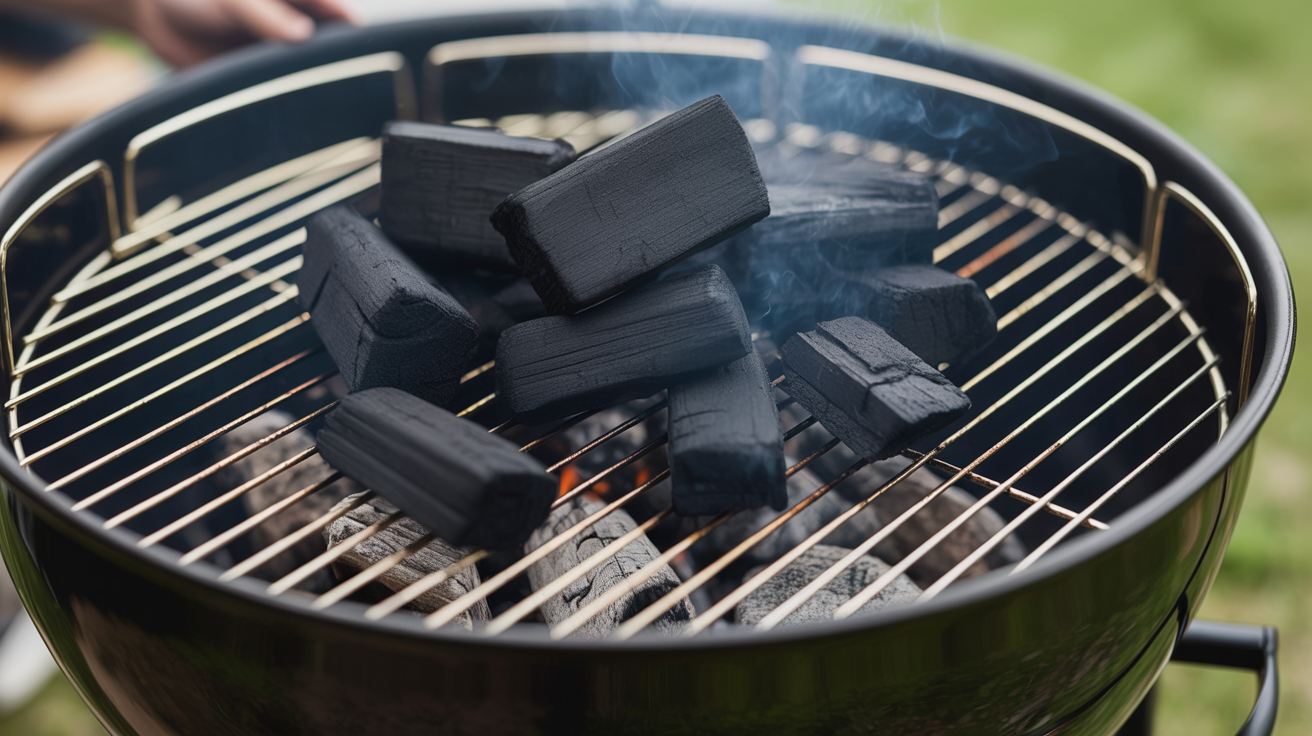
Vent position controls oxygen, but the amount of charcoal controls your ceiling. You can't coax 500°F out of a half-empty charcoal basket no matter how wide you open the vents. And you can't run a four-hour brisket cook on a single layer of coals.
For high-heat direct grilling, fill your charcoal basket or pile coals two to three layers deep. For low-and-slow cooking, a minion method works well: fill the charcoal ring with unlit coals and nestle a small amount of lit coals (10-15 briquettes, or a comparable amount of lump) on top. The lit coals slowly ignite the unlit ones, extending your burn time without spiking the temperature.
The lump charcoal vs briquettes choice matters here too. Lump burns hotter and faster. Briquettes burn cooler and more evenly. For long cooks, briquettes are more forgiving because they hold a steadier temperature. For a fast sear, lump gets there quicker.
The two-zone setup is the single most useful technique in managing grill heat. Push all your coals to one side of the grill. You now have a hot direct zone over the coals and a cooler indirect zone on the other side. Food can move between zones depending on what it needs. You can sear over the hot side, then slide the meat to the indirect side to finish cooking through without burning the outside. You can also park food at lower temperatures while you deal with something else.
A proper two-zone fire also gives you a safe zone. If something flares up or threatens to burn, move it to indirect. No more grabbing tongs and hovering over the grill.
Lid management
The lid is not just a cover. It's a heat regulator and a cooking environment.
Lid closed: heat circulates around the food, cooking it from all sides. The internal temperature of the grill builds up. This is how you cook thicker cuts, whole chickens, or anything that needs time. The convection effect means food cooks faster and more evenly with the lid down.
Lid open: you get direct radiant heat from below and nothing else. Useful for very thin foods that cook in under two minutes. But every time you lift the lid, you lose heat and add time to your cook. The old saying is roughly right: if you're lookin', you ain't cookin'.
For most grilling, keep the lid closed. Open it to check doneness, flip, or reposition food. Don't hover.
Gas grill temperature control
Managing grill heat on a gas grill is more intuitive at first, but there are still variables most people miss.
The obvious one: turn the burners up or down with the knobs. But the less obvious one is which burners you turn on. A gas grill with three burners running front, middle, and back gives you full heat. Turning the back burner off creates an indirect zone, exactly like the two-zone charcoal setup. This lets you sear over the active burners and finish cooking over the off burner.
Preheat a gas grill for at least 10-15 minutes with the lid closed before you cook. Grates that aren't fully heated will cause sticking and uneven searing. A lot of gas grill problems happen because people start cooking too soon.
Gas grills also lose heat faster in cold or windy weather. If you're grilling in 40-degree temperatures, your grill's stated BTU output tells you less than you'd think. The grill has to work harder to maintain heat, and recovery time after opening the lid increases.
Weather and environmental factors
Wind is the enemy of grill temperature control. It accelerates the charcoal burn on the windward side and creates uneven heat across the grill. It also strips heat from the grill body, making it harder to hold target temperatures. If you're grilling in wind, position the intake vent away from the wind direction to prevent it from fanning the coals uncontrollably.
Cold ambient temperature has the same effect: more heat loss through the grill body. Ceramic kamado grills handle cold weather better than thin steel kettles because the ceramic retains heat rather than radiating it. On a cold day with a steel kettle, expect to use more charcoal and keep the vents a bit more open than you would in summer.
Altitude affects combustion too. At higher elevations, thinner air means less oxygen per vent opening, and the fire won't be as hot as it would be at sea level with identical vent settings. This is a minor factor for most people but worth knowing if you're cooking at elevation.
Getting your fire started right
Temperature control is easier when you start with a proper fire. A charcoal chimney starter is the cleanest way to light charcoal because you get coals that are fully lit and glowing before they go into the grill. Partially lit coals dumped directly into the grill create uneven temperature and more ash.
When the coals in the chimney are covered in grey ash with orange glow showing through (usually 15-20 minutes), dump them. Arrange them for your cook, put the grates on, close the lid with vents open, and give the grill 5-10 minutes to come up to temperature before you cook. Check the thermometer before you put anything on.
If your grill has a built-in thermometer in the lid, understand that it measures air temperature at the lid, not at the grate surface where the food sits. Grate-level temperature is typically 50-75 degrees hotter than the lid thermometer reads. A grate-level probe or an instant-read thermometer held at grate height gives you a more accurate picture.
Adding smoking wood changes the heat math slightly. Wood burns hot initially, then settles into a lower smolder. Add wood chunks at the start of the cook so the initial flare doesn't burn food, and use wood that's appropriate for what you're cooking. Michigan State University Extension's primer on smoking as a cooking method is a good refresher on why that combustion behaves the way it does. The guide on best wood for smoking different meats is a good reference for pairing wood to protein.
Practical checklist for temperature control
Before you cook, run through these:
- Charcoal quantity is appropriate for the cook length and target temperature
- All coals are fully lit before going into the grill
- Two-zone setup is in place if you're cooking anything thicker than an inch
- Intake vent is set to match your target temperature range
- Exhaust vent is at least halfway open
- Grill has preheated for 5-10 minutes with the lid closed
- You have a reliable thermometer (lid gauge is not enough)
During the cook:
- Check temperature every 15-20 minutes on long cooks
- Adjust intake vent in 10% increments and wait before adjusting again
- Keep the lid closed as much as possible
- Add unlit coals to extend a long cook if needed (add them to the edge of the coal pile, not directly on top of the food side)
FAQ
Why does my grill temperature keep dropping? The most common reason is running out of fuel. On a long cook, coals naturally burn down. Add fresh unlit coals before the fire gets too low to recover. Another common reason is that the intake vent is too restricted. If the fire is being starved of oxygen, it will slowly decline even with plenty of fuel left.
How do I lower the temperature quickly if the grill runs too hot? Partially close the intake vent and wait. You can also remove some coals if you have a way to do that safely. On a gas grill, turn down the active burners or cut one off entirely. Don't open the lid to cool things down, it lets in more oxygen and can temporarily spike the temperature.
What temperature should I grill at? It depends entirely on what you're cooking. Steaks for a hard sear want 450-500°F. Burgers and chicken pieces work well at 375-400°F. Whole chickens and thick bone-in cuts want indirect heat at 325-350°F. Ribs and brisket go low and slow at 225-250°F.
Can I use water to cool down a too-hot charcoal grill? No. Pouring water on hot coals produces a sudden steam flash and can crack a ceramic grill. The only correct tool for lowering temperature is vent control.
Why is one side of my grill hotter than the other? On a charcoal grill, this usually means the coals aren't evenly distributed, or wind is hitting one side harder. Spread the coals more evenly, or account for the hot spot and use it intentionally. On a gas grill with uneven heat, individual burners may have different output or the grates may have cold spots from a heat shield issue. Check that all burners are lighting fully.