Fire & Fuel
Best Wood for Smoking Different Meats
A practical guide to smoking wood types, which woods pair best with which meats, and how to avoid the mistakes that ruin a cook.
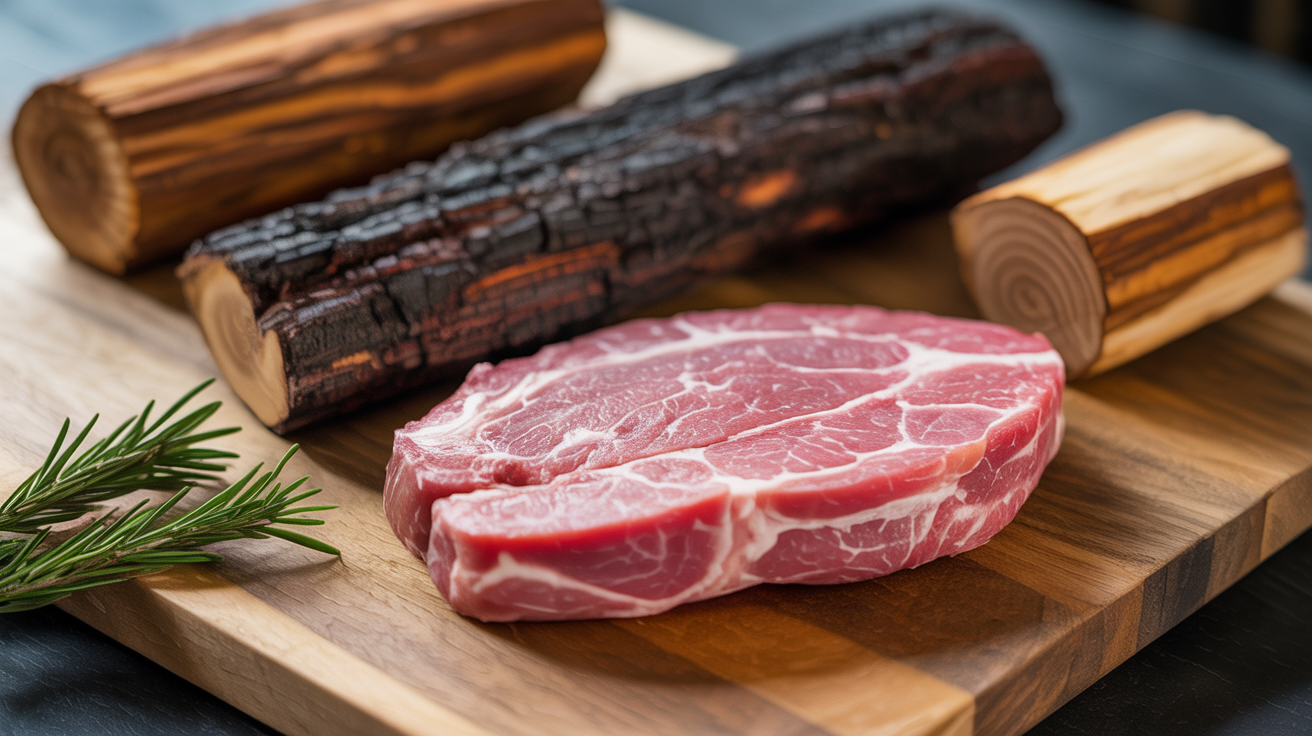
The wood you burn shapes the flavor of everything on the grate. Get this wrong and a 12-hour brisket tastes like a campfire. Get it right and the smoke becomes part of the meat's identity. This guide covers the woods that matter, what makes each one tick, and how to pair them intelligently.
At a Glance
- Hickory is the pork default; oak is the beef default. The debate mostly disappears once you match wood to protein.
- Mesquite is the most aggressive wood here. Save it for short, hot cooks or the first hour of a long one.
- Apple, cherry, pecan, and maple are the forgiving, blendable woods that rarely ruin a cook.
- Blending a dominant wood with a milder secondary (roughly 70/30) gives more complexity than any single species alone.
- Avoid softwoods entirely: pine, fir, cypress, spruce, redwood, cedar, elm, eucalyptus, and sassafras all produce off flavors or worse.
- Chips are for charcoal-and-chip setups; chunks are the standard fuel for dedicated smokers running on their own.
Why wood choice matters more than people think
Most backyard cooks treat smoking wood as an afterthought, something you grab off a shelf without much thought. But smoke is a flavor ingredient, same as salt or acid. Different woods carry different phenolic compounds, which is what creates the range from the gentle sweetness of apple to the punchy, almost savory bite of mesquite.
Smoke also behaves differently depending on how the wood combusts. Clean, pale blue smoke from properly seasoned hardwood, burned with enough oxygen, deposits flavor. Thick white or black smoke from wet, green, or oxygen-starved fires deposits bitterness. Meathead's wood-and-smoke science guide at AmazingRibs breaks this down well: the particle size in the smoke is what separates "clean" from "acrid," and that comes down to fire management as much as species.
One more thing worth saying upfront: avoid softwoods entirely. That same AmazingRibs guide is blunt about it, warning against pine, fir, cypress, spruce, redwood, and cedar because their sap and terpenes can leave meat tasting off, along with elm, eucalyptus, and sassafras. Same goes for any treated, painted, or mystery wood. Stick to seasoned hardwoods and you will never have a problem.
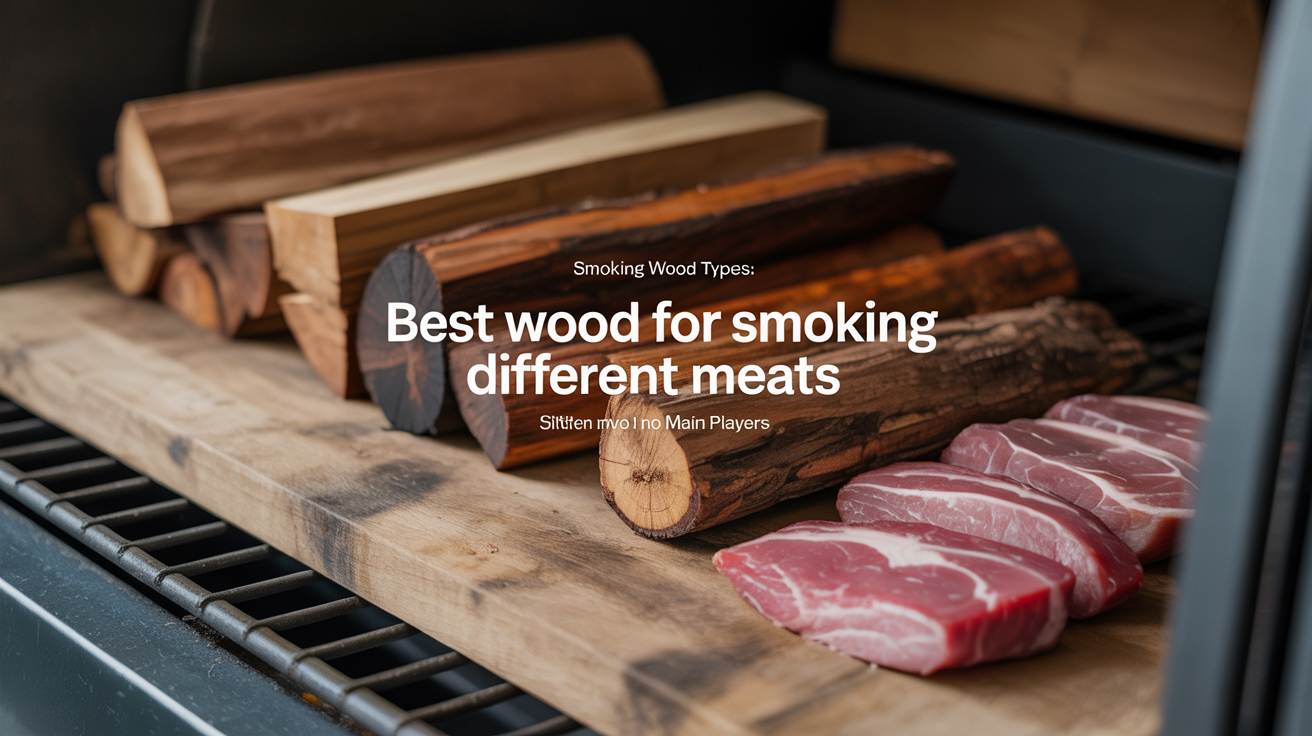
Smoking wood types: the main players
| Wood | Smoke Strength | Best With |
|---|---|---|
| Hickory | Strong | Pork ribs, pork shoulder, bacon |
| Oak | Medium-strong | Brisket, beef ribs, lamb |
| Mesquite | Very strong | Steaks, beef brisket (short cooks) |
| Apple | Mild-sweet | Pork, poultry, light fish |
| Cherry | Mild-sweet | Pork, chicken, duck, venison |
| Pecan | Medium | Pork, poultry, beef |
| Maple | Mild-sweet | Poultry, pork, vegetables |
These aren't a random list of favorites. The USDA Forest Service's Forest Products Laboratory tracks cooking wood as a commercial category in its own right, and its breakdown of the flavorwood market names the same core species: mesquite, alder, apple, cherry, pecan, hickory, oak, and maple, sold to consumers as chips and chunks and to the smoked-meat industry as sawdust for liquid smoke. The same report notes a distinction worth remembering when you're setting up a cook: chips are typically used alongside charcoal, while chunks are used by themselves as the primary fuel source for dedicated smokers.
Hickory
Hickory is the default smoking wood across most of the American South, and for good reason. It produces a bold, bacon-forward smoke that handles pork exceptionally well. Pork shoulder, ribs, and belly all take hickory without complaint. The flavor is intense but not harsh when the fire is managed correctly.
Where hickory stumbles is on delicate proteins. Use it on fish or chicken and you risk overwhelming the meat entirely. If you want hickory on poultry, cut it with apple or cherry at a 1:1 ratio. The fruit wood softens the edge.
Oak
For brisket, oak is the answer. Central Texas pitmasters have used post oak for generations, and there is a reason the tradition stuck. Oak burns long, produces consistent heat, and deposits a medium-weight smoke that layers into beef without dominating it. It is the wood that lets the meat speak.
The hickory vs oak smoking debate comes down to the protein. Hickory wins on pork. Oak wins on beef. Both are legitimate; the argument only exists because people try to crown one as universal.
Oak also works well on lamb, which benefits from smoke that has enough presence to complement the gamey depth of the meat without burying it.
Mesquite
Mesquite is the most aggressive wood on this list. It burns hot, produces heavy smoke quickly, and can tip into bitterness if you are not careful. That intensity makes it suitable for steaks and other short, direct-heat cooks where the smoke exposure is brief. It is less appropriate for long low-and-slow sessions like a full packer brisket, where hours of mesquite smoke builds up and turns acrid.
If you live in Texas Hill Country and you want mesquite on a brisket, the move is to use it early in the cook and switch to oak once the bark has set. You get the character without the harshness.
Apple
Apple is one of the most forgiving woods in the smoking world. The smoke is light and slightly sweet, which means it will not overpower anything. Pork pairs with it beautifully, and apple on chicken produces a clean, mild result that works for people who find hickory too assertive. It is also the go-to for fish, particularly salmon, where you want smoke presence but not domination.
The downside is that apple will not give you heavy bark on its own. If you are after a dark, crunchy crust on ribs, blend apple with hickory or oak.
Cherry
Cherry behaves similarly to apple but with a slightly deeper, almost sweet-tart quality. It also does something visually striking: the compounds in cherry wood darken the surface of meat significantly, giving chicken and pork a mahogany color that looks impressive without any change to the actual process.
Cherry works well on duck, venison, and lamb in addition to the usual pork and poultry. For wood pairing in BBQ contexts where you want a rich color with mild smoke, cherry is worth keeping in rotation. It blends well with oak for a rounded, complex smoke profile on beef.
Pecan
Pecan sits between hickory and apple in terms of intensity. It has the nuttiness you would expect from the nut family, with a smooth finish that suits long cooks. It handles pork well and does not overwhelm poultry the way hickory can. Brisket with pecan comes out slightly sweeter and less aggressive than with straight oak, which is a preference call more than a quality difference.
Maple
Maple is mild and slightly sweet. It works best on poultry and pork, and it is one of the better options for vegetables if you are running a long smoke on a plank or in a dedicated smoker. The smoke is gentle enough that it will not muddy other flavors, which makes it a good blending wood when you want a base without strong character.
Fruit woods vs traditional hardwoods
The basic breakdown is straightforward. Fruit woods (apple, cherry, peach, pear) produce milder, sweeter smoke. Traditional hardwoods (hickory, oak, mesquite) produce heavier, more assertive smoke. Neither category is superior; the right choice depends on what you are cooking and how long the cook runs.
Longer cooks accumulate more smoke flavor, which pushes you toward milder woods or blends. A 14-hour pork shoulder in straight mesquite is going to be unpleasant. That same cook with apple and cherry is excellent. Short, hot cooks on steaks or chops can handle more aggressive wood because the exposure time is limited.
Blending is common and encouraged. A mix of 70% oak and 30% cherry on beef is a good starting point that delivers color, body, and depth without any single note dominating.
Blend Ratios: A Starting Point by Protein
If you're not sure where to start with blending, these ratios are safe defaults. Adjust toward the dominant wood if you want more character, or toward the secondary if the last cook ran too heavy.
| Protein | Blend | Ratio |
|---|---|---|
| Brisket | Oak + Cherry | 70/30 |
| Brisket (Hill Country style) | Mesquite (first hour only) + Oak | 30/70 |
| Pork shoulder / ribs | Hickory + Apple | 60/40 |
| Poultry (whole bird) | Pecan + Maple | 50/50 |
| Poultry (thighs, hotter/faster) | Cherry + Apple | 50/50 |
| Salmon / light fish | Apple alone, or Apple + Alder | 100/0 or 70/30 |
| Steaks (direct, short cook) | Mesquite alone or Oak alone | 100/0 |
| Lamb | Oak + Cherry | 60/40 |
Practical tips for getting the most from your wood
- Use chunks, not chips, for charcoal smokers and offset pits. Chips burn out too fast to maintain consistent smoke for long cooks. Save chips for gas grills where you need quick smoke bursts.
- Season your wood. Freshly cut wood contains too much moisture and produces steam-heavy smoke. Properly dried wood, generally in the 15-22% moisture range, burns clean.
- Do not soak your wood. Soaking delays ignition and produces steam, not smoke; wood doesn't absorb water well below the surface (think of how long a log floats), so the practice mostly just cools the fire. It is a persistent myth worth putting down permanently.
- Start your cook with the lid closed once smoke is running thin and blue. Opening the lid to check repeatedly introduces oxygen spikes that throw off your temperatures. Pair this with solid temperature control technique and your cook will be far more consistent.
- Match the volume of wood to your cooker. A large offset smoker needs much more wood than a kettle grill. On a kettle, 2-3 fist-sized chunks for a rib cook is usually enough.
If you are still working out how to get your fire going efficiently, using a chimney starter is the cleanest way to light lump or briquettes before adding wood. And understanding your fuel base matters too, the differences between lump charcoal and briquettes affect how wood burns on top of them.
Frequently Asked Questions
Can I mix different woods in the same cook?
Yes, and most experienced pitmasters do. Common blends include oak and cherry for brisket, hickory and apple for ribs, and pecan and maple for poultry. Start with a 70/30 dominant-to-secondary ratio and adjust from there.
How much wood should I use?
Less than you think, especially when starting out. A kettle grill doing ribs might need 3-4 chunks total. Adding more mid-cook because you cannot see smoke is a common mistake. The meat absorbs smoke most readily in the first few hours before the bark sets, so front-load the wood and let the fire run clean after that.
What is the difference between hickory and oak for smoking brisket?
Oak is the traditional choice for brisket because it delivers a medium, balanced smoke that complements beef without overwhelming it. Hickory is stronger and more pork-forward in character. You can use hickory on brisket, but you will want to moderate the amount and possibly blend it with oak to avoid a harsh result.
Do wood pellets count as real smoke?
Pellet smokers using hardwood pellets produce genuine smoke, though the flavor tends to be lighter than chunk wood in an offset or kettle. The convenience trade-off is real, and pellet smoke is not better or worse, just different in intensity.
Is it safe to smoke with wood from my backyard?
Only if you can positively identify the species as a food-safe hardwood (apple, oak, pecan, cherry, etc.) and you know it has not been treated or sprayed with anything. Unknown wood or ornamental trees are not worth the risk. Buy from a reputable supplier if you have any doubt.
Does the size of the wood chunk change the flavor, or just the burn time?
Mostly burn time. A bigger chunk smolders longer before it's fully consumed, which matters for keeping smoke going through a multi-hour cook, but the flavor compounds it releases per pound of wood burned are the same regardless of size. Two small chunks added in stages will taste about the same as one large chunk that lasts the equivalent time, so pick chunk size based on how often you want to open the lid to reload, not for a flavor difference.
Can I use wood that's been kiln-dried instead of air-dried?
Yes. Kiln drying just speeds up the moisture loss that air drying achieves naturally, and it's actually more consistent, since a kiln can be controlled to hit that 15-22% moisture target reliably. Air-dried wood left out for a full season or two ends up in the same range, but kiln-dried wood removes the guesswork about whether a piece is actually seasoned all the way through.