Fire & Fuel
Lump Charcoal vs Briquettes
Lump charcoal burns hotter and cleaner; briquettes burn longer and more evenly. Here's how to choose the right charcoal for your cook.
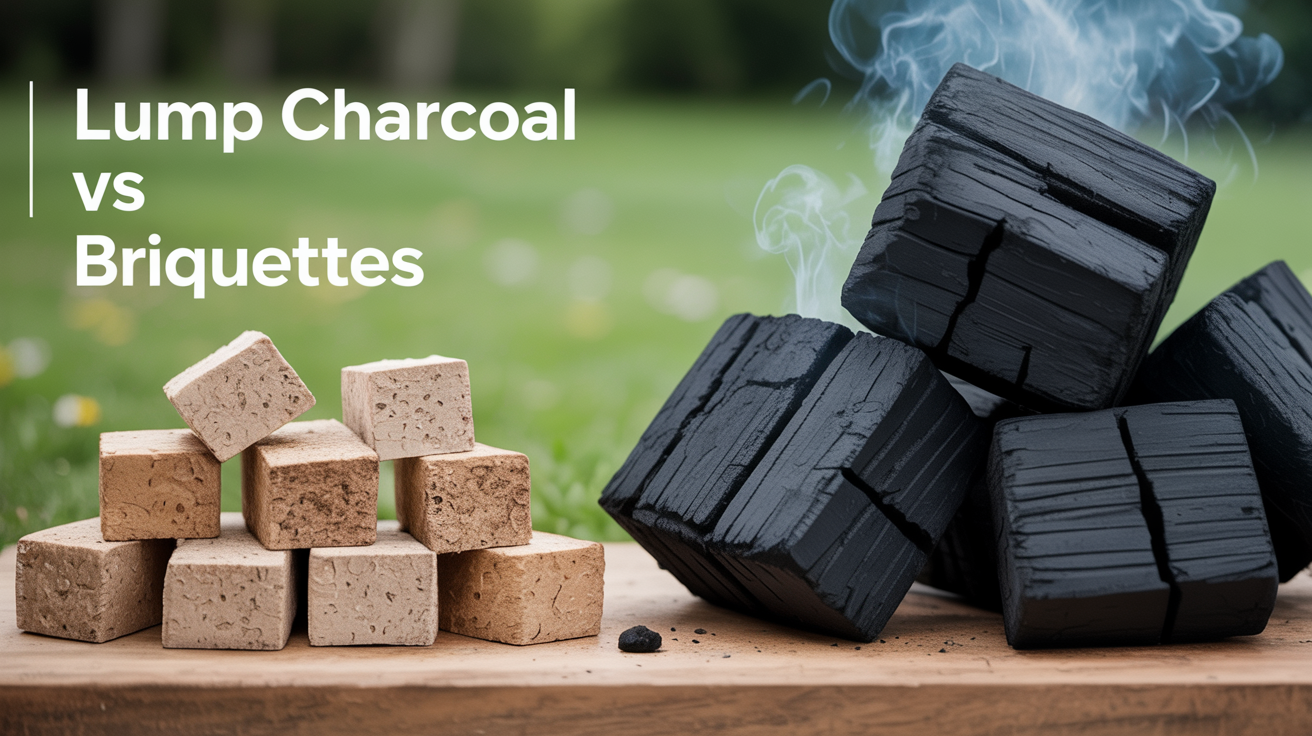
Pick up a bag of lump charcoal and a box of briquettes side by side, and the difference is obvious before you even light them. One looks like chunks of actual wood. The other looks like little hockey pucks stamped from a machine. That physical difference tells you almost everything you need to know about how they perform.
Neither charcoal type is universally better. The right choice depends on what you're cooking, how long you're cooking it, and how much you care about temperature precision. This breakdown covers both options honestly so you can stop second-guessing at the hardware store.
What lump charcoal actually is
Lump charcoal is carbonized wood, full stop. Hardwood logs are stacked in a low-oxygen kiln and burned slowly until most of the water, sap, and volatile compounds cook off. What's left is nearly pure carbon in irregular, lightweight chunks.
Because lump is made from real wood, it carries some of that wood's character. You'll often find recognizable shapes: a curved piece that was once bark, or a flat chunk from a branch. Higher-end bags specify the wood species (oak, mesquite, hickory), which can add a faint flavor contribution on top of whatever wood chunks you're smoking with.
The upsides are real. Lump ignites fast, sometimes in under 10 minutes with a chimney starter. It burns hotter than briquettes at peak temperature, making it the go-to for searing steaks or anything that benefits from serious high heat. It also produces less ash, which means fewer cleanouts and better airflow through your grill's bottom vents.
The downsides are just as real. Lump is inconsistent by nature. Chunk sizes vary within the same bag, which means your fire can develop hot and cool spots. Smaller pieces fall through grates. Temperature control takes more attention, especially over a long cook.
What briquettes actually are
Briquettes are manufactured fuel. The base material is usually sawdust, wood scrap, or charcoal fines compressed with a binder, typically cornstarch or another food-safe adhesive, and molded into uniform pillow shapes. Some cheaper brands add sodium nitrate (to help lighting) or coal dust (for burn time), which is why you'll occasionally smell something chemical when a bag first catches.
Quality briquettes, like Kingsford Professional or Royal Oak, use cleaner binders and produce less off-taste. If you're sensitive to the chemical smell, go premium and let them ash over completely before adding food.
The manufactured shape is a feature, not a defect. Uniform size means predictable, even burning. A chimney full of briquettes produces a fire that settles into a steady heat output and stays there, sometimes for hours. This consistency is exactly what low-and-slow BBQ requires. When you're managing a brisket for 12 hours, you want a fuel source that holds 250°F without constant adjustment.
Briquettes also produce more ash than lump, which can clog vents and choke the fire if you ignore it. On a long cook, you may need to tap or remove some ash partway through.
Lump vs briquette comparison
| Factor | Lump Charcoal | Briquettes |
|---|---|---|
| Peak heat | Higher (can exceed 1,000°F) | Lower (600-800°F typical) |
| Burn time | Shorter (1-2 hours full load) | Longer (2-4+ hours) |
| Consistency | Variable, requires management | Predictable, holds steady |
| Ash produced | Low | Moderate to high |
| Ignition speed | Fast (8-12 min in chimney) | Moderate (15-20 min) |
| Cost per cook | Higher per bag, lower ash waste | Lower per bag, more ash |
| Additives | None (quality bags) | Binders, sometimes accelerants |
| Best use | Searing, grilling, kamados | Low-and-slow, long cooks |
When to use lump charcoal
Lump is the right choice whenever high heat or clean flavor matters most.
- Steaks and chops. A fast, screaming-hot sear benefits from lump's higher ceiling. You can get a kettle grill hot enough to char the outside of a ribeye in under 2 minutes per side.
- Kamado grills. Big Green Egg and other ceramic cookers are designed around lump. The ceramic holds heat, so you don't need briquette burn time. Lump's lower ash output also keeps kamado vents clear.
- Pizza and flatbreads. Anything that needs a quick blast of radiant heat is better served by lump.
- When you want wood flavor. Lump already carries some hardwood character. Add a chunk of cherry or post oak to a lump fire and the flavor integration is more natural.
If you're new to controlling grill temperature, lump's variability can be frustrating at first. Sizes matter: load larger chunks on the bottom, smaller pieces on top. Avoid the fine dust at the bottom of the bag for anything other than starting the fire.
When to use briquettes
Briquettes are the practical choice for most American backyard cooks and for anyone running a long smoke.
- Brisket, pork shoulder, ribs. A 12-hour cook on a kettle or offset smoker is miserable to manage with lump's shorter, inconsistent burn. Briquettes give you a stable coal bed you can actually walk away from for an hour.
- Beginners learning fire management. Briquettes forgive mistakes. They don't spike and crash the same way lump can.
- Indirect setups. Two-zone cooks where one side has coals and the other has the meat work beautifully with briquettes. The even heat output makes the cool side predictable.
- Budget cooking. Briquettes are cheaper per pound and usually available at any grocery store.
For low-and-slow cooks where you're also adding wood for smoke flavor, the charcoal's base flavor matters less. Briquettes are a neutral backdrop. The smoke from hickory or applewood dominates, so there's no meaningful flavor penalty. Check out best wood for smoking different meats for pairing guidance that applies regardless of which charcoal you use underneath.
Practical tips that apply to both
Whatever charcoal type you choose, a few fundamentals stay the same.
Always use a chimney starter. Lighter fluid is unnecessary, adds off-flavors, and is slower than a chimney. Fill it, stuff two sheets of newspaper or a paper bag in the bottom, light it, and wait. When the top coals are ashed over, you're ready.
Never add raw charcoal to a running fire without letting it catch first. Tossing unlit briquettes onto active coals creates temperature dips and uneven results. If you need to add fuel mid-cook, use a second chimney running in parallel so you're adding lit coals.
Let your grill settle before cooking. After you dump the coals, put the lid on (vents open), and give it 5 minutes to equalize. The temperature you read 30 seconds after dumping is not the temperature you'll be cooking at.
Clean your grates. Not just for hygiene, but for heat transfer. Carbon buildup on grates insulates food from direct radiant heat and promotes sticking.
FAQ
Can I mix lump charcoal and briquettes? Yes, and it works well. A base layer of briquettes gives you a steady long burn; lump on top adds extra heat and speeds ignition. The combination is useful for cooks that start hot (to sear) and then shift to a lower temperature for finishing.
Does lump charcoal really taste better than briquettes? In a blind taste test on a gas-finished piece of chicken, most people can't tell the difference. On a steak or pork chop cooked directly over charcoal, some tasters detect a slightly cleaner finish from lump. The practical impact is small unless you're doing a very simple cook with no wood smoke added.
Why does my charcoal smell chemical when it first lights? That's usually the binder burning off in briquettes, or residual sap/resin in lower-quality lump. Wait until the coals are at least 75% ashed over before cooking. The chemical smell disappears once the surface carbon is what's burning.
Which charcoal is better for a Weber kettle? Both work. Briquettes are easier to manage for beginners and for two-zone indirect setups. Lump is great for high-heat direct grilling. Many kettle users keep both on hand and choose based on what they're cooking that day.
How much charcoal do I need? For a standard 22-inch kettle: roughly 80-100 briquettes for a full direct setup, or about two-thirds of a standard chimney. For lump, fill the chimney. For low-and-slow with indirect heat, use half a chimney and plan to add more. Your temperature control technique matters as much as the quantity.