Rubs, Sauces & Marinades
Carolina, Kansas City, and Texas BBQ Sauce Styles
Learn the key differences between bbq sauce styles from Carolina, Kansas City, and Texas, including what they're made of and what meat they suit best.
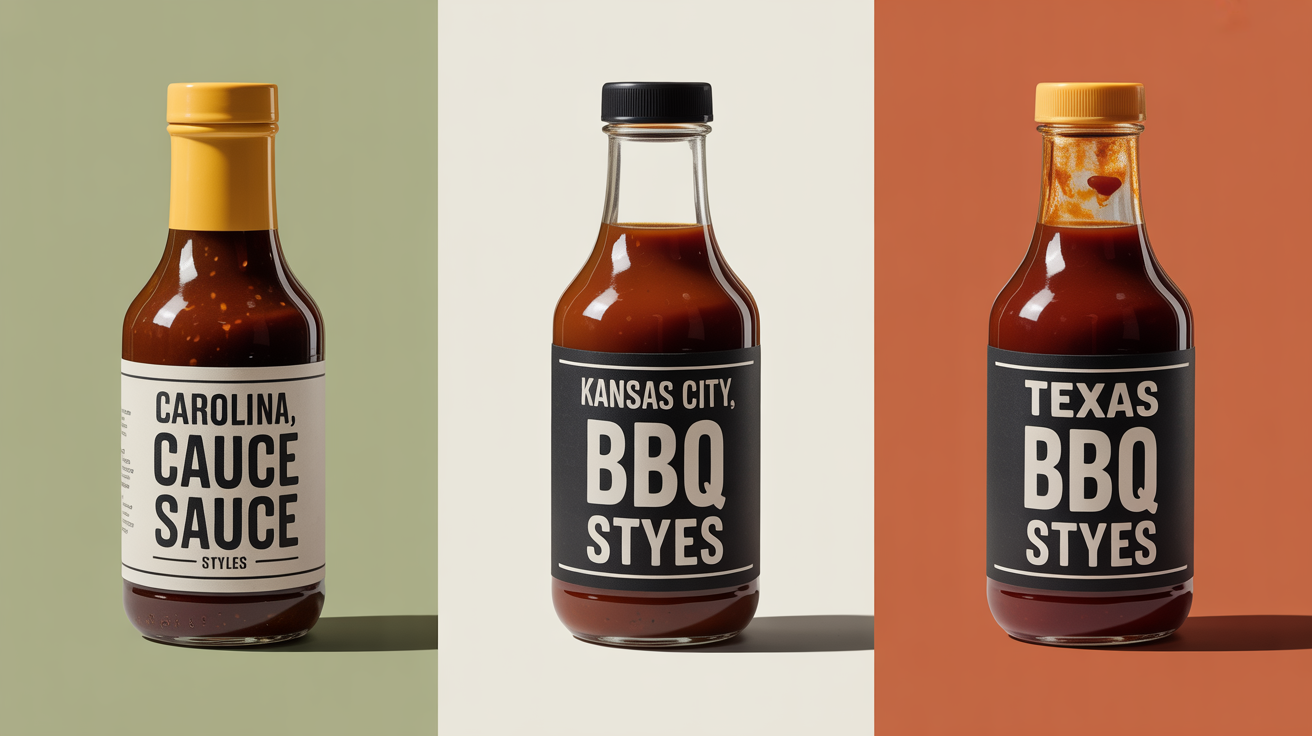
Walk into a barbecue joint in North Carolina and ask for "bbq sauce," and you'll get a cup of thin, sharp vinegar. Ask the same question in Kansas City and something thick, sweet, and brick-red slides across the counter. In central Texas, the pitmaster might just shrug. Each of these regional bbq sauce styles grew up around a specific meat, a specific wood, and a specific idea about what sauce is actually supposed to do.
Carolina BBQ Sauce: Vinegar Does the Work
No region in the country takes sauce more seriously than the Carolinas, and no region has more internal debate about it. There are at least three distinct Carolina styles, and locals will let you know if you mix them up.
Eastern North Carolina: Pure Vinegar
The simplest sauce in American barbecue is also one of the most effective. Eastern North Carolina sauce is nothing but cider vinegar (or sometimes plain white vinegar), red pepper flakes, a bit of salt, and black pepper. No tomato. No sweetener worth mentioning.
The acid cuts straight through the fat of a whole-hog smoke, which is exactly what eastern NC pitmasters are cooking. The vinegar dissolves into the pulled pork as you chop or pull it, seasoning every bite instead of sitting on top. It also keeps for months unrefrigerated, which mattered when this style developed long before refrigeration was common.
If you want to make your own, the ratio is roughly one cup of cider vinegar to one teaspoon of red pepper flakes, a pinch of salt, and a few grinds of black pepper. Some people add a tablespoon of brown sugar. Most don't.
Lexington / Piedmont Style: Tomato Joins the Party
Move west from Raleigh toward Charlotte and the sauce changes. This sub-style, sometimes called "Lexington dip" or "Piedmont sauce," adds a few tablespoons of ketchup (or tomato paste) to the vinegar base, along with a little sugar and Worcestershire. The result is still thinner and sharper than anything you'd find in Kansas City, but it has a faint brick color and slightly more body.
Lexington-style sauce is designed for pork shoulder, not whole hog. The slightly richer base stands up well to the deeper, fattier cuts from the butt end.
South Carolina Mustard Sauce: The Gold Standard
Yellow mustard as a sauce base sounds like a cookout accident, but South Carolina's mustard sauce (often called "Carolina gold") has a devoted following. The base is yellow mustard cut with cider vinegar, sugar, a little hot sauce, and sometimes Worcestershire or butter. It's tangy, bright, slightly sweet, and pairs perfectly with pulled pork.
The history traces to German settlers in the region who brought a mustard tradition with them. It stuck. If you've never tried it on a pulled pork sandwich, it's worth making a batch from scratch. Our homemade BBQ sauce from scratch guide includes a solid mustard-style starting formula you can adjust to taste.
Kansas City BBQ Sauce: Sweet, Thick, and Tomato-Forward
Kansas City is where the sauce that most Americans picture when they hear "bbq sauce" was born. The style is thick (molasses or brown sugar alongside a tomato base), sweet, a little smoky, and has a tangy backbone from vinegar and sometimes Worcestershire. Some versions lean heavy on black pepper; others add cayenne for heat. The color lands somewhere between deep mahogany and brick red.
Kansas City sauce is designed to be brushed on ribs and burnt ends in the last 30 minutes of a cook, then caramelized into a sticky glaze over heat. It works equally well served on the side for dipping. The sweetness and thickness make it less effective as a mop sauce during a long cook, since the sugars start to burn at anything above about 300°F (149°C).
The sauce traces back to Henry Perry, who opened one of the first Kansas City barbecue stands in the early 1900s, and the tradition has only gotten sweeter over the decades. Commercial bottles from the region tend to be aggressively sweet. Homemade versions let you dial back the sugar and add more vinegar, which gives a better balance.
Common Kansas City add-ins beyond the base of ketchup, molasses, and cider vinegar: brown sugar, yellow mustard, Worcestershire, liquid smoke, onion powder, garlic powder, cayenne, and black pepper. The proportions vary by cook.
Texas BBQ Sauce: An Afterthought (by Design)
In central Texas, the barbecue philosophy starts with the meat. Brisket and beef ribs get a simple salt-and-pepper rub, then spend 12 to 18 hours in an offset smoker over post oak. The smoke ring and bark are the point. Sauce is offered on the side as a courtesy, and plenty of people skip it entirely.
When Texas does make a sauce, it's thinner than Kansas City style, less sweet, and noticeably more savory. Beef drippings or beef stock sometimes go into the base. The tomato is there (usually ketchup or crushed tomato) but it doesn't dominate. Black pepper and chili powder are heavier than in most other styles. The overall effect is a sauce that complements beef without competing with the smoke.
East Texas is the exception. That corner of the state has more in common with Louisiana and the Deep South, with sweeter, thicker sauces and more pork on the menu.
If you're building a sauce for brisket, skip the heavy sweeteners. A base of ketchup, beef broth, Worcestershire, black pepper, garlic powder, and a splash of cider vinegar works well and won't mask the smoke.
Regional Style Comparison
| Style | Base | Sweetness | Thickness | Best Paired With |
|---|---|---|---|---|
| Eastern NC | Cider vinegar | Very low | Thin | Whole hog, pulled pork |
| Lexington (Piedmont NC) | Vinegar + ketchup | Low | Thin-medium | Pork shoulder |
| South Carolina Gold | Yellow mustard | Medium | Medium | Pulled pork, chicken |
| Kansas City | Ketchup + molasses | High | Thick | Ribs, burnt ends, chicken |
| Texas (Central) | Ketchup + beef stock | Low-medium | Medium | Brisket, beef ribs |
Choosing the Right Sauce for Your Cook
A few practical rules for putting these styles to work at home:
Vinegar sauces work best as finishing sauces or as a mop applied in the second half of a cook. They're acidic enough that mopping early can slow bark formation and interfere with the crust.
Thick, sweet sauces belong in the last 30 to 45 minutes. The sugars in Kansas City-style sauce start to burn around 300°F (149°C). Brushing it on at 250°F (121°C) is fine in the short term, but applying fresh coats every 20 minutes over hours will build up a layer that turns bitter and dark.
Mustard sauce is the most versatile of the Carolina styles. It won't burn as readily as molasses-based sauces, and it doubles well as a binder for dry rubs before a smoke. The mustard helps the rub adhere to the surface without leaving any noticeable mustard flavor after a full cook at 225 to 250°F (107 to 121°C).
Texas-style sauce is best served on the side and added after slicing. That's how most Texas joints do it anyway. If you've spent 14 hours building a proper bark on a brisket, putting sauce on it at the pit defeats the purpose. Let each person add what they want.
Building the right sauce starts with understanding your rub. A sauce and a rub should complement each other rather than fight for the same flavor notes. If you haven't settled on a rub yet, start with the basics of a BBQ dry rub and build a sauce around the same flavor profile.
Frequently Asked Questions
What's the main difference between Carolina and Kansas City BBQ sauce?
Carolina sauces are thin and vinegar-forward, built to cut through fatty pork. Kansas City sauce is thick, sweet, and tomato-molasses based, built for glazing ribs and chicken. The two styles come from completely different barbecue traditions and serve different purposes on the plate.
Which regional BBQ sauce style is the sweetest?
Kansas City is the sweetest of the major styles, relying on molasses, brown sugar, and sometimes corn syrup. Eastern Carolina sauce has almost no sweetness. South Carolina mustard sauce falls in the middle, with enough sugar or honey to balance the vinegar and mustard.
Can you use Kansas City sauce as a mop during a long smoke?
You can, but it's not ideal. The sugar in Kansas City sauce can burn around 300°F (149°C). At typical low-and-slow temps of 225 to 250°F (107 to 121°C) it won't char immediately, but applying coat after coat over many hours builds up a sticky, bitter layer. Use it in the final 30 to 45 minutes and you'll get the glaze without the bitterness.
What is Carolina gold sauce made of?
The base is yellow mustard combined with cider vinegar, a sweetener (usually sugar or honey), a bit of hot sauce, and sometimes Worcestershire or butter. The exact ratios vary by cook and region, but the balance between mustard and vinegar is what gives it the bright, tangy character that sets it apart from tomato-based sauces.
Is Texas BBQ always served without sauce?
Central Texas barbecue culture puts the emphasis on smoke and meat rather than sauce. Most traditional joints offer it on the side rather than applying it at the pit. East Texas, by contrast, is more comfortable with sauce and has closer ties to the sweeter Deep South tradition. At home, the central Texas approach makes a lot of sense for brisket: slice it, put the sauce on the table, and let people decide for themselves.