Smoking & Low-and-Slow
How to Set Up Your Grill for Smoking
Learn how to smoke on a grill without a dedicated smoker. Master indirect heat, wood placement, and temperature control for real low-and-slow results.
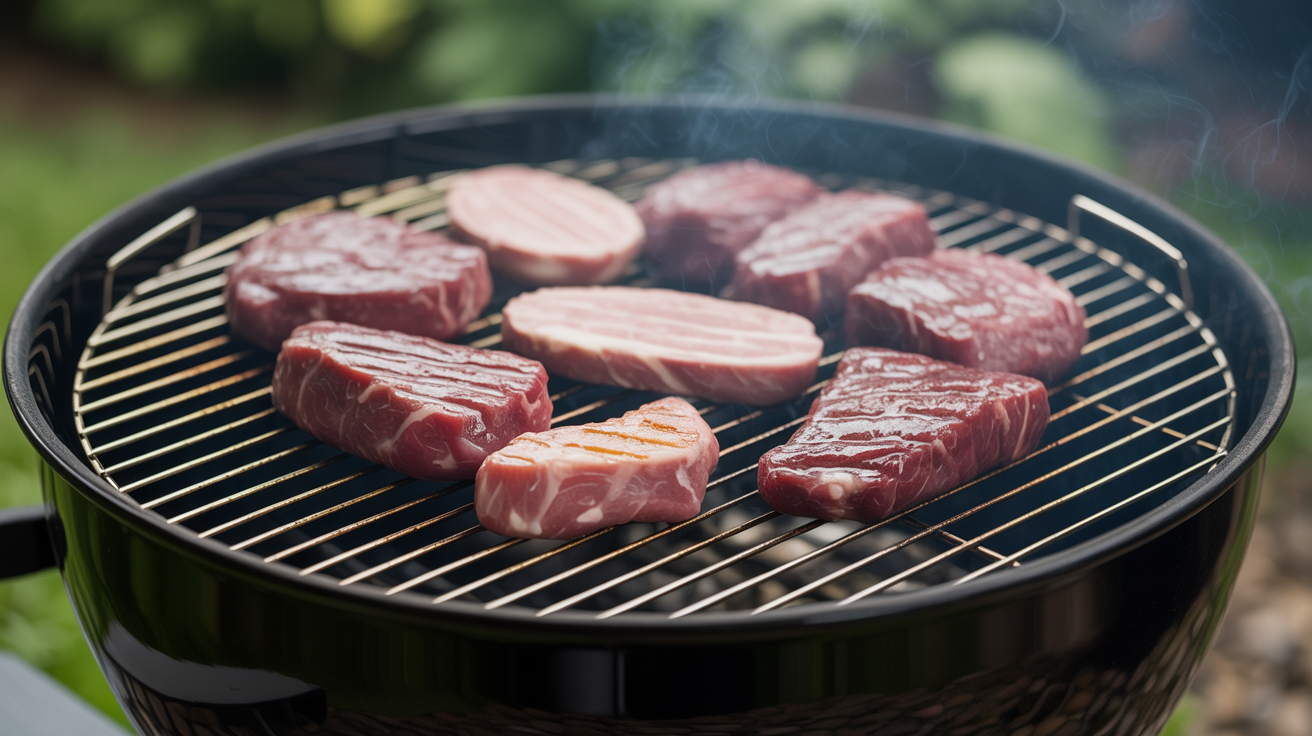
You don't need a dedicated smoker to barbecue ribs, brisket, or pork shoulder at home. Any full-size charcoal or gas grill can pull double duty as a smoker, as long as you know how to set up indirect heat and keep temperatures low. The technique takes a bit of setup, but once you've done it once, it becomes second nature.
The Core Idea: Indirect Heat at Low Temperature
Grilling and smoking are different disciplines. Grilling uses direct, high heat (400°F/205°C and above) to sear food fast. Smoking runs at 225°F to 275°F (107°C to 135°C) over several hours, cooking food indirectly so it never sits directly over the flame.
This low-and-slow approach breaks down collagen in tough cuts, keeps moisture in the meat, and gives smoke time to penetrate the surface. The key variable is where the heat comes from. In a properly set-up smoking configuration, the heat source sits off to one side (or on just one set of burners), and the food sits on the other side of the grill with the lid closed.
Think of your grill lid as an oven door. The entire cooking environment inside needs to stay within that 225-275°F (107-135°C) range for most low-and-slow cooks.
What "Low and Slow" Means in Practice
A pork butt at 250°F (121°C) takes roughly 1.5 hours per pound. A rack of ribs at the same temperature takes 5 to 6 hours. You're not in a hurry, and that's the point. These cuts get their tenderness from time, not from searing. The smoke flavor builds gradually over the cook, and the result is something you simply can't produce at high heat.
Setting Up a Charcoal Grill for Smoking
A kettle grill or any round charcoal grill works well for smoking. The most common configuration is the two-zone fire, where lit coals occupy one side of the charcoal grate and the food sits on the other.
The Two-Zone Setup
Bank your lit coals to one side of the grill. Place a disposable aluminum pan filled with a small amount of water on the other side, directly on the charcoal grate. This drip pan does two things: it catches drippings so they don't flare up, and the water helps buffer against temperature swings. Put your food on the cooking grate above the pan, not above the coals.
Vent management is everything on a charcoal grill. Open both the top and bottom vents roughly halfway to start. Air flowing in from the bottom feeds the fire; air escaping from the top controls how fast the fire burns. More airflow means higher temps. If the grill climbs above 275°F (135°C), close the vents slightly. If it drops below 225°F (107°C), open them a bit more. Make small adjustments and wait 10 minutes before changing anything again.
The Snake Method for Longer Burns
For cooks that run 4 or more hours, the snake method (sometimes called the C method) extends your fuel without needing to add charcoal mid-cook. Arrange unlit briquettes in a long curved line around the perimeter of the charcoal grate. Light a small cluster of coals at one end using a chimney starter, then pour them on. The fire slowly travels down the snake, lighting fresh coals as it goes. A full snake of standard briquettes can sustain cooking temperature for 6 to 8 hours with minimal intervention.
Place wood chunks directly on the unlit coals along the snake so they catch fire gradually as the burn progresses. This gives you a steady, gentle smoke throughout the cook rather than a heavy burst at the start.
Setting Up a Gas Grill for Smoking
Turning a gas grill into a smoker is straightforward, though gas grills lose temperature consistency a little more easily than charcoal because the lid doesn't seal as tightly and the flame can't be throttled as finely.
Which Burners to Light
On a three-burner grill, light only the far left burner (or far right, it doesn't matter) on its lowest setting. Place your food over the unlit burners. On a two-burner grill, light one burner on low and place food on the other side.
Your goal is to get the interior temperature to 225-250°F (107-121°C). This usually means running one burner on low to medium-low, but every grill is different, so watch your thermometer and adjust. The built-in lid thermometer on most gas grills reads the temp at the top of the dome, which is warmer than where the food actually sits. If you have a probe thermometer, position it at grate level near the food for a more accurate reading.
Adding Wood to a Gas Grill
Gas grills don't have hot coals to nestle wood chunks into, so you need a different approach. A foil packet works well: take a double layer of heavy-duty aluminum foil, pile about a cup of wood chips in the center, fold it into a sealed packet, and poke several holes in the top. Tuck it directly on the lit burner, under the cooking grate. It'll start producing smoke within 5 to 10 minutes.
Dedicated smoker boxes made of cast iron or stainless steel work the same way and hold up better over repeated use. Either method delivers real smoke flavor on a gas grill.
Adding Wood for Smoke Flavor
The wood you choose shapes how the finished food tastes. Fruit woods like apple and cherry are mild and pair well with poultry and pork. Hickory and oak are stronger, well-suited to beef and pork. Mesquite burns hot and aggressively, so it's best used sparingly or blended with milder wood.
For charcoal smoking, use wood chunks (fist-sized pieces) rather than chips. Chunks burn longer and produce a steadier smoke output. Chips ignite quickly and burn out fast, which makes them better suited for shorter cooks or gas grill foil packets. You do not need to soak wood before using it. Soaking just delays ignition and produces steam, not clean smoke.
On a charcoal grill, place 2 to 3 chunks directly on the lit coals when you set up. Don't pile on more than that. Heavy smoke from dense woods or too much fuel can produce a bitter, acrid bark that overwhelms the meat flavor.
Keeping Temperature Steady
The biggest challenge for anyone new to low-and-slow cooking is holding a consistent temperature for hours at a time. The good news is that meat cooked at 235°F (113°C) versus 255°F (124°C) comes out nearly identical. A 20-degree window is completely fine. The problems start when temperature swings 50°F or more in either direction.
Keep the lid closed as much as possible. Every time you lift the lid, heat escapes and the grill takes 10 to 15 minutes to recover. Resist the urge to check the meat constantly. Trust your thermometer.
On charcoal, avoid adding cold unlit coals mid-cook if you can. Cold coals drop the temperature sharply and produce acrid smoke while they light. If you need to top up the fuel, use pre-lit coals from a chimney starter and add them quickly.
A leave-in probe thermometer is worth having for anything that cooks longer than 2 hours. Set it in the thickest part of the meat before you close the lid and monitor from outside. The internal temperature tells you when the cook is done, not the clock on the wall.
Frequently Asked Questions
Can any grill be used for smoking?
Most full-size charcoal and gas grills can handle smoking as long as they have a lid. Smaller grills and portable charcoal units have a harder time because there's less space to separate the heat source from the food. Kamado-style ceramic grills smoke particularly well due to their thick walls and excellent heat retention.
How long does it take to smoke on a grill?
It depends on the cut. Chicken pieces take 1.5 to 2.5 hours at 250°F (121°C). Baby back ribs take 4 to 5 hours. A pork butt takes 8 to 12 hours depending on size. A full brisket can run 12 to 16 hours or more. Internal temperature tells you when it's done, not the clock.
Do I need a water pan when smoking?
Not strictly, but it helps. Water absorbs heat and releases it slowly, buffering against temperature spikes. It also adds a bit of humidity to the cooking environment. On a charcoal kettle especially, a water pan makes holding temperature easier during long cooks.
Should I flip the meat while smoking?
For most low-and-slow cooks, no. Whole shoulders and briskets cook fat-side-up so the rendering fat bastes the meat as it runs down. Ribs can be flipped once halfway through if you want, but many cooks leave them bone-side-down the whole way. For how the timing breaks down on ribs specifically, see the guide on smoking ribs the 3-2-1 method.
What internal temperature should I aim for?
Chicken breasts finish at 165°F (74°C). Pork ribs are done at 195-203°F (91-95°C) for probe-tender results. Pork shoulder for pulling needs 200-205°F (93-96°C). Brisket targets the same range. If you're planning to smoke a brisket for the first time, the target internal temp matters more than any single time estimate you'll read.