Smoking & Low-and-Slow
How to Smoke a Brisket
Learn how to smoke a brisket from scratch: trim, rub, temperature, the stall, and when to pull. Real times, real temps, no guesswork.
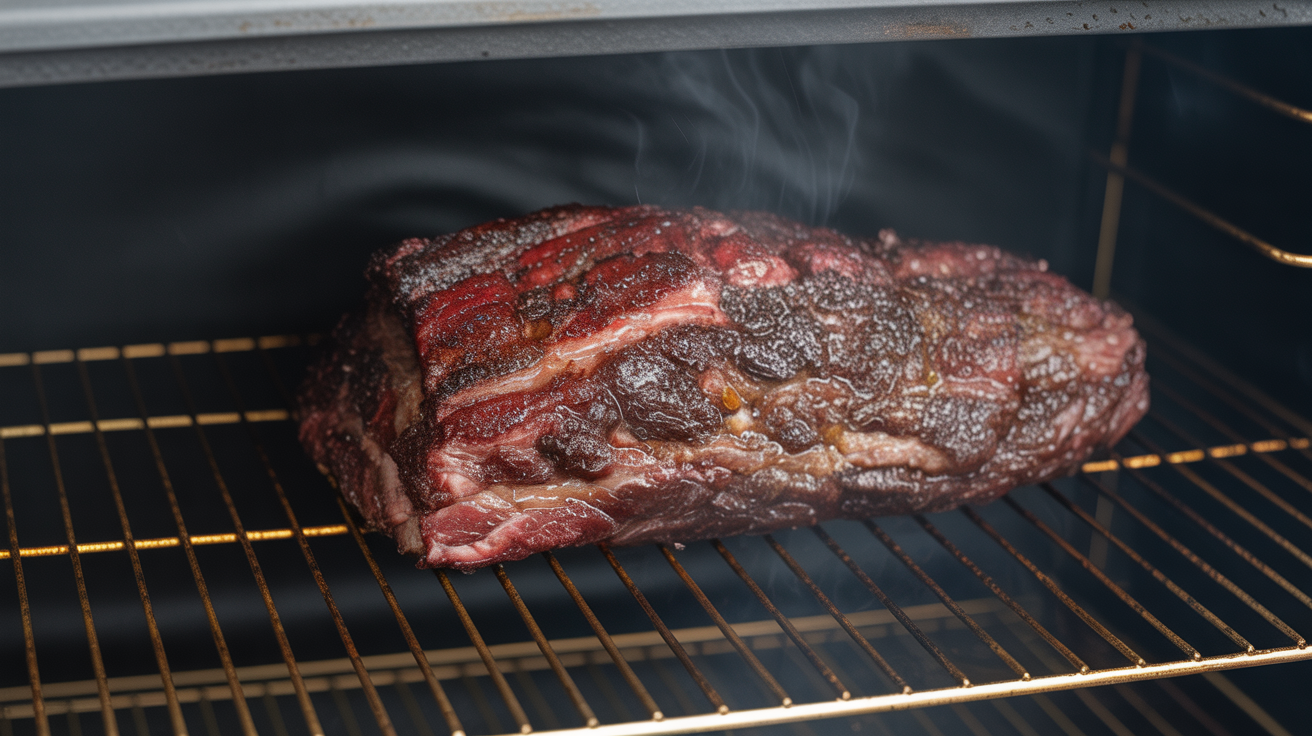
Smoking a brisket takes time, but it does not take magic. Get the trim right, hold your temperature, and trust your thermometer over the clock. Follow those three rules and you will pull something genuinely impressive off your smoker every time.
This guide covers everything from selecting the cut to the final slice. If you have never done a brisket on a smoker before, this is the right place to start.
Choosing the right brisket
Brisket comes from the chest of the steer. The full cut, called a "packer brisket," has two muscles: the flat and the point. The flat is lean and slices cleanly. The point has more fat running through it and is where you find the most flavor.
For beginner brisket cooks, buy a full packer if you can find one. They run 12 to 16 pounds untrimmed and give you the best of both muscles. Prime grade from a warehouse store works well and is usually cheaper than what a butcher charges for the same quality.
Choice grade is fine. Select is harder to pull off well because the lean flat dries out quickly without enough intramuscular fat.
Trimming and seasoning
Trimming is worth your time. A fat cap that is too thick slows the bark formation and prevents smoke from reaching the meat. You want roughly a quarter inch of fat left on the surface. Anything thicker than a finger width comes off.
Cut away the hard, waxy fat between the flat and point as well. That fat does not render during the cook, and it creates a greasy layer where you want good texture.
For seasoning, a simple beef rub is hard to beat:
- Coarse black pepper (the bigger grind, the better the bark)
- Kosher salt, roughly equal parts to the pepper
- Garlic powder, about half as much as the salt
Apply it generously. You are covering a large surface area, and brisket can handle a heavy hand. Let the rubbed brisket sit uncovered in the refrigerator for at least an hour; overnight is better. The surface dries out slightly, which helps the bark set faster.
Setting up your smoker
Target 225 to 250°F inside the cook chamber. Lower than 225°F and the cook drags past usefulness. Higher than 275°F and the flat tightens up before the connective tissue has time to break down.
Wood choice matters, but not as much as people argue online. Post oak is the Texas standard. Hickory is strong and slightly sweet. Fruit woods like cherry give a mahogany color to the bark without adding much smoke flavor on their own, so mix them with oak if you want both.
Get your smoker to temperature and stable before the brisket goes on. Chasing a fluctuating firebox during an 12-hour cook is exhausting.
Place the brisket fat side up. Fat on the bottom works in some setups where the main heat source is below the grate, but fat up is the safer default. Put the thicker point end toward the heat source if you have a traditional offset.
The cook: low and slow
A 14-pound packer at 225°F will take roughly 1 to 1.5 hours per pound, putting you somewhere between 14 and 20 hours total. The range is wide because every brisket is different. Cook to temperature and feel, not time.
The first several hours are the active smoke phase. The meat surface stays cool enough to absorb smoke well. After the bark sets and the internal temp climbs past 140°F or so, you stop picking up meaningful smoke flavor anyway.
At some point, usually between 155 and 170°F internal, the cook appears to stall. The temperature stops climbing and sits there. This can last two to four hours. It is not a problem. The stall is caused by evaporative cooling as moisture moves through the meat and evaporates off the surface. Patience is the answer. For a full breakdown of what is happening and how to handle it, see The Stall, and How to Power Through It.
The Texas crutch (wrapping in butcher paper or foil) gets you through the stall faster. Butcher paper lets some steam escape and keeps the bark from going soft, which is why it is the preferred option in most competition circles. Foil is faster and results in slightly more moisture retained in the flat, but the bark softens.
Wrap when the bark looks set and the color is deep mahogany, typically around 160 to 165°F internal. Continue cooking wrapped until probe-tender.
Temperature and timing reference
| Stage | Internal temp | What you are watching for |
|---|---|---|
| Smoke absorption | 90 to 140°F | Smoke ring forming, bark beginning to set |
| Stall | 155 to 170°F | Temperature plateaus, can last 2-4 hours |
| Wrap | 160 to 165°F | Bark set, deep color, wrap in paper or foil |
| Done | 195 to 205°F | Probe slides in with no resistance |
| Rest | N/A | Hold at 145°F+ for at least 1 hour |
The probe test matters more than any specific number. Push a thermometer probe or a toothpick into the thickest part of the flat. It should slide through with the same resistance as room-temperature butter. If it catches, give it another 30 minutes and check again.
Most briskets hit probe-tender somewhere between 195 and 205°F. The 203°F figure gets repeated often because it is where collagen conversion is mostly complete, but that number is a guideline, not a finish line.
Resting and slicing
Resting is not optional. Pull the brisket off the smoker when it is probe-tender and let it sit, still wrapped, for at least one hour. Two hours is better. The internal temperature will continue to rise for a bit (carryover), then slowly fall. During this time the muscle fibers relax and reabsorb moisture.
A cooler works well for holding. Wrap the brisket in a towel, put it in a dry cooler, and it will hold safely for four to six hours.
When you are ready to slice, separate the flat from the point. They run at an angle to each other, so you need to change direction between the two. Slice against the grain. This shortens the muscle fibers and makes every bite tender instead of chewy. Aim for slices about the thickness of a pencil.
The point, with all its fat, is good for chopped beef or burnt ends. Cut it into chunks, toss with a bit of your rub and some sauce if you like, and put them back on the smoker for 30 to 45 minutes to caramelize.
FAQ
How long does it take to smoke a brisket at 225°F? Plan on 1 to 1.5 hours per pound. A 14-pound brisket can take 14 to 20 hours depending on the cut, the smoker, and how long the stall lasts. Start the night before if you need it ready for lunch.
Do I need to inject a brisket? No. Injecting adds moisture and can improve the flat, but a well-trimmed brisket with a proper cook and a good rest does not require it. If you are competing or cooking Prime grade beef, skip the injection and focus on technique.
What wood is best for smoking brisket? Post oak is the traditional choice and is hard to overdo. Hickory works well but is strong, so use less. Cherry adds color. Mesquite burns hot and gets bitter fast on a long cook, so avoid it unless you are using very small amounts.
My brisket came out dry. What happened? A dry flat usually means the internal temp ran too high, the rest was too short, or the brisket was underfat to begin with. Next cook, wrap earlier, pull at 200 to 203°F when the probe test passes, and rest a full two hours.
Can I smoke a brisket flat instead of a packer? Yes, but flats are less forgiving. Without the point's fat to buffer the cook, a flat can dry out quickly. Wrap it earlier and pull it around 195 to 198°F, checking the probe often in the last stretch.
Once you have a brisket under your belt, the same low-and-slow principles transfer directly. Smoking Ribs: The 3-2-1 Method uses the same patience and temperature control but runs in half the time. How to Smoke Pulled Pork is another long cook with a similar rhythm and even more room for error if you are still getting comfortable with the smoker.