Smoking & Low-and-Slow
How to Smoke Pulled Pork
Step-by-step guide to smoking pulled pork: choosing the right cut, seasoning, managing your smoker at 225°F, pushing through the stall, and pulling at 203°F.
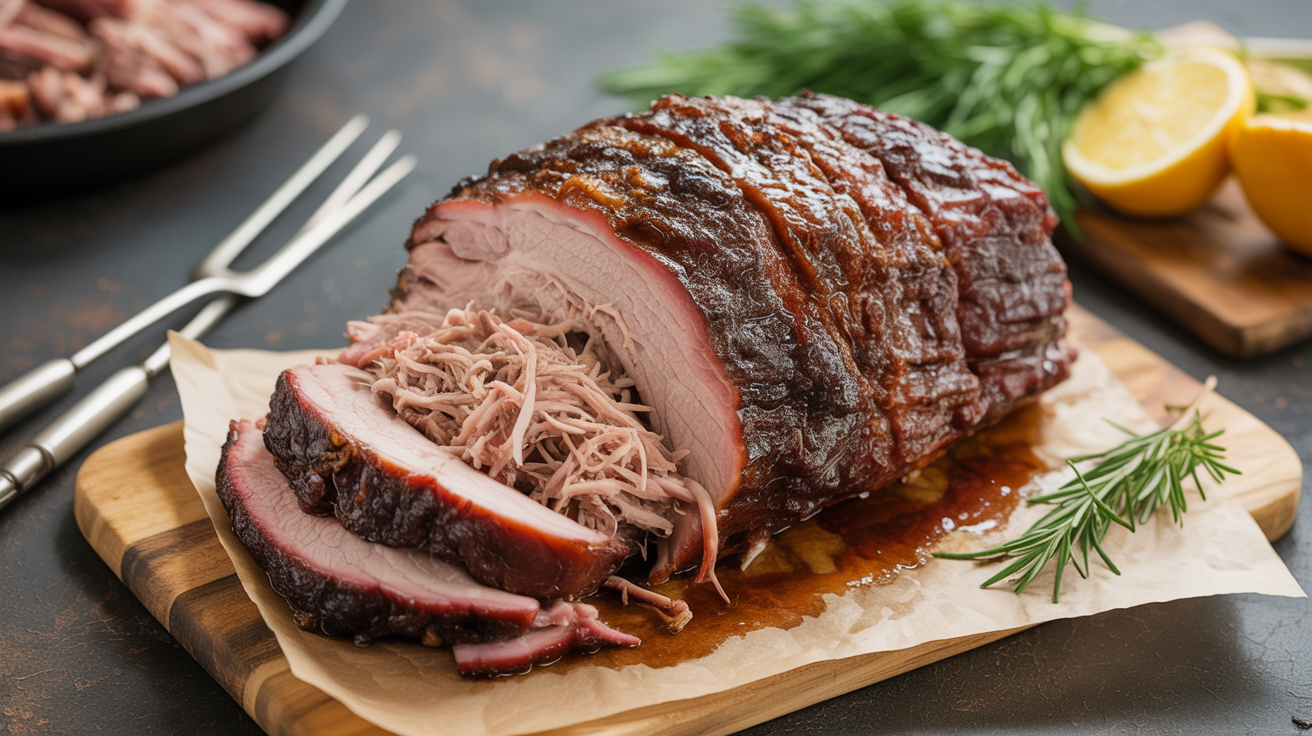
Smoked pulled pork is one of the most forgiving long cooks you can do on a smoker. It rewards patience over precision, and the margin for error is wider than brisket or ribs. That said, there is a real technique behind getting a proper bark, clean smoke penetration, and meat that shreds with almost no effort. Here is how to do it right.
Choosing the cut
Pork shoulder is the umbrella term, but the two sub-cuts behave differently on the smoker.
The Boston butt (upper shoulder) is what most pitmasters reach for. It has a fat cap on one side, good marbling throughout, and a blade bone that runs through the center. That intramuscular fat renders slowly and keeps the meat moist through a 12- to 16-hour cook. Boneless butts exist and are fine, but the bone acts as a rough internal temperature indicator and seems to help the surrounding meat stay tender.
The picnic (lower shoulder) has more connective tissue and skin. It works, but it takes longer to render and the skin doesn't exactly turn into crispy bark the way brisket fat does. Most people prefer the butt.
Look for a bone-in Boston butt between 8 and 10 pounds. That size fits most smokers without crowding and gives you plenty of bark-to-meat ratio. For a pork butt smoking session that feeds a crowd, two 8-pound butts side by side is the move.
Trimming and prep
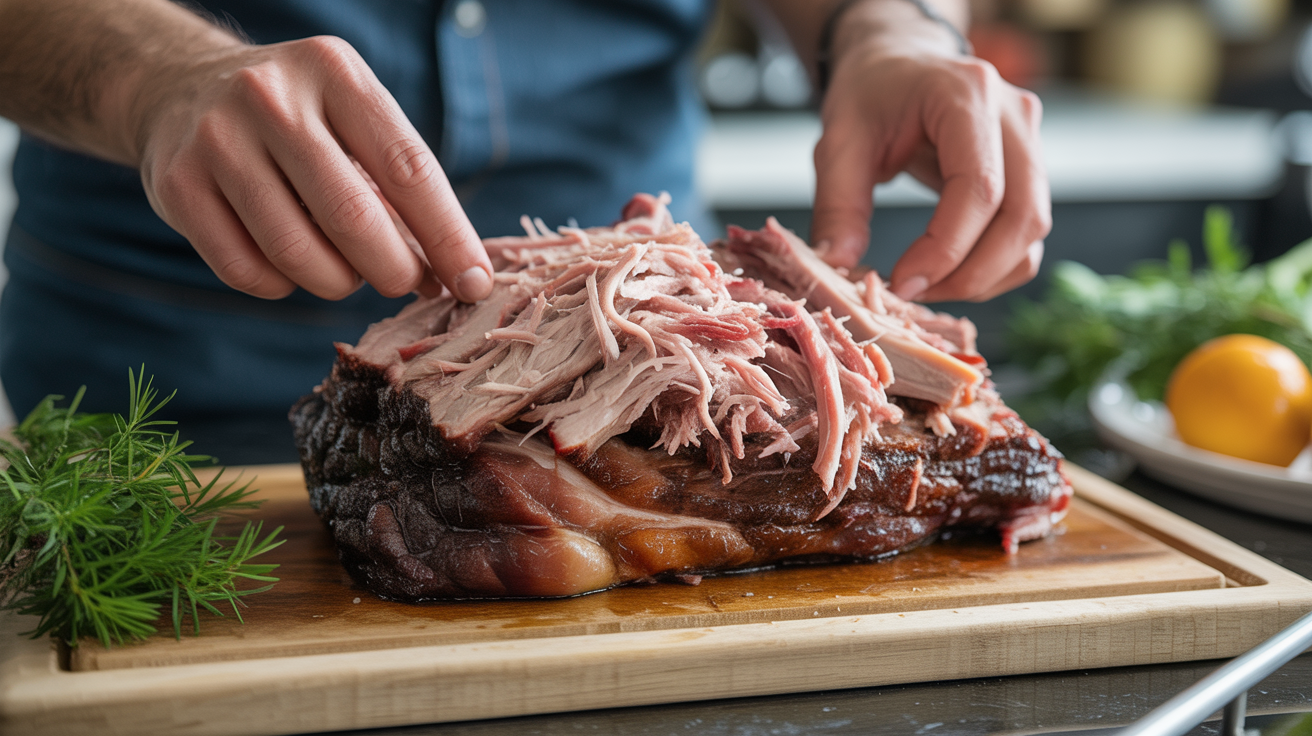
Most bone-in butts come with a thick fat cap. Trim it down to about a quarter inch. Fat above that won't render in the cook window, and it blocks the rub from contacting the meat.
Flip the butt over and look for any large silverskin or loose flaps. Remove silverskin entirely since it toughens rather than renders. Loose flaps can burn and turn bitter in the smoke.
Pat the meat dry with paper towels. Moisture on the surface delays bark formation. Let the butt sit uncovered in the fridge for a few hours, or overnight if you have the time. Cold meat also absorbs smoke slightly better in the first hour of the cook.
The rub
A pulled pork rub is built on a few things: salt, sugar, paprika, and black pepper. After that, it's personal.
Basic ratio to start:
- 2 tablespoons kosher salt
- 2 tablespoons brown sugar
- 2 tablespoons smoked paprika
- 1 tablespoon black pepper
- 1 teaspoon garlic powder
- 1 teaspoon onion powder
- 1/2 teaspoon cayenne (optional)
Apply the rub heavily and press it in so it adheres. A thin layer of yellow mustard helps the rub stick and completely disappears in the cook. Some people skip it; it doesn't change the final flavor but it does help the bark.
Setting up your smoker
Target temperature is 225 to 250°F, in line with what Michigan State University Extension recommends for keeping smoker air temperature in a safe, controllable range throughout a long cook. Lower end gives you more time for collagen breakdown and a deeper smoke ring. Higher end speeds things up without hurting the result much. On a charcoal smoker, bank your coals and add 3 to 4 fist-sized chunks of wood at the start. On a pellet grill, set it and check on it every couple of hours.
Wood choice matters but not as dramatically as people claim. Hickory is the classic for pork, assertive and slightly sweet. Fruit woods like apple or cherry are milder and produce a cleaner pink smoke ring. A 50/50 hickory-apple blend is a reliable middle ground. Avoid mesquite for a long cook at these temps; it can turn acrid over many hours.
Place the pork butt fat-cap up. Some pitmasters rotate it or flip it partway through. Fat-cap up lets the rendering fat baste the meat. Fat-cap down creates a slight heat buffer between the direct radiant heat and the lean side. Both work. Pick one and be consistent so you can calibrate future cooks.
Timing and temperature reference
| Internal temp | What's happening | Action |
|---|---|---|
| 140-150°F | Bark is setting, smoke ring forming | Leave it alone |
| 155-170°F | The stall begins, collagen converting | Wait or wrap |
| 195°F | Nearly done, starting to probe tender | Check every 30 min |
| 200-205°F | Target zone, probe slides in like butter | Pull and rest |
The stall, and what to do about it
Somewhere between 155 and 170°F internal, your pork butt will stop climbing. The temperature might sit there for 2, 3, sometimes 4 hours. This is the stall, and it happens because evaporative cooling from the meat's surface exactly offsets the heat coming in from the smoker. It isn't a problem with your fire or your thermometer.
You have two options:
Wait it out. Bark development continues during the stall. If you have time and you started early, let it ride. The stall eventually breaks on its own.
Wrap it. This is the Texas crutch. Pull the butt at 165 to 170°F, wrap it tightly in two layers of heavy-duty aluminum foil (or pink butcher paper), and return it to the smoker. Wrapping traps steam and effectively ends the evaporative cooling. It shortens the stall dramatically, though it softens the bark. For pulled pork, soft bark isn't a dealbreaker since you're shredding the meat anyway.
For a deeper look at the science behind this, see The Stall, and How to Power Through It.
Knowing when it's done
Internal temperature is your primary guide. Pull the pork butt at 200 to 205°F. But temperature is actually a proxy for texture, and the real test is the probe test. Slide a thermometer probe or a thin skewer into the thickest part of the meat, away from the bone. It should meet almost no resistance, like pushing into room-temperature butter.
At 200°F some butts are done; others need another hour. The bone should wiggle freely when you grab it and twist. If there's resistance, keep going.
Total cook time at 225°F runs roughly 1.5 to 2 hours per pound. A 9-pound butt typically takes 13 to 16 hours. Always cook to temperature and texture, not the clock.
The rest
This step gets skipped more often than it should. Rest the wrapped pork butt for at least an hour before pulling. Two hours is better. The muscle fibers continue to relax and the juices redistribute throughout the meat. A properly rested butt pulls cleaner and stays juicier.
To hold it longer, wrap the foiled butt in a clean towel and place it in an empty cooler. It will stay above 145°F for 3 to 4 hours this way, which is useful when timing a cook around a specific meal time.
Pulling and serving
Unwrap the butt over a cutting board or a large pan and save any accumulated juices. Let it cool for 10 minutes so you can handle it. Remove the blade bone by grabbing it and pulling straight out. If the cook went right, it slides clean.
Pull the meat apart with two forks, bear claws, or just your hands. Work with the grain initially, then mix everything together so you get a combination of bark pieces and interior meat in every bite. Pour the reserved juices back over the pulled pork and toss to coat.
Smoked pulled pork holds well at a low oven temp (175°F) for an hour or two if you're not serving immediately.
If you've got the smoker going for a long day cook, How to Smoke a Brisket uses a similar low-and-slow approach, and you can run both on the same fire. Or if you want a shorter project while the pork rests, Smoking Ribs: The 3-2-1 Method fits neatly into the back half of a pork butt cook.
FAQ
How long does it take to smoke a pork butt? At 225°F, budget 1.5 to 2 hours per pound. A 9-pound bone-in butt typically runs 13 to 16 hours. Variables like wind, how often you open the smoker lid, and how much fat the specific cut has will move that window. Start early and use the cooler rest method if it finishes ahead of schedule.
Do I need to inject the pork butt? No. A bone-in butt has enough intramuscular fat to stay moist through the cook without injection. That said, an apple juice or broth injection can add flavor to the interior and speed up the cook slightly. It's a worthwhile step if you want to experiment but not a requirement.
What internal temperature should pulled pork reach? The target is 200 to 205°F, verified by a probe that slides in with no resistance. The USDA minimum safe temperature for pork is 145°F, but at that temperature the collagen hasn't fully converted to gelatin and the meat will be tough, not shreddable.
Can I smoke pulled pork on a gas grill? Yes, with indirect heat and a smoker box or foil packet of wood chips over a lit burner. It's less efficient than a dedicated smoker, and temperature control requires more attention, but it produces a real result. Keep the unlit side around 225 to 250°F with the lid closed.
How do I store and reheat leftover pulled pork? Refrigerate in an airtight container for up to 4 days, or freeze for up to 3 months. Reheat low and slow in a covered pan with a splash of apple juice or the reserved cooking juices, stirring occasionally. Avoid high heat or the microwave on full power; both dry it out quickly.