Smoking & Low-and-Slow
Smoking Ribs: The 3-2-1 Method
Learn the 3-2-1 method for smoking ribs: 3 hours of smoke, 2 hours wrapped, 1 hour sauced. Step-by-step guide for spare ribs and baby backs.
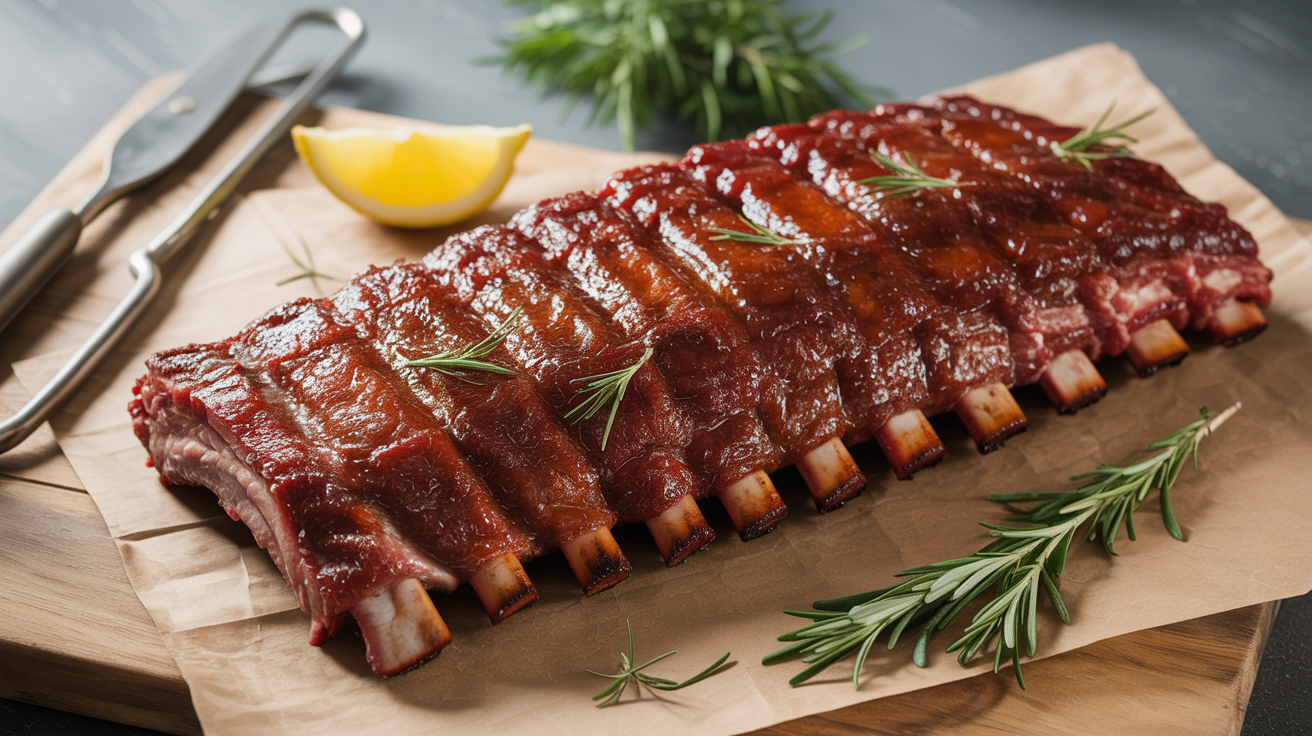
If you want to know how to smoke ribs that come out consistently tender with real smoke flavor, the 3-2-1 method is the most reliable framework in low-and-slow cooking. It breaks the cook into three distinct phases: smoke, steam, and set. Each phase does something specific, and understanding what that is makes you a better cook, not just someone following a timer.
What 3-2-1 actually means
The numbers refer to hours. Three hours on the smoker with the ribs unwrapped, two hours wrapped tightly in foil, and one final hour back on the grate unwrapped to firm up the bark and set the sauce.
Phase 1 (3 hours): The ribs sit directly in the smoker at 225°F, bark side up, absorbing smoke and beginning to cook through. The surface dries slightly, forming the beginning of a crust. This is where smoke penetration happens. Wrap too early and you stop this process cold.
Phase 2 (2 hours): The ribs go into a tight foil packet, often with a small amount of liquid (apple juice, butter, brown sugar, or some combination). The foil traps steam. Internal temperature climbs faster, connective tissue breaks down, and the meat softens considerably. This is the phase that drives tenderness.
Phase 3 (1 hour): The foil comes off, and the ribs go back on the smoker. Sauce goes on during this phase if you want it. The surface tightens back up. The bark re-forms. The ribs finish cooking to temperature while developing color and chew.
That's the whole method. Three numbers, three phases, one clean framework.
Spare ribs vs. baby backs: which rack should you use?
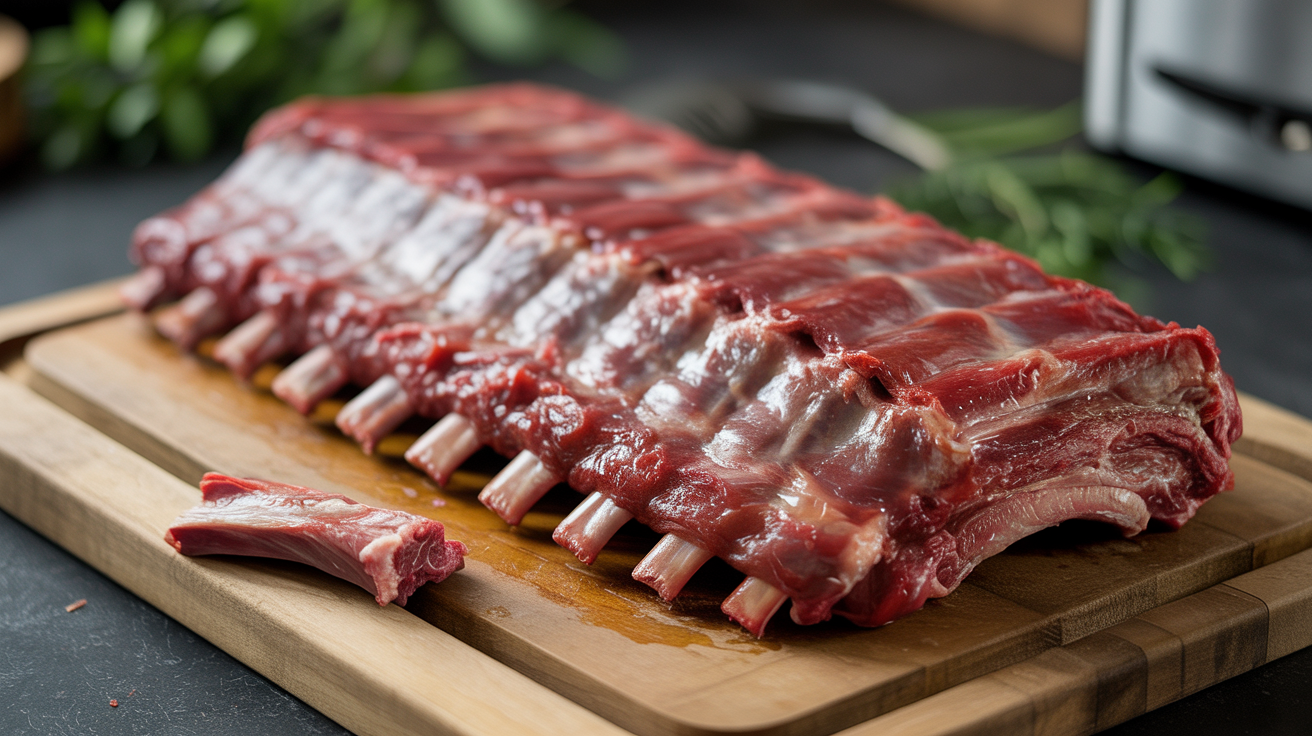
The 3-2-1 smoked ribs method was designed for spare ribs, specifically St. Louis-cut spares. Spare ribs are meatier, have more fat to render, and have more collagen to break down. They need the full time.
Baby back ribs are smaller, thinner, and leaner. Running them through the full 3-2-1 will overcook them. Use 2-2-1 for baby backs instead: two hours of smoke, two hours wrapped, one hour to finish. The cook time drops but the structure stays the same.
A few other things that vary by rack:
- Weight: A full slab of St. Louis spares typically runs 2.5 to 3.5 pounds trimmed. Baby backs are usually 1.5 to 2.5 pounds.
- Bone shape: Spare rib bones are flatter and longer. Baby back bones curve more, which means they can sit unevenly on the grate.
- Doneness cues: On both cuts, the meat between the bones should show about a quarter-inch of pullback from the bone tips. The bend test works well too: pick the rack up from one end and it should bend substantially but not snap or split.
Timing table
| Phase | Duration (spare ribs) | Duration (baby backs) | Temp | Notes |
|---|---|---|---|---|
| Smoke (unwrapped) | 3 hours | 2 hours | 225°F | Bone side down, smoke active |
| Steam (wrapped) | 2 hours | 2 hours | 225°F | Tight foil packet, add liquid |
| Set (unwrapped) | 1 hour | 1 hour | 225°F | Sauce in last 20-30 min |
| Total | 6 hours | 5 hours | Varies with rack size |
These are starting points, not guarantees. A thicker slab might need an extra 30 minutes in the foil phase. A thin rack might be probe-tender at 5.5 hours. Use the table to plan, but use your hands and eyes to finish.
Step-by-step: how to smoke ribs with the 3-2-1 method
1. Prep the ribs. Remove the membrane from the bone side. Slide a butter knife under it near a bone, grip it with a paper towel (it's slippery), and peel it off in one pull. Leaving it on blocks smoke and makes the ribs chew like plastic wrap.
2. Season generously. A simple dry rub works: equal parts kosher salt, black pepper, garlic powder, and paprika. Some cooks add brown sugar, cumin, or chili powder. Apply the rub at least 30 minutes before the rack hits the smoker, or the night before if you have time.
3. Get the smoker to 225°F. Let it stabilize before you load the ribs. Temperature swings at the start affect the first phase more than any other. For wood, fruit woods (apple, cherry) give a milder, slightly sweet smoke. Oak and hickory are more aggressive. Mesquite is polarizing on ribs; use it sparingly or not at all.
4. Load bone side down. The meat sits on top, away from the direct heat source. Place the rack diagonally if needed to fit. Let it cook undisturbed for the full three hours. Don't lift the lid to check. Every peek costs you temperature.
5. Wrap after three hours. Pull the rack, place it bone side down on a large sheet of heavy-duty foil. Add a small pour of liquid: two tablespoons of apple juice or cider vinegar works fine. Some people add a pat of butter and a sprinkle of brown sugar. Wrap tightly, crimping the edges so no steam escapes. Return to the smoker.
6. Unwrap and sauce after two hours. Carefully open the foil (steam escapes fast and burns). Check the bend: hold the rack with tongs in the center and lift. It should droop at both ends. If it barely bends, give it another 20-30 minutes wrapped. If it bends easily, it's ready for the final phase. Place it back on the grate, bone side down.
7. Sauce and finish. Apply barbecue sauce in the last 20-30 minutes if you want it. Earlier than that and the sugars burn. One coat, let it set for 10-15 minutes, apply a second thin coat, then let that ride until you pull the rack.
8. Rest before cutting. Five to ten minutes on a cutting board before slicing. The internal temperature will carry a few degrees, and the juices redistribute slightly. Cut between every bone, not every other.
A word on "fall off the bone"
"Fall off the bone ribs" is the phrase people use when they want very tender ribs, and it means different things to different people. Technically, if the meat falls off without any effort, the ribs are overcooked. Competition BBQ judges want a clean bite with a little resistance, meat pulling away from the bone with each bite but not collapsing.
For home cooking and backyard cookouts, that distinction matters less. If your family loves ribs that pull apart with fingers, run the wrapped phase closer to 2.5 hours. If you want a firmer bite, keep it at 2 hours exactly and don't rush the final phase.
Neither approach is wrong. Know what your crowd wants and adjust accordingly.
The 3-2-1 smoked ribs method produces fall-off-the-bone ribs reliably when you lean into the foil phase. It produces competition-style ribs when you tighten up the timing. That range of outcomes is part of what makes it worth learning.
What can go wrong
The bark doesn't form in phase one. Usually a moisture problem. Don't spritz during the first phase. Let the surface dry out and firm up on its own.
The meat sticks to the foil in phase two. Add a little more liquid next time. The packet should have some steam volume, not sit completely flat against the meat.
The sauce burns in phase three. Either the fire spiked or the sauce went on too early. Keep temps steady and hold sauce until the last 20-30 minutes.
The ribs still seem tough after six hours. Check your smoker temperature. A 50-degree error (running at 175°F instead of 225°F) explains hours of extra cook time. Probe thermometers in the grate, not just the dome gauge. Michigan State University Extension's guide to smoking as a cooking method recommends tracking both smoker air temperature and food temperature with separate thermometers for exactly this reason.
If you're new to low-and-slow cooking, ribs are a great starting point, but the same patience applies to everything in this style. The stall, and how to power through it shows up on briskets and pork shoulders the same way it can affect a long rib cook. And once you've got ribs dialed in, the same temperature discipline that makes ribs work carries directly into smoking a brisket or getting pulled pork right.
FAQ
Do I need a water pan in the smoker for ribs? It helps in dry smokers like offsets and kettles. A water pan adds humidity to the chamber, which can slow surface drying and give you a more even cook. Kamado-style cookers and pellet grills tend to retain moisture better on their own. Try it both ways and see which your equipment prefers.
Can I do the 3-2-1 method on a charcoal grill? Yes, with a two-zone setup. Coals on one side, ribs on the other. You'll need to manage temperature more actively than on a dedicated smoker, and you'll need to add charcoal roughly every hour. A chimney and a dedicated thermometer at grate level are essential. It's more work but the results are comparable.
What internal temperature should ribs reach? The target for pork ribs is typically 195-203°F for tender, shreddable meat, well above the USDA's 145°F minimum for pork because you're cooking for texture and collagen breakdown, not just safety. Unlike brisket, though, ribs are often judged more by feel than temperature because the bones make probe placement tricky. Use the bend test and the pullback test alongside your thermometer.
Should I remove the membrane from both sides? There's only one membrane, on the bone side (the concave side of the rack). Remove that one. The thin silverskin on the meat side doesn't affect the cook the same way and is usually fine to leave.
Can I prep the ribs the night before? Yes. Season the rack, wrap it in plastic wrap, and refrigerate overnight. The rub has more time to work into the surface, and the morning cook starts with less prep. Pull the rack out 30-45 minutes before it goes on the smoker so it isn't ice-cold going in.