Cuts & Recipes
Reverse-Seared Ribeye on the Grill
Master the reverse sear steak method on your grill: low indirect heat first, then a hard sear for edge-to-edge doneness and a serious crust.
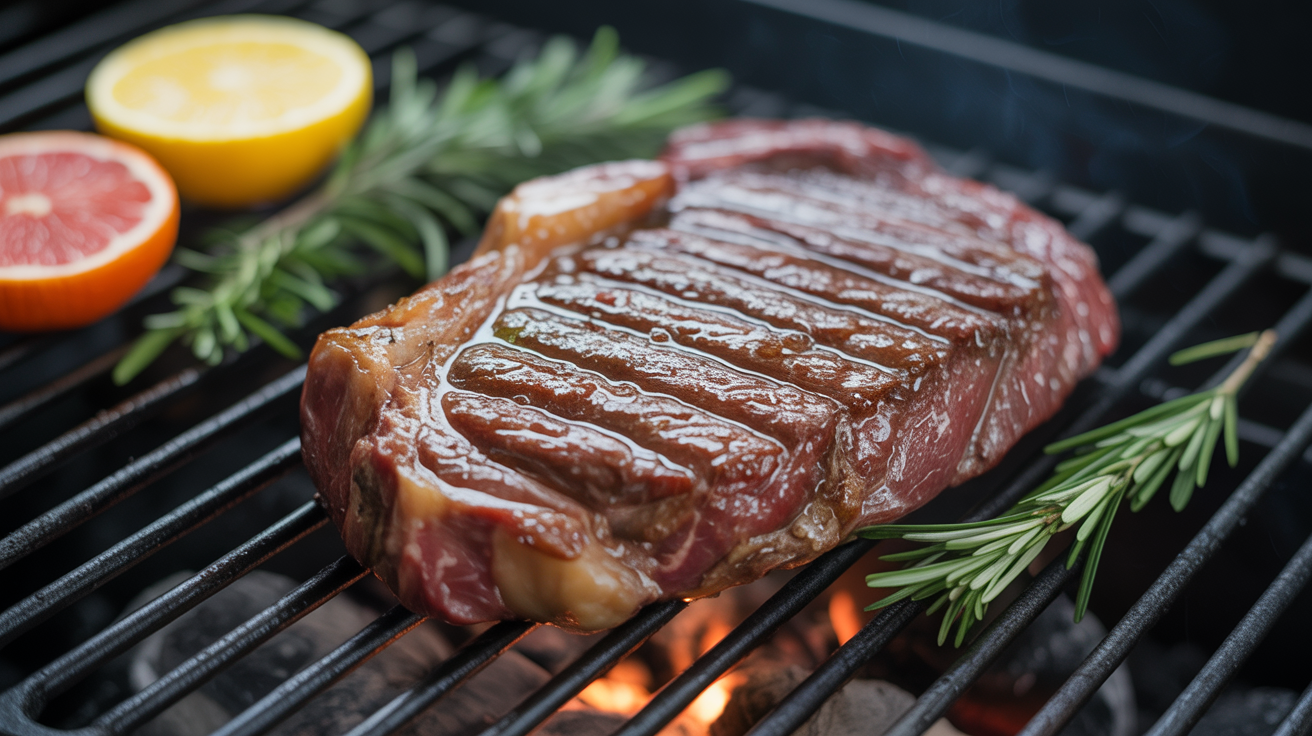
The reverse sear flips the traditional grilling sequence: you bring the steak up to temperature slowly over indirect heat, then finish it with a hard sear. The result is edge-to-edge even doneness with a deep, caramelized crust that a straight high-heat approach rarely delivers. For thick ribeyes, it is the most reliable method going.
Why the Reverse Sear Works Better Than Direct Heat
Traditional grilling starts with a hot sear, which sounds logical but creates a problem. By the time the outside of a thick steak is nicely charred, there is often a thick band of overcooked gray meat under the crust before you reach the pink center. The reverse sear eliminates that gradient. Going low first gives heat time to move evenly through the meat and lets the surface dry out slightly. When you move it to screaming-hot grates, the Maillard reaction kicks in fast without steaming.
There is also a practical advantage: the low-heat phase is forgiving. A steak sitting at 100°F (38°C) internal is far less sensitive to a few extra minutes than one that has been searing for three minutes and is already at 130°F (54°C). You have a real window to work with, and that patience is what produces a consistent result.
Choosing Your Ribeye
Thickness is the single biggest variable. Reverse searing is most useful on cuts 1.25 inches (about 3 cm) or thicker. Thinner steaks do not need the method, and the long low phase can actually dry them out. A bone-in ribeye, sometimes called a cowboy steak, in the 1.5 to 2-inch range is ideal. Boneless ribeyes work fine too.
What to look for:
- At least 1.25 inches thick, preferably closer to 1.5
- Good marbling throughout, not just around the outer edge
- Bright red color with firm white fat
See best cuts of beef for grilling if you are still deciding between ribeye, strip, or another cut for this cook.
Dry brine before you grill. Salt the steak generously on both sides at least 45 minutes before it goes on the grill, or up to 24 hours ahead uncovered in the fridge. The salt draws a little moisture to the surface, dissolves, then gets pulled back into the meat. The surface you put on the grill will be noticeably drier than a salted-and-immediately-cooked steak, which helps the crust form faster once you hit the sear.
Setting Up the Grill for Two-Zone Cooking
You need two zones: a cool indirect side and a hot direct side. The steak moves from cool to hot exactly once.
Charcoal Setup
Bank your lit coals to one side of the grill. You want the indirect side to read around 225 to 250°F (107 to 121°C) at grate level. This is cooler than the indirect zone most people run for two-zone grilling, but for a reverse sear it is the right range. A small amount of wood, one chunk of oak or cherry, adds a hint of smoke without overwhelming the beef. Leave the other side of the grill empty.
When you are ready to sear, you can shovel the coals to spread them under the direct side or add a small chimney of fresh coals to the hot zone to maximize heat.
Gas Setup
Turn one or two burners off and leave the others on low to medium. Check the temperature on the cool side with a grate-level thermometer and aim for that same 225 to 250°F (107 to 121°C). Preheat the hot side for at least 10 to 15 minutes before you need it. Gas grates need time to absorb and hold heat; a 30-second preheat will not give you the crust you are after.
How to Reverse Sear a Ribeye, Step by Step
Low-heat phase:
- Place the ribeye on the cool side of the grill, away from any direct flame. Close the lid.
- Cook until the internal temperature reaches 15 to 20°F below your target doneness. For medium-rare, pull it at 115 to 120°F (46 to 49°C).
- For a 1.5-inch ribeye at a 225°F (107°C) grate temp, this usually takes 25 to 40 minutes. Cook to temperature, not to time.
- Remove the steak and let it sit, loosely tented with foil, for 5 to 10 minutes while you get the hot side ready.
Sear phase:
- Pat the surface of the steak dry with a paper towel. Moisture on the surface delays the crust.
- Move the steak to the direct-heat side. Sear 1 to 2 minutes per side with the lid open. You want color, not more internal cooking. Sear the edges briefly if you have a thick fat cap.
- Monitor the internal temp. For medium-rare you are targeting 130 to 135°F (54 to 57°C) final. The steak rises a few degrees during the sear, so check as you go.
- Pull it off and rest for 5 minutes before slicing.
Doneness Temperatures for Reverse Sear
| Doneness | Pull from indirect heat | Final target after sear |
|---|---|---|
| Rare | 105 to 110°F (41 to 43°C) | 120 to 125°F (49 to 52°C) |
| Medium-rare | 115 to 120°F (46 to 49°C) | 130 to 135°F (54 to 57°C) |
| Medium | 125 to 130°F (52 to 54°C) | 140 to 145°F (60 to 63°C) |
| Medium-well | 135°F (57°C) | 150°F (66°C) |
A reliable instant-read thermometer is not optional here. You cannot gauge this by touch or color alone, especially across the full thickness of a two-inch ribeye.
Common Mistakes to Avoid
Skipping the dry brine. Salt applied right before grilling draws moisture to the surface but does not give it time to reabsorb. Either brine at least 45 minutes ahead or go overnight in the fridge.
Running the indirect zone too hot. If your cool side is at 325°F (163°C), you are essentially just cooking the steak over lower flame, not doing a true reverse sear. You lose the even-doneness benefit. The target is 225 to 250°F (107 to 121°C), which requires restraint on the fuel side.
Not getting the sear zone hot enough. A lukewarm hot zone gives you a gray, steamed band instead of a crust. On charcoal, let the coals ash over fully or pile on fresh ones. On gas, preheat that side for at least 10 to 15 minutes with the lid closed before the steak touches the grates.
Leaving moisture on the surface before the sear. The steak picks up condensation and fat while resting. A quick pat with a paper towel before it hits the grates makes a real difference.
Cutting too soon. Five minutes rest after the sear is enough for a steak this size, but do not skip it. The carry-over heat is still moving through the meat and the fibers need a moment before you slice.
Frequently Asked Questions
Can I reverse sear a ribeye on a gas grill?
Yes, and gas actually makes the two-zone setup easy to manage precisely. The main thing is getting the hot side genuinely hot before the sear. Turn the burners on the sear side to maximum and let it preheat for at least 10 to 15 minutes. Close the lid between flips to keep the heat concentrated on the grates.
What thickness works best for reverse searing?
The sweet spot is 1.25 to 2 inches (about 3 to 5 cm). Below 1 inch, the long indirect phase does not add much and can dry the steak out. Above 2 inches, the indirect phase stretches to 45 to 55 minutes, but the method still works well for thick tomahawks or cowboy cuts.
Do I need to add smoke during the reverse sear?
You do not have to, but one chunk of oak or cherry on the charcoal adds a light smoke note that complements ribeye well. On gas, a small foil packet of soaked wood chips set over a lit burner does the same job. Keep it subtle. Ribeye has enough flavor on its own and does not need the smoke load you would use on a brisket or pork shoulder.
Why does the reverse sear produce a better crust than a regular sear?
Two things. First, the surface of the steak dries out during the slow cook, which means no surface moisture to steam off when it hits the grates. Second, because the steak is already close to done internally, you only need 1 to 2 minutes per side. A shorter sear at higher heat builds a thinner, crunchier crust with more Maillard flavor than a longer sear at moderate heat.
Can I use this method on other cuts?
The reverse sear works on any thick steak with similar fat content: strip, T-bone, porterhouse, and tomahawk all respond well. Leaner cuts like tenderloin can work but dry out more easily during the low phase, so pull them at the lower end of the temperature window. The same logic applies to thick-cut pork chops, though you are targeting a different internal temperature (145°F / 63°C final).