Cuts & Recipes
Best Cuts of Beef for Grilling
A practical guide to the best cuts of beef for grilling: tenderness, heat method, and price tier for every cut from ribeye to flat iron.
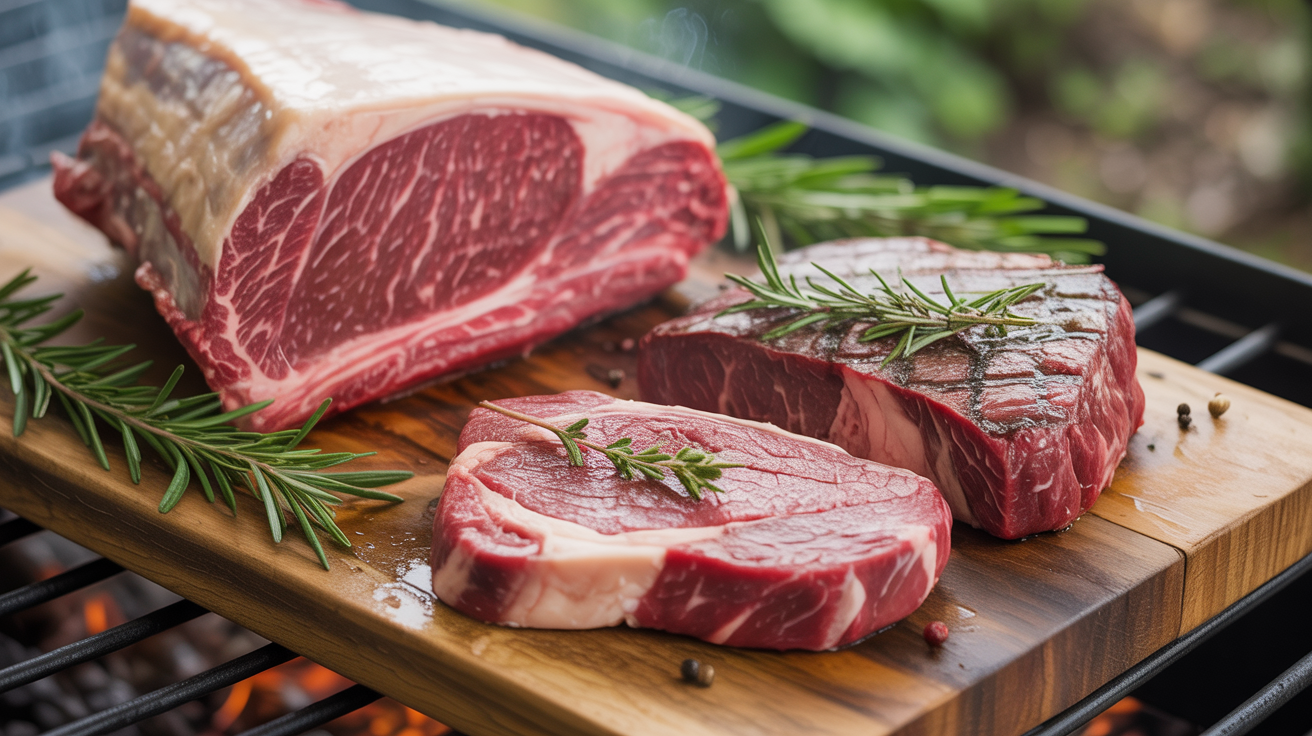
Walk into any butcher counter or grocery meat case and you'll face a wall of options with vague labels and wildly different price tags. Knowing which beef cuts for grilling actually reward the heat, and which ones punish you for it, is the skill that separates a good cookout from a great one.
This guide covers the cuts worth knowing, how they behave over live fire, and what to expect from your wallet.
At a Glance
- Ribeye and strip steaks reward high, hot, direct heat and forgive small timing mistakes because of their fat content.
- Flank, skirt, and hanger steaks need a marinade, very high heat, thin cooking, and slicing against the grain.
- Grade matters most for fatty cuts; Prime and Choice both outperform Select on ribeye, but the gap narrows on lean cuts like sirloin.
- Thickness beats weight as a buying signal: aim for at least 1 inch, ideally 1.25 inches or more, for direct-heat steaks.
- USDA lists 145°F with a 3-minute rest as the food-safety minimum for whole-muscle beef; the lower pull temps below are chosen for texture, within that same safe range.
- Carryover cooking adds 3-5°F during the rest, so pull earlier than you think.
The quick reference table
| Cut | Tenderness | Best heat | Price tier |
|---|---|---|---|
| Ribeye | Very high | High direct | $$$ |
| New York strip | High | High direct | $$$ |
| T-bone / Porterhouse | High | High direct + indirect | $$$ |
| Flat iron | Medium-high | High direct | $$ |
| Sirloin (top) | Medium | High direct | $$ |
| Flank steak | Medium-low | High direct, thin slice | $ |
| Skirt steak | Medium-low | Very high direct, thin slice | $ |
| Hanger steak | Medium | High direct | $–$$ |
Ribeye: the benchmark
If you're only ever grilling one cut, ribeye is the answer most grill cooks land on. The muscle it comes from (the longissimus dorsi, running along the rib section) does almost no real work, so it stays tender. More importantly, it carries more intramuscular fat than almost any other steak, and that fat bastes the meat from the inside as it cooks.
Bone-in ribeye (sometimes sold as "rib steak" or "cowboy steak") adds some aesthetic appeal and can slow cooking near the bone slightly, but it doesn't transform the flavor. The real variable is marbling grade. Choice ribeye is excellent. Prime ribeye is better. Wagyu or American Wagyu ribeye is a different experience entirely, though the price reflects that.
Grill ribeye over screaming-hot direct heat. Aim for a crust in the first 2-3 minutes per side, then pull it at 125-130°F internal for medium-rare. Let it rest at least 5 minutes. A 1.25-inch cut is more forgiving than a thin one; you get crust without overcooking the center.
New York strip: tight grain, clean bite
The NY strip comes from the short loin, the same primal as the tenderloin. It's leaner than ribeye, with fat concentrated along one edge rather than threaded throughout. That changes the eating experience: strip has more chew and a slightly more pronounced beef flavor.
Some people prefer this. A strip at medium-rare gives you a clean, distinct bite that ribeye's butteriness doesn't. If you're pairing with a bold red wine or a heavy sauce, strip handles it better.
Grill it identically to ribeye: high direct heat, crust it fast, target the same internal temps. The fat cap on the edge will render and drip, so watch for flare-ups. One reliable move is to hold the steak on its edge with tongs for 60 seconds to render that fat cap before laying it flat.
T-bone and porterhouse: two cuts in one
These are the same structural cut, just from different positions along the short loin. Both contain a NY strip on one side of the bone and a tenderloin medallion on the other. The difference: a porterhouse has a larger tenderloin section (USDA requires at least 1.25 inches measured at its widest point). A T-bone has a smaller one.
Grilling them takes more attention than a solo steak. The tenderloin side cooks faster because it's leaner and often thinner. The strip side is more forgiving. One approach is to start over direct heat, then shift the tenderloin side toward indirect heat while the strip side stays over the coals.
These are thick cuts, often 1.5 inches or more, which is part of why they work on the grill. Thinner T-bones can overcook before you develop any crust.
Flat iron: the underrated option
The flat iron was effectively invented by university researchers in the early 2000s searching for value in the chuck primal. It comes from the shoulder blade (infraspinatus muscle) and would be one of the most tender cuts on the animal if not for a connective tissue seam running through the middle. Butchers remove that seam and cut the two halves into flat iron steaks.
For the price, flat iron punches well above its category. It has decent marbling, takes a crust nicely, and responds well to simple seasoning. Grill it hot and fast, same as a strip or ribeye, and pull it between 125-135°F depending on your preference.
It's also consistent in size and shape, which makes it easier to cook in batches than an irregular flank or skirt. If you're feeding a group and don't want to spend ribeye money across the board, flat iron is a legitimate answer.
Sirloin: reliable, not remarkable
Top sirloin sits just behind the short loin. It's leaner than strip and ribeye, which puts it at a disadvantage in the flavor department when you're cooking over fire, since fat carries a lot of what makes grilled beef taste like grilled beef. Still, it's tender enough to grill directly and holds up to marinades without going mushy.
The practical case for sirloin is price. It's consistently cheaper than the premium cuts, widely available, and rarely disappoints if you don't overcook it. Keep it at medium-rare to medium (125-135°F) and let it rest. Beyond medium, the leanness becomes a liability.
Top sirloin and sirloin cap (picanha) are different cuts, though they come from the same primal. Picanha is popular in Brazilian churrasco and has a thick fat cap that makes it behave differently over fire. It deserves its own treatment.
Flank and skirt: the marinade cuts
Flank steak comes from the belly, skirt from the diaphragm. Both are long, flat, and composed of long muscle fibers running in a visible direction. That fiber structure means they can be tough if you cook them wrong, but they're not inherently tough cuts.
The rules: marinate for 2-8 hours (acid, oil, aromatics), grill over very high heat and cook them thin (don't go past medium), and slice against the grain. Cutting with the grain gives you long, chewy strands. Cutting against it gives you short, tender bites from the same steak.
Skirt steak is slightly thinner and cooks faster than flank. It also has more fat and a more intense beefy flavor, which is why it's the traditional choice for fajitas. Flank is a bit milder and works well in applications where you want the marinade or accompanying flavors to come through.
On price, both are good value. Skirt in particular used to be one of the cheapest cuts available before restaurants popularized it; prices have climbed, but it's still well below ribeye territory.
Hanger steak: butcher's cut
The hanger hangs between the rib and loin, near the diaphragm. There's only one per animal, which limits supply and keeps it from being everywhere. Butchers often kept it for themselves, which is where the nickname "butcher's steak" comes from.
Flavor-wise, hanger is intense, more mineral and gamey than strip or ribeye. It has a coarse grain similar to skirt, so the same slicing rule applies: always against the grain. It does well with a simple salt-and-pepper approach or with a quick marinade.
Grill it hot and fast, pull at 130°F or below, rest and slice thin. It's a genuinely excellent cut when you find it.
Understanding USDA grades before you buy
The price tags on beef cuts don't only reflect the cut; the USDA quality grade stamped on the box (or listed on the label at better grocery counters) moves the price too, sometimes more than the cut itself does. According to South Dakota State University Extension's breakdown of USDA beef grading, graders evaluate the amount of marbling in the ribeye muscle at the cut surface between the 12th and 13th ribs, and a greater amount of marbling correlates directly to a higher grade. Prime carries the most marbling, Choice a step below, and Select noticeably leaner still.
That grading system matters more for some cuts than others. On a ribeye or strip, jumping from Select to Choice is a real, tastable difference because so much of the eating experience comes from rendered fat. On a lean cut like sirloin or a marinated cut like flank, the grade gap narrows, because the marinade and the sear are doing more of the flavor work than the fat is.
Practical notes on choosing steak cuts at the store
A few things worth checking before you buy:
- Thickness matters more than weight. A thin steak at high heat will overshoot your target temp before you develop a real crust. For direct-heat grilling, look for cuts at least 1 inch thick, ideally 1.25 inches or more.
- Marbling is visible. Hold the package up to the light. White fat threads running through the muscle are intramuscular fat. More of it, distributed evenly, means more flavor and more moisture. A lean cut with surface fat only won't behave the same way.
- Color is a rough freshness signal. Bright red isn't always better than dark red; vacuum-sealed meat turns purple and brightens when exposed to air. Grayish-brown edges on an open-packaged steak are a different matter and worth avoiding.
- Check the sell-by date against your cook plan. A steak bought two days before a weekend cookout has more margin than one bought the morning of, especially if you're planning to marinate flank or skirt for several hours first.
If you're new to grilling beef and want a starting point, ribeye is the most forgiving because the fat compensates for small timing errors. As you get more comfortable reading temps and managing heat zones, leaner and more affordable cuts like flank and skirt become easier to hit consistently.
Pull temperatures at a glance
Carryover cooking, the temperature rise that continues after the steak leaves the heat, typically adds 3-5°F during a 5-minute rest. Pulling at the number in this table, not your final target, is what actually gets you the doneness you want.
| Doneness | Pull Temp | Final Temp After Rest | Best Suited To |
|---|---|---|---|
| Rare | 115-120°F | 120-125°F | Hanger, flank, skirt (thin, fast cooks) |
| Medium-rare | 125-130°F | 130-135°F | Ribeye, strip, flat iron, T-bone |
| Medium | 130-135°F | 135-140°F | Sirloin, thicker cuts you want more set |
| Well beyond medium | 145°F+ | 150°F+ | Not recommended for marbled cuts; fat has fully rendered off by this point |
USDA's food-safety minimum for whole-muscle beef, listed by University of Nebraska Extension's safe cooking temperature chart, is 145°F with a 3-minute rest. That number exists because bacteria on beef live on the surface, not the interior of an intact muscle, and a hot sear kills surface bacteria before the center is ever checked. That's the long-standing basis for cooking a whole steak to medium-rare safely; it's a different calculation from ground beef, where grinding mixes any surface bacteria through the whole patty and a higher internal temperature is the safe target.
For context on other proteins over fire, the same principles around heat management and resting apply. How to Grill Pork Chops walks through the equivalent decisions for pork, and Grilled Chicken Thighs, Step by Step covers the indirect-to-direct method that works for bone-in cuts across proteins. If ground beef is more your speed, How to Grill Burgers That Stay Juicy addresses the specific challenges of patties.
FAQ
What is the most tender cut of beef for grilling? Tenderloin (filet mignon) is technically the most tender muscle on the animal. In practice, most grill cooks prefer ribeye because the fat gives it more flavor. Tenderloin has almost no marbling and benefits from wrapping in bacon or serving with a sauce to compensate.
Can you grill cheaper cuts like flank and skirt at high heat? Yes, and high heat is actually the right call for both. The goal is a fast sear on the surface before the interior overcooks. The key variables are marinade time, pulling at or below 135°F, and slicing against the grain.
Is Choice or Prime beef worth the price difference for grilling? For cuts that rely on marbling, like ribeye, the jump from Select to Choice is noticeable. Prime adds more still, particularly in fat distribution. For leaner cuts like sirloin or flank, the grade difference matters less because the flavor comes more from the marinade and crust than from internal fat.
How thick should a steak be for grilling? 1 inch is a workable minimum for direct-heat grilling steaks. 1.25 to 1.5 inches gives you more control: you can build a crust without overshooting your target internal temperature. Anything under 3/4 inch is difficult to cook to medium-rare over a hot fire.
What internal temperature should I pull beef off the grill? Pull earlier than you think. Carryover cooking adds 3-5°F during the rest. For medium-rare, pull at 125-128°F and rest 5 minutes minimum. Medium is 130-135°F pull temp. Beyond 145°F (well done), leaner cuts become noticeably dry and most of the fat-carried flavor in marbled cuts has rendered off.
Why does the same cut taste different at two different stores? Grade is the biggest factor if the label lists one, but even within a grade, marbling varies animal to animal and the USDA grading process itself has some subjectivity built in, since a human grader is assessing marbling by eye against reference photos. Feed program and aging (wet-aged versus dry-aged) also change flavor meaningfully even at the same grade and cut.
Do I need to bring steak to room temperature before grilling? It helps but isn't essential. Thirty minutes out of the fridge lets a thick steak cook more evenly, since the center isn't starting from a colder point than the edges. It's a bigger factor on a 1.5-inch ribeye than on a thin flank steak that's going to cook in a few minutes regardless.