Cuts & Recipes
Grilled Chicken Thighs, Step by Step
Learn how to grill chicken thighs with crispy skin, juicy meat, and the right internal temp—using a simple two-zone fire.
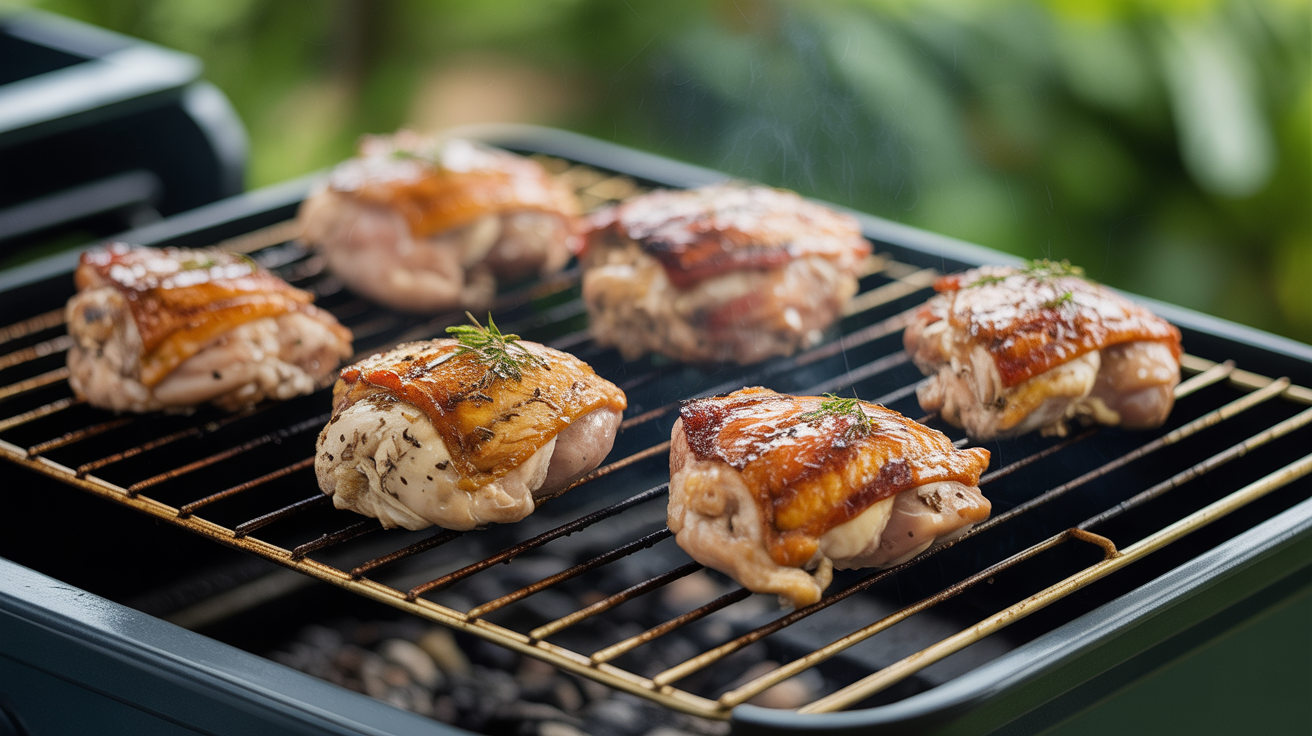
Chicken thighs are the honest workhorse of the grill. They stay moist when you overshoot the temp by ten degrees, they absorb smoke and char without drying out, and they cost a fraction of what a decent steak runs. If you've been defaulting to breasts because they seem "safer," this article is the push you need to switch sides.
What follows is a practical, step-by-step walkthrough for getting grilled chicken thighs right every time, whether you're going bone-in and skin-on or boneless and skinless. The fundamentals are the same. The timing and techniques differ.
Bone-in, skin-on vs. boneless, skinless
Before you buy anything, decide which cut you want. The answer shapes everything from fire setup to how you finish them.
Bone-in, skin-on thighs take longer (30 to 45 minutes total), but the payoff is real. The bone conducts heat slowly and evenly. The skin, when handled correctly, crisps into something that crackles when you bite it. These are the classic bbq chicken thighs you see at cookouts, and they're forgiving in ways boneless cuts simply aren't.
Boneless, skinless thighs are thinner, faster, and more versatile. They go from grill to plate in 12 to 16 minutes. No skin means no flare-up risk from dripping fat. These are better for weeknights, wraps, salads, or anywhere you want chicken flavor without the theatrics.
There's no wrong answer. But if you're trying to master grilled chicken thighs in the full sense of the phrase, start with bone-in, skin-on. Get those right, and the boneless version is easy.
| Type | Heat Setup | Approx. Time | Target Temp |
|---|---|---|---|
| Bone-in, skin-on | Two-zone (indirect start, sear finish) | 30–45 min | 175–185°F |
| Boneless, skinless | Direct medium heat | 12–16 min | 165–170°F |
| Bone-in, skinless | Two-zone (same as skin-on) | 28–40 min | 175–185°F |
| Boneless, skin-on | Direct medium, flip often | 15–20 min | 170–175°F |
A note on temperature: the USDA minimum for poultry is 165°F, and at that point the meat is safe. But chicken thighs eat better at 175 to 185°F. The connective tissue around the joint needs higher heat to break down into gelatin, which is what makes dark meat taste rich and pull cleanly from the bone. Don't be afraid to push past 165°F on thighs. They're built for it.
Seasoning: how far ahead matters
Dry rubs and salt work best when given time. If you can season your thighs 45 minutes to an hour before grilling, the salt draws moisture out, dissolves, and gets pulled back into the meat. The result is seasoning that goes deeper than the surface.
A basic rub for how to grill chicken thighs that most people will reach for again and again:
- 1 tsp kosher salt per pound of chicken
- 1/2 tsp black pepper
- 1 tsp garlic powder
- 1 tsp smoked paprika
- 1/2 tsp onion powder
- Optional: 1/4 tsp cayenne, 1/2 tsp brown sugar (adds color, slight sweetness)
Pat the thighs dry with paper towels before applying anything. Wet skin won't crisp. Moisture on the surface creates steam, which is the enemy of the Maillard reaction that gives you color and texture. Dry the skin thoroughly, rub lightly with oil, then season all over, including under the skin if you can loosen it with your fingers.
If you're working with a marinade instead of a dry rub, pull the thighs out of the liquid, pat them dry, and give them 20 minutes on a wire rack before they hit the grill. Same principle: drier surface, better browning.
Setting up a two-zone fire
This is the most important technique for crispy grilled thighs without charring the outside before the inside cooks through.
On a charcoal grill: pile your lit coals on one side of the kettle. You now have a hot direct zone and a cooler indirect zone. For bone-in thighs, you want the coals medium-hot, around 375 to 400°F over the direct side.
On a gas grill: light two or three burners on one side, leave the other side off. Same concept. The indirect zone is where most of the cooking happens.
Place bone-in, skin-on thighs skin-side up over the indirect zone first. This sounds counterintuitive if you want crispy skin, but it's correct. You're bringing the meat up to temperature slowly, which lets the fat under the skin render without scorching. Cook them over indirect heat for 20 to 25 minutes, until the internal temperature hits around 160°F.
Then move them to the direct heat zone, skin-side down. This is the crisping stage. Leave them alone for 3 to 5 minutes. Resist the urge to move them. You'll see the color deepen through the grates. When they lift cleanly and the skin is deep golden-brown, flip once and give the meat side 1 to 2 minutes more. Pull at 175 to 180°F.
Boneless thighs get direct heat the whole way, flipped once or twice. No drama required.
The skin problem, explained
Flare-ups are the main reason skin-on chicken thighs go wrong. Fat drips, flames shoot up, the skin burns black on the outside while the interior is still raw. Two things fix this.
First, trim any loose hanging skin before seasoning. That excess fat is what drips and catches. Tight skin that sits flat against the meat renders in place and crisps.
Second, use the two-zone method above. Direct heat from the start causes the outside of the skin to seize and lock in fat before it can render out. Starting over indirect heat lets the fat melt slowly and drip away before the skin ever sees a flame.
If you get a flare-up anyway, move the thigh to the indirect side. Don't spray water on a charcoal fire. Just remove the fuel source (the chicken) from the fire, and the flame will die.
Saucing: do it late
BBQ sauce on the grill is a timing question more than anything. Most sauces are loaded with sugar, and sugar burns fast over direct heat. If you sauce too early, you get blackened, bitter chicken that looks done but isn't.
Apply sauce in the last 5 to 8 minutes of cooking, over indirect or lower direct heat. Brush a layer on, let it set for 2 to 3 minutes, flip, and repeat. You get a sticky, lacquered finish without carbonized sugar.
If you want multiple layers of sauce with more depth, apply a light coat in the last 8 minutes, then add another right before pulling from the grill. Let it rest a few minutes and the sauce thickens against the meat.
Step-by-step: bone-in, skin-on grilled chicken thighs
- Pat thighs dry with paper towels. Trim excess hanging skin.
- Loosen skin with your fingers. Rub seasoning directly onto the meat under the skin, then over the outside.
- Rest at room temperature for 30 to 60 minutes while you prep the grill.
- Set up a two-zone fire. Target 375 to 400°F on the hot side.
- Place thighs skin-side up on the indirect zone. Close the lid.
- Cook 20 to 25 minutes until the internal temp reads 155 to 160°F.
- Move thighs skin-side down to the direct heat zone.
- Grill 3 to 5 minutes until the skin is deep golden and releases cleanly from the grates.
- Flip once. Cook 1 to 2 more minutes on the meat side.
- Pull at 175 to 180°F. Rest on a wire rack for 5 minutes before serving.
The resting step matters. Juices redistribute. The carryover heat brings the center up another 3 to 5 degrees. You lose less when you cut into it.
What to serve and how to build on it
Grilled chicken thighs are flexible. They work sliced over grain bowls, plated alongside grilled corn, or eaten straight off the bone with a paper towel. The rub in this recipe skews smoky-savory, which pairs well with acidic sides like vinegar slaw or pickled peppers.
If you're building out your grilling repertoire, the same two-zone setup used here applies across proteins. The logic behind how to grill pork chops is nearly identical: indirect first, sear to finish, rest before cutting. And if you want to know which best cuts of beef for grilling benefit from the same patient approach, that guide breaks down fat content, thickness, and heat by cut. For something completely different in structure but requiring the same fire management, how to grill burgers that stay juicy covers the patty work that trips up most home cooks.
FAQ
What temperature should grilled chicken thighs reach? The USDA minimum is 165°F, and at that point the meat is safe to eat. For bone-in thighs, 175 to 185°F gives better texture because the connective tissue breaks down at higher temps, making the meat pull cleanly from the bone and taste more tender. Boneless thighs are fine at 165 to 170°F.
How long does it take to grill chicken thighs? Bone-in, skin-on thighs take 30 to 45 minutes using the two-zone method. Boneless, skinless thighs cook faster, usually 12 to 16 minutes over direct medium heat. Thickness varies by package, so use a thermometer rather than treating time as the final word.
Should I grill chicken thighs with the lid open or closed? Closed, almost always. A closed lid traps heat and creates a convection environment that cooks the meat more evenly. Opening the lid lets heat escape and extends your cook time. Only open it to flip, sauce, or check the temp.
Why does my chicken skin come out rubbery instead of crispy? Two likely causes: the skin was wet when it hit the grill, or it never got direct heat long enough. Pat the skin dry before seasoning, and always finish skin-side down over direct heat for at least 3 to 5 minutes. If it still comes out soft, your fire may be too low.
Can I grill chicken thighs from frozen? Technically yes, but it takes twice as long and the skin won't render or crisp properly. Thaw completely in the refrigerator (overnight is ideal), then grill. The result is worth the planning.