Cuts & Recipes
How to Grill Burgers That Stay Juicy
Learn how to grill burgers that stay juicy every time — fat ratios, patty shaping, two-zone fire, and exact temps explained.
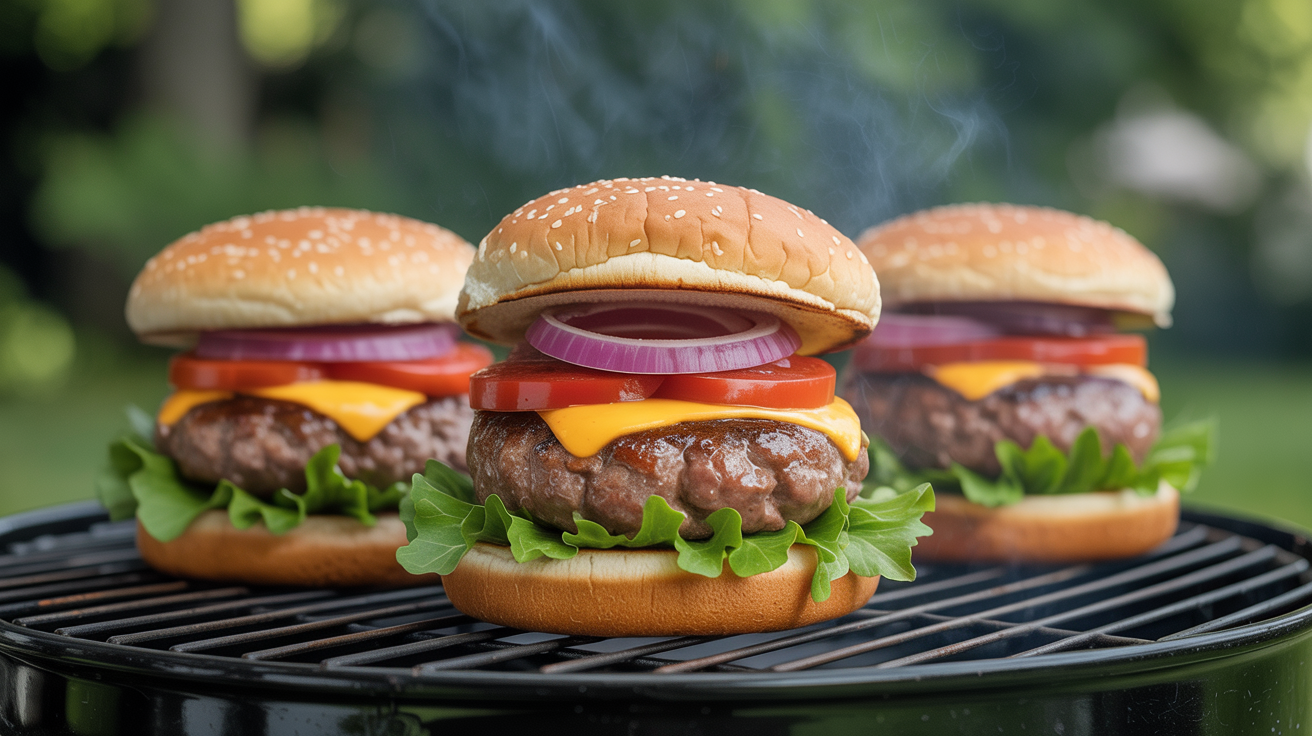
Most people have eaten a dry, gray hamburger at a backyard cookout. Overcooked, pressed flat with a spatula, finished on a grill that was either too hot or not hot enough. Learning how to grill burgers well is not complicated, but there are a handful of decisions that matter a lot more than most people realize, and getting them wrong compounds quickly.
This is the full breakdown: fat percentage, how to form patties, seasoning, fire setup, flipping, cheese timing, and doneness. Work through it once and grilled burgers become one of the most reliable things you cook.
Start with the right fat ratio
The single biggest factor in a juicy grilled burger is not technique, it's the ground beef you buy. Fat renders as the burger cooks, which keeps the interior moist and carries flavor. Lean beef (90/10 or leaner) loses too much moisture to the fire and turns dry before it's safe to eat.
80/20 ground chuck is the standard, and for good reason. Twenty percent fat gives you plenty of flavor and enough moisture to survive high heat. Some grillmasters prefer 75/25 for a richer bite, though that extra fat causes more flare-ups and requires closer attention. Anything leaner than 85/15 and you're fighting the physics the whole time.
If you're grinding your own, chuck is the default choice. For a premium blend, a mix of chuck and short rib works well, the short rib adds fat and a deeper beefy flavor. For more background on how different cuts behave over fire, see Best Cuts of Beef for Grilling.
Pre-made patties from the store are usually packed too tight and have inconsistent fat content. Grinding your own or buying fresh-ground from a butcher makes a noticeable difference.
How to form the patty (and why the dimple matters)
Keep the beef cold until you're ready to form patties. Warm fat smears and the patty loses its texture. Work quickly with cold hands, or chill the formed patties for 20 minutes before they go on the grill.
For a standard backyard burger, aim for 6 oz (about 170g) per patty, roughly 3/4 inch thick. Make them slightly wider than your bun, they'll shrink as they cook.
Don't overwork the meat. Press gently until the patty holds together. Compacting it too much makes the texture dense rather than tender.
Once the patty is formed, press a shallow dimple into the center with your thumb, about 1/4 inch deep. This is not a trick. As ground beef heats, the proteins contract and the center rises. Without a dimple, the patty domes up, which means the center stays raw longer and the outside overcooks trying to compensate. The dimple fills in as the burger cooks, and you end up with a flat, even patty instead of a meatball shape.
Seasoning: simple and direct
Ground beef has plenty of flavor on its own. Season only the outside, right before the patties go on the grill, not mixed into the meat, which changes the texture.
Kosher salt and black pepper is a complete seasoning. A generous pinch of salt per patty, applied to both sides. That's it. Salt draws out a small amount of surface moisture, which helps with browning.
If you want to add garlic powder or smoked paprika, keep it light. The grill will add char and smoke, you don't need to overload the seasoning to make the burger interesting.
Set up a two-zone fire
A single-zone screaming-hot grill is the most common reason burgers end up burned outside and raw inside. Two-zone setup gives you control.
For charcoal: bank the coals to one side. High heat on the coal side, no-heat zone on the other.
For gas: turn two or three burners to high and leave one burner off. The off burner is your indirect zone.
The process:
- Preheat the grill with the lid closed for 10-15 minutes.
- Clean the grates with a brush.
- Oil the grates lightly, fold a paper towel, dip in vegetable oil, and wipe with tongs.
- Place patties over direct heat.
- Grill 3-4 minutes per side for medium (do not press down).
- If flare-ups occur, move patties to the indirect zone temporarily.
- Add cheese in the last 60 seconds over direct heat, lid closed.
The indirect zone is also where you can park burgers if you need to hold them while the rest of the food catches up.
The no-press rule
Pressing burgers with a spatula is one of those habits that looks active and engaged but actively ruins the result. Every press pushes fat and moisture out of the patty and onto the grill grates, where it either burns or disappears. You lose flavor and you lose juiciness in one motion.
The only exception is a smash burger, where a thin patty (2-3 oz) is pressed hard against a screaming-hot flat surface in the first 10 seconds of cooking, before a crust forms, to maximize browning. That's a different cooking method entirely, and it's done on a flat griddle or cast iron, not open grates.
For a traditional grilled burger, put it down, leave it alone, flip it once.
When to add cheese
Timing the cheese is simple: add it in the last 60 seconds of cooking, with the lid closed. The trapped heat melts the cheese without overcooking the patty.
American cheese melts the fastest and most evenly, if you want a clean, glossy melt, it's hard to beat. Cheddar takes a bit longer and can get oily. Gruyere and Swiss melt smoothly but need a full minute. Provolone is a reliable middle ground.
If the cheese isn't melting fast enough, you can add a small splash of water to the grates away from the patty and close the lid. The steam speeds up the melt.
Doneness and internal temperature
Ground beef is not the same as a steak. The grinding process distributes any surface bacteria throughout the meat, so the USDA minimum safe internal temperature for ground beef is 160°F. At 160°F the burger is fully cooked with no pink remaining.
That said, most of the flavor differences happen in the 150-160°F range. Here's what to expect:
| Doneness | Internal Temp | Appearance |
|---|---|---|
| Medium (not recommended for ground beef) | 145-150°F | Pink center, some red |
| Medium-well | 155-160°F | Slight pink in center |
| Well done (USDA safe) | 160°F+ | No pink, juices run clear |
Use an instant-read thermometer. Guessing by feel or color is unreliable with burgers, color is affected by myoglobin, not just temperature, and a burger can look done before it's safe.
Pull the patty at 155-158°F and rest it for 2-3 minutes (tented loosely with foil). Carryover heat will bring it to 160°F, and the brief rest lets the juices redistribute rather than pour out when you bite.
Buns, toppings, and assembly
Toast the buns cut-side down on the grill over indirect heat for 60-90 seconds. They go stale-textured fast if they sit too long, so time this to coincide with the burger's rest.
A smear of mayo or butter on the bun before toasting helps with browning and flavor. Mustard and ketchup on the bottom bun, then the burger, then anything structural (onions, pickles) before the top bun. Wet toppings go closest to the meat so they don't make the bun soggy.
If you're cooking for a crowd and need to manage multiple proteins, the same two-zone setup works for How to Grill Pork Chops and Grilled Chicken Thighs, Step by Step, chicken and pork just need different target temperatures and timing adjustments.
FAQ
What's the best ground beef for juicy grilled burgers? 80/20 ground chuck. The fat percentage is the most important variable, leaner beef dries out over high heat before it reaches a safe internal temperature. If you can get fresh-ground from a butcher, it's worth it.
How do I keep burgers from sticking to the grill? Preheat the grill fully, clean the grates, and oil them right before adding the patties. Cold or dirty grates are the main reason burgers stick. Don't try to flip a burger that hasn't released naturally, if it's sticking, give it another 30-60 seconds.
Should I flip burgers more than once? One flip is conventional, but multiple flips aren't harmful and can actually produce a slightly more even cook. The key is not pressing the patty, how many times you flip matters less than what you do with the spatula.
How do I prevent flare-ups? Have a cooler zone ready. Flare-ups come from fat hitting the flames, moving the patty to indirect heat for 30 seconds usually stops them. Don't close the lid during a flare-up over gas, as it can cause a larger flare when you reopen it.
Can I make the patties ahead of time? Yes. Form the patties and stack them separated by parchment paper. Refrigerate for up to 24 hours, or freeze for up to 3 months. Cold patties go straight from the fridge to the grill, no need to bring them to room temperature. Cold beef holds its shape better during cooking.