Cuts & Recipes
How to Grill Pork Chops
Learn how to grill pork chops that are juicy, not dry. Covers cut selection, brining, seasoning, two-zone heat, and the right pull temp.
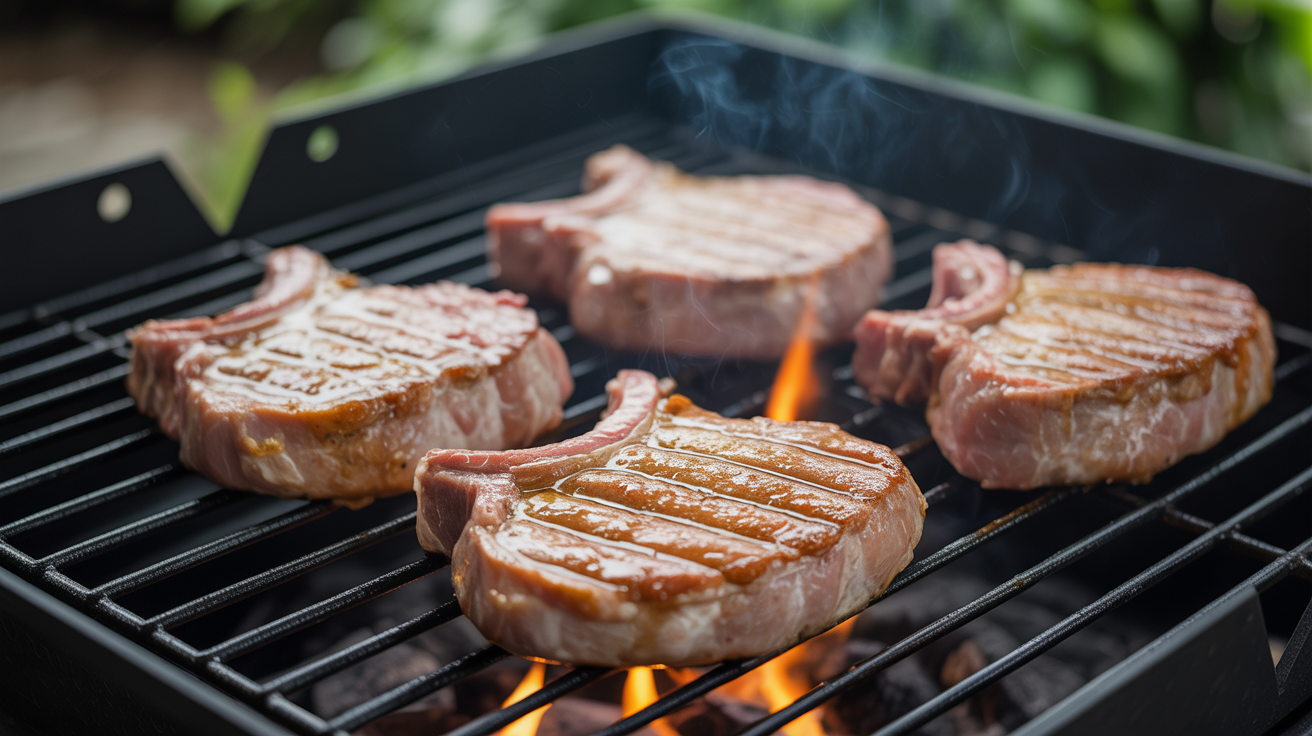
Pork chops have a reputation for drying out, and it's not entirely undeserved. The cure for dry pork isn't a secret technique or a specialty rub, it's understanding two things: what cut you're working with and how heat moves through it. Get those right, and juicy pork chops on the grill follow naturally.
Choosing your chop
Not all pork chops behave the same over fire. The cut matters, and so does thickness.
Bone-in rib chops are the best starting point for grilling. The bone slows heat transfer at the edges, which gives you a slightly wider window before the meat overcooks. The fat cap on the edge also renders down and bastes the meat as it cooks. If you've had a grilled pork chop that actually stayed juicy, there's a good chance it was a bone-in rib chop.
Boneless loin chops are leaner and more uniform, which makes them cook faster and dry out faster. They're not a bad choice, they just require more attention and benefit even more from brining.
Thickness is the variable that matters most. Thin chops (under 3/4 inch) cook through before you get any browning, which forces you to choose between a crust and a dry interior. Go thicker. An inch to an inch and a quarter gives the outside time to develop color while the center comes up to temperature gradually.
If your butcher stocks double-cut chops (around 1.5 inches), those work well with a reverse sear. More on that below.
To brine or not to brine
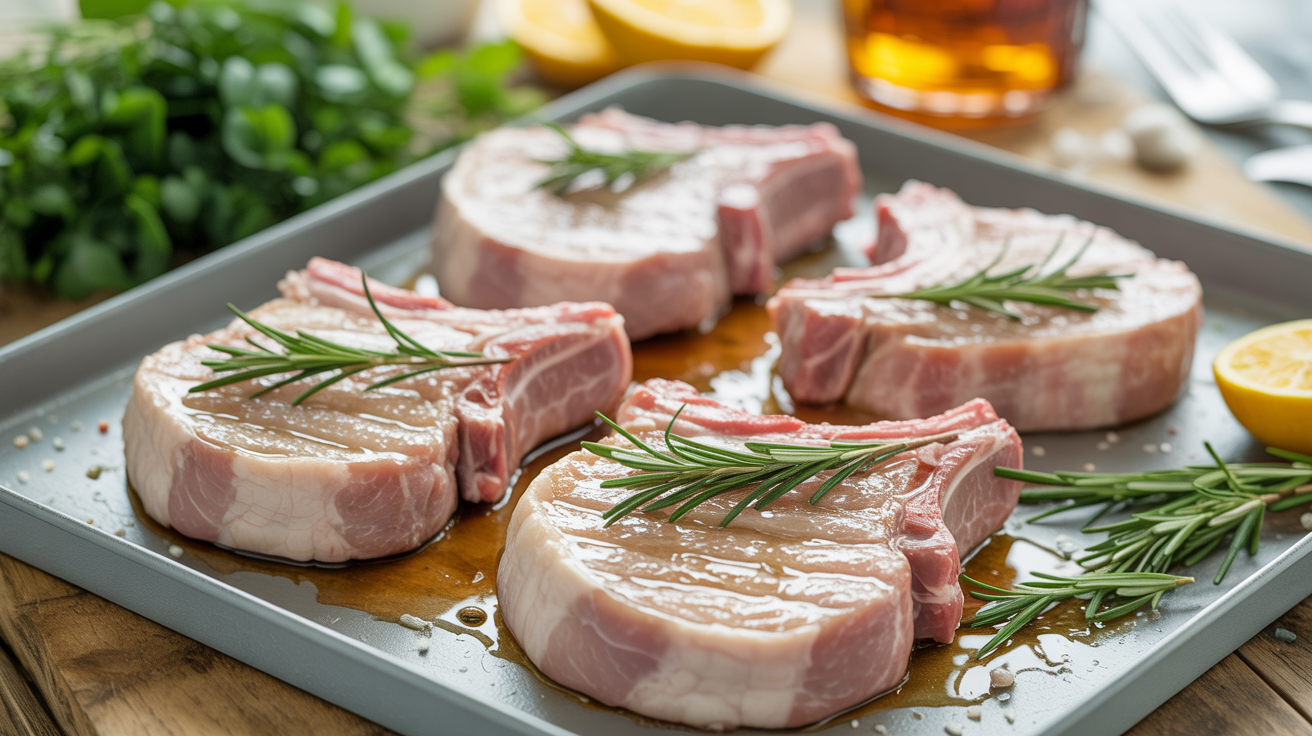
A simple brine does real work here. Modern pork is bred lean, which means it has less intramuscular fat to protect it during cooking. Brining pulls moisture into the muscle fibers and seasons the meat throughout, not just on the surface.
Basic brine ratio: 1 tablespoon kosher salt per cup of cold water. Submerge chops for 30 to 60 minutes. Don't go longer than 2 hours, the texture starts to soften in a way that most people don't enjoy.
If you're short on time, skip the brine and season aggressively with salt at least 30 minutes before grilling so it can penetrate. Dry brining (salting and letting the chops rest uncovered in the fridge overnight) is a solid middle ground that also dries the surface for better browning.
After brining, pat the chops completely dry before seasoning. Wet surfaces steam instead of sear.
Seasoning
Simple works. Salt, black pepper, garlic powder, and smoked paprika is a combination that complements pork without crowding it. If you want more complexity, dried thyme or a small amount of cumin fits naturally.
Apply seasoning 15 to 20 minutes before grilling, or right before if you're using a sugar-heavy rub (sugar burns fast over direct heat).
Brush the chops lightly with a neutral oil before they go on the grate. It helps browning and prevents sticking.
Setting up a two-zone fire
The biggest mistake people make with pork chops on the grill is putting them directly over high heat and walking away. That works for thin cuts, but for chops an inch or thicker, direct heat alone gives you a burned exterior and a raw center.
A two-zone setup solves this. On a charcoal grill, bank all the coals to one side. On a gas grill, turn one or two burners to high and leave the others off. You now have a hot side for searing and a cooler side for finishing.
This setup is the same approach used for Best Cuts of Beef for Grilling, the logic applies across proteins.
Grilling the chops: direct, two-zone, or reverse sear
Standard two-zone method (recommended for 1 to 1.25-inch chops):
- Get the grill hot. You want the direct zone at around 450-500°F at grate level.
- Sear the chops over direct heat for 2 to 3 minutes per side, lid open, until you have clear grill marks and some browning.
- Move them to the indirect side, close the lid, and let them finish with indirect heat until the center hits 140°F.
- Pull at 140-145°F. Carry-over heat will bring the center up another 3 to 5 degrees during the rest.
- Rest 3 minutes before cutting.
Reverse sear (best for thick chops, 1.5 inches or more):
With a reverse sear, you start on the cool side and finish over the flame. It sounds counterintuitive, but it gives you far more control and a more evenly cooked chop from edge to edge.
- Place chops on the indirect zone, lid closed, at around 250-275°F.
- Cook until the internal temp reaches 120-125°F. This takes 20 to 30 minutes depending on thickness.
- Move directly over the coals or high burner. Sear hard for 60 to 90 seconds per side. The surface is already dry from the slow cook, so it browns fast.
- Pull at 140-145°F and rest 3 minutes.
The sear at the end is aggressive but brief. Keep your eyes on it.
Time and temperature reference
| Chop thickness | Heat method | Approx. total time | Pull temp |
|---|---|---|---|
| 3/4 inch | Direct high heat | 6-8 min | 140-145°F |
| 1 inch | Two-zone (sear, then indirect) | 12-16 min | 140-145°F |
| 1.25 inch | Two-zone (sear, then indirect) | 16-20 min | 140-145°F |
| 1.5 inch | Reverse sear | 30-40 min | 140-145°F |
These are starting points. Actual time depends on grill temperature, chop temperature going in, and how close the grate is to the coals. A reliable instant-read thermometer matters more than the clock.
The pull temperature and why it matters
The USDA sets 145°F as the safe minimum internal temperature for pork, with a 3-minute rest. That's a significant change from the old 160°F guideline, which produced gray, dry chops; AmazingRibs' rundown of the 2011 revision covers why the number moved and where it still differs from what restaurant kitchens actually pull at. Pull at 145°F and your pork will be slightly pink at the center, that's correct, not undercooked.
For the juiciest result, pull at 140°F. The residual heat during the 3-minute rest carries the center to 143-146°F, landing right in the safe zone while keeping the texture moist.
Invest in a good thermometer. The guessing games aren't worth it, and this is the same advice that applies whether you're cooking grilled chicken thighs or a thick pork rib chop.
Resting
Three minutes, minimum. Cut too soon and the juices run out of the meat rather than redistributing. Tent loosely with foil if you want to hold heat a bit longer, but don't seal it tightly, you'll steam the crust you just worked to build.
What to serve alongside
Grilled pork chops are direct enough in flavor to work with most sides. Grilled corn, a sharp slaw, roasted sweet potatoes, or a simple green salad all make sense. An apple-based sauce (not sweet apple sauce, something with cider vinegar and a little heat) cuts through the richness of a bone-in chop well.
If you're cooking for a crowd and want a lower-stress protein to run alongside, the two-zone technique for juicy burgers on the grill follows the same logic and frees up your attention.
FAQ
Can I grill frozen pork chops? Technically yes, but it's not ideal. Frozen chops take much longer to cook through, and you risk the outside burning before the center thaws and heats. Thaw in the refrigerator overnight and pat dry before grilling.
Why do my grilled pork chops always come out tough? Usually overcooking. If you've been pulling at 160°F or higher, drop that target to 145°F and rest the chops for 3 minutes. The difference is real. Thin boneless chops are also more prone to toughness, switching to a bone-in cut at least an inch thick helps.
Do I need to marinate pork chops before grilling? No. A marinade adds flavor but doesn't do what a brine does in terms of moisture retention. If you want to marinate, keep the acid (citrus, vinegar) low in the ratio and limit soaking time to 2 to 4 hours. Too much acid for too long breaks down the surface texture.
How do I keep pork chops from sticking to the grill? Make sure the grates are clean and hot before the chops go on. Oil the chops directly rather than the grates. And don't try to flip too early, a properly seared chop releases cleanly on its own. If it's sticking, give it another 30 seconds.
Can I use a gas grill for this method? Yes. Gas grills work well for two-zone cooking. Set one side to high and leave the other burners off. The indirect side on a gas grill won't get as smoky as charcoal, but you get the same temperature control. Add a small packet of wood chips over the lit burner if you want some smoke character.