Cuts & Recipes
Smoked Pork Shoulder for Pulled Pork
Learn how to smoke a pork shoulder low and slow for pulled pork. Covers the right cut, rub, temps, the stall, and when to pull and rest.
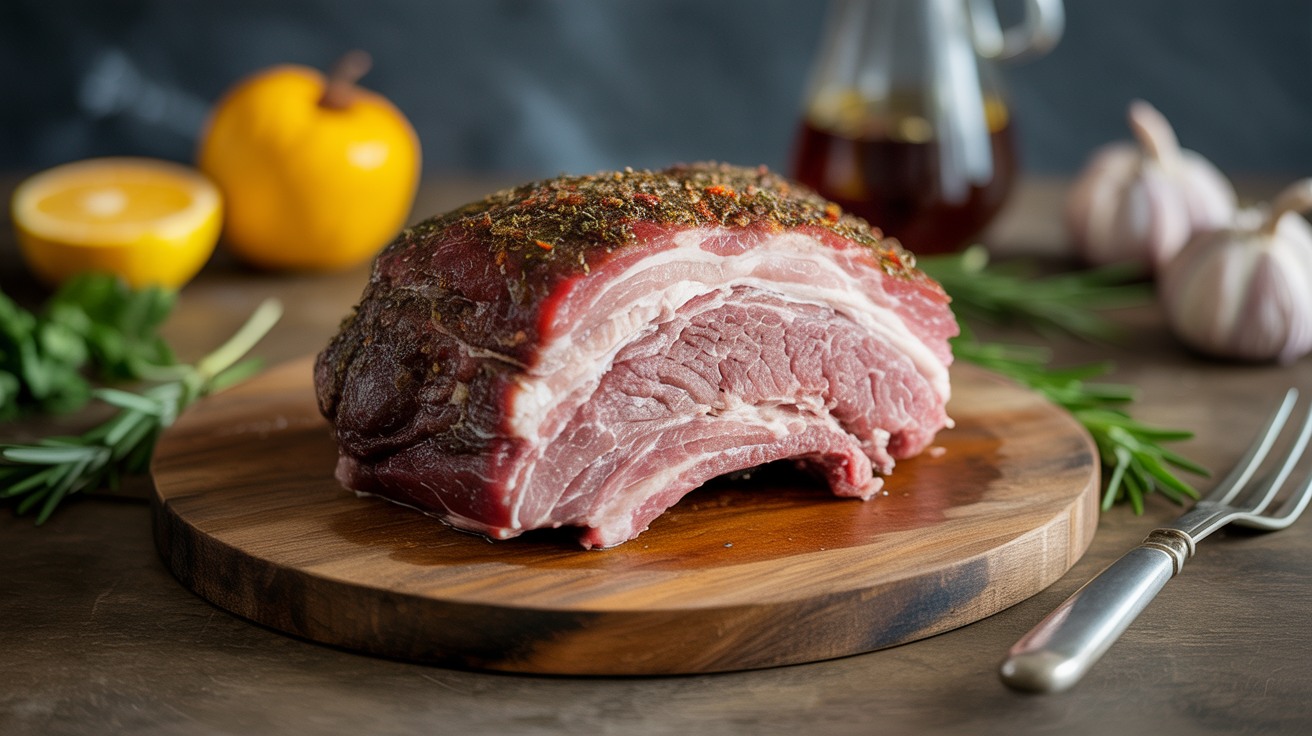
A smoked pork shoulder is one of the most forgiving things you can put on a smoker, and the payoff is enormous: tender, juicy pulled pork with a dark bark and real smoke flavor. Smoke it at 225 to 250°F (107 to 121°C), expect somewhere between 10 and 14 hours depending on the size, and pull it when the internal temperature hits around 200 to 205°F (93 to 96°C). That's the short version. Here's everything else you need.
The Cut: Boston Butt vs. Picnic Shoulder
Both cuts come from the front leg of the pig. The names are a little confusing, and most people use "pork shoulder" to mean either one.
Boston butt (also called pork butt or bone-in pork shoulder) is the upper portion. It has a thick fat cap, a good fat-to-muscle ratio, and a blade bone running through it. This is the cut most pitmasters reach for. It holds its shape on the smoker, cooks evenly, and pulls apart beautifully. Typical weights run from 6 to 10 pounds (2.7 to 4.5 kg) for a bone-in butt.
Picnic shoulder is the lower portion, closer to the front shin. It has more connective tissue and is a bit more irregular in shape. It absolutely works for pulled pork, but it takes longer to break down and can dry out in spots if you're not careful. Start with a Boston butt while you're learning the cook.
For a crowd, plan on about 1/3 to 1/2 pound (150 to 225 g) of finished pulled pork per person. Bone-in butts lose roughly 30 to 35 percent of their raw weight during the cook, so an 8-pound (3.6 kg) butt will yield around 5 to 5.5 pounds (2.3 to 2.5 kg) of meat.
Bone-In or Boneless?
Bone-in is the better choice for smoking. The bone conducts heat toward the center of the meat and gives you a built-in doneness indicator: when the bone pulls out cleanly with little resistance, the pork is ready. Boneless butts cook a bit faster but can fall apart on the smoker before you're ready to handle them.
The Rub
For smoked pork shoulder, a simple dry rub is all you need. Fat and connective tissue do most of the flavor work during a long smoke; you don't need a complicated marinade.
A basic starting point:
- 2 tablespoons kosher salt
- 2 tablespoons coarse black pepper
- 1 tablespoon smoked paprika
- 1 tablespoon brown sugar
- 1 teaspoon garlic powder
- 1 teaspoon onion powder
- 1/2 teaspoon cayenne (optional)
Mix the rub and coat the pork shoulder on all sides, pressing it into any folds or crevices. For best results, apply the rub the night before and refrigerate the pork uncovered. The salt pulls moisture to the surface, which then absorbs back into the meat, seasoning deeper layers. If you're short on time, even 30 minutes of rub time helps.
Trim the fat cap to about 1/4 inch (6 mm) thick before rubbing. Leave some fat: it bastes the meat as it renders and protects the surface from drying out during a 12-hour smoke. Just don't leave an inch-thick slab that won't render through.
Setting Up the Smoker and Wood Choice
Get your smoker settled at 225 to 250°F (107 to 121°C) before the pork goes on. The extra 25 degrees doesn't sound like much, but it can shorten your cook by two hours or more on a big butt.
Wood choice matters here. Pork takes smoke well and pairs nicely with fruit woods and mid-strength hardwoods. Apple and cherry are mild, slightly sweet, and build a mahogany-colored bark. Hickory is the classic Southern choice and adds a stronger, more assertive smoke flavor. Oak is somewhere in between and works well if you're doing a long cook and want to avoid over-smoking.
Avoid mesquite for the whole cook. It burns hot and its smoke turns bitter over a 10-plus-hour session. If you want it, use it for just the first hour, then switch to something milder.
Place the pork fat side up if your heat source is below, fat side down if it's above. Fat side up lets the rendering fat drip through the meat; fat side down shields the bottom from direct heat. Try both and see which gives you the bark you prefer.
The Cook: Temperature, the Stall, and Wrapping
Temperature and Time
A common rule of thumb is 1.5 to 2 hours per pound at 225°F (107°C). That math holds reasonably well, though an 8-pound butt might take anywhere from 12 to 16 hours. Bone shape, fat content, and how consistent your smoker runs all affect timing.
Use a leave-in probe thermometer and track the internal temperature throughout the cook. Don't pull the pork based on time; pull it based on temperature and feel.
The pork is done when it reads 200 to 205°F (93 to 96°C) in the thickest part of the meat, away from the bone. At that temperature, the collagen has converted to gelatin, the muscle fibers have relaxed, and the whole thing pulls apart with almost no effort.
The Stall
Somewhere between 155 and 170°F (68 and 77°C), the internal temperature of the pork will stop rising, sometimes for hours. This is called the stall, and it happens because moisture evaporating off the surface of the meat cools it at about the same rate the smoker is heating it.
New cooks panic and crank up the heat. Don't. The stall is normal. You can either wait it out, which develops better bark, or push through it faster by wrapping the pork. Both work.
Wrapping (the Texas Crutch)
Wrapping the pork shoulder in butcher paper or foil at the stall speeds up the cook by trapping moisture and heat. The trade-off is bark: foil softens it considerably, while pink butcher paper lets some steam escape and holds more of the crust.
If you wrap, do it when the pork hits 160 to 165°F (71 to 74°C). Add a small splash of apple juice or cider vinegar inside the wrap if you like, then seal it tight and return it to the smoker. The temperature will climb through the stall much faster after that.
If you skip the wrap, plan for a longer cook and keep your smoker temperature steady. The unwrapped bark will be firmer and more deeply flavored.
Resting and Pulling
Resting is not optional. After the pork comes off the smoker, the muscle fibers need time to relax and reabsorb the juices that shifted toward the center during cooking. Skip the rest and those juices run straight out when you start pulling.
Wrap the pork in foil (if not already wrapped), then put it in a clean empty cooler with no ice. It will hold at a safe temperature for up to four hours this way. A minimum of 45 minutes is fine; an hour is better. The pork will actually continue to rise a few degrees internally during this time.
To pull, use two forks, bear claws, or your hands in heat-resistant gloves. Remove the bone if present; it should slide out with almost no resistance at this point. Break the meat apart into rough chunks, then pull those into strands. Discard any large pockets of hard fat that didn't render.
Taste the pulled pork before adding sauce. If it needs salt, add it now. You can add a splash of apple cider vinegar to brighten the flavor if it tastes a little flat.
For a faster weeknight pork option that uses the same seasoning logic, see how to grill pork chops. If you're cooking for a crowd and need something alongside the pulled pork, how to grill burgers that stay juicy covers the setup and temp management.
Frequently Asked Questions
How long does it take to smoke a pork shoulder?
Plan on 1.5 to 2 hours per pound at 225°F (107°C). An 8-pound (3.6 kg) Boston butt typically takes 12 to 16 hours. Variables like bone density, fat content, and how consistent your smoker holds temperature will affect the final time. Always cook to internal temperature (200 to 205°F / 93 to 96°C), not by the clock.
Should I smoke a pork shoulder at 225°F or 250°F?
Either works. At 225°F (107°C), you get a longer smoke exposure and slightly better bark development, but the cook is long. At 250°F (121°C), the cook moves faster and the results are nearly identical. Many cooks start at 225°F (107°C) for the first several hours to build smoke flavor, then bump to 250°F (121°C) to push through the stall. That's a solid middle ground.
Do I need to spritz the pork shoulder while it smokes?
Spritzing with apple juice or cider vinegar adds a little moisture to the surface and can help the bark set. It's not required. Opening the smoker frequently to spritz loses heat and adds time. If you wrap at the stall, spritzing matters even less. Try it both ways and see if you notice a difference in your setup.
Can I smoke a pork shoulder overnight?
Yes, and many cooks prefer it. Set the smoker to 225°F (107°C), put the pork on before bed, and monitor with a wireless thermometer that can alert you to temperature swings. A pellet grill handles this well since it regulates its own fuel. On a charcoal smoker, use a large snake or Minion-method fuel bed to extend the burn without needing to reload in the middle of the night. Pull the pork when it hits temperature in the morning, rest it, and pull before lunch.
What's the difference between a Boston butt and a pork shoulder?
Technically, the pork shoulder includes both the Boston butt (upper portion) and the picnic shoulder (lower portion). In everyday usage, most people and most grocery stores label the upper cut as "pork shoulder" even when they mean the Boston butt specifically. When a smoked pork butt recipe refers to a 6- to 10-pound bone-in cut with a thick fat cap, that's almost always a Boston butt, regardless of what the label says.