Grilling Basics
Common Grilling Mistakes and How to Avoid Them
Avoid the most common grilling mistakes backyard cooks make. Practical tips on heat, timing, and technique for better results every time you fire up.
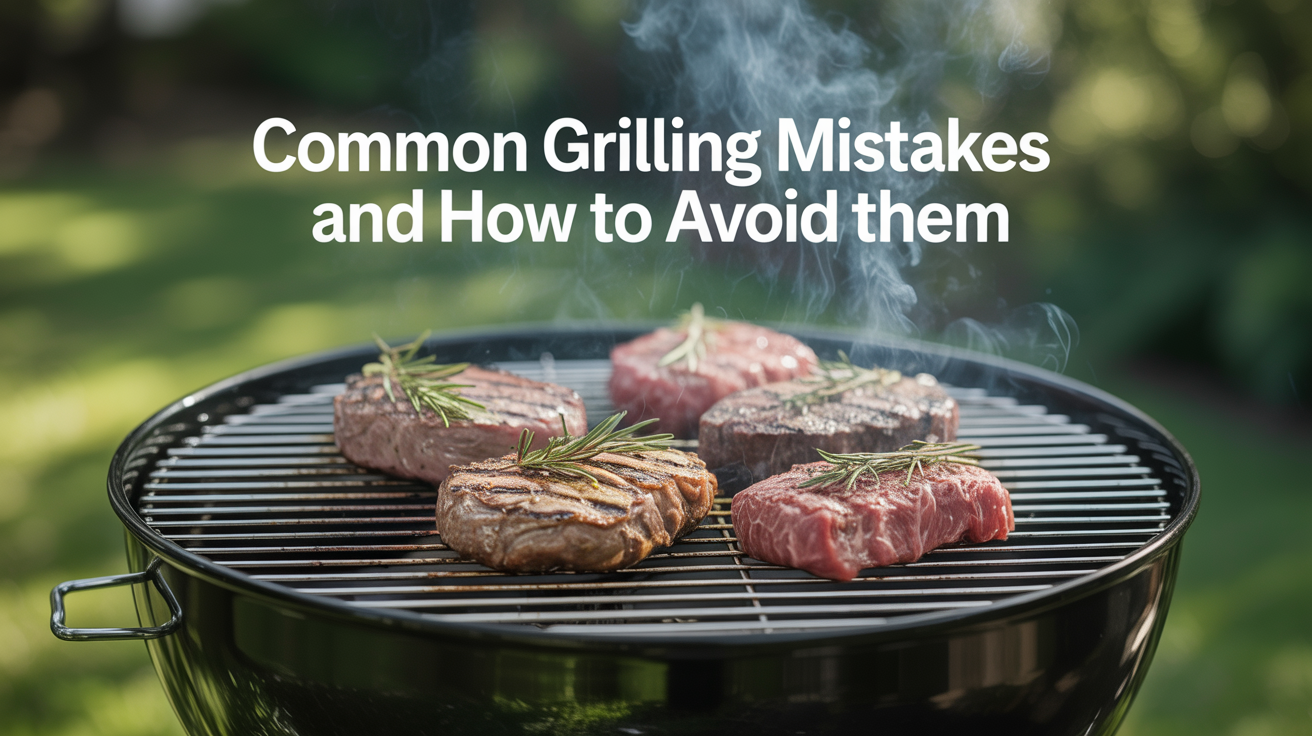
Most grilling mistakes come down to three things: the wrong heat setup, bad timing, and too much tinkering. These common grilling errors show up at every skill level, but they hit beginner grilling cooks the hardest because there's no mental model yet for what good heat actually looks and acts like. Once you know what to watch for, the fixes are simple.
Starting with a Cold, Dirty Grill
This is the one that causes sticking, uneven cooking, and off flavors more than almost anything else.
Preheat for real
A cold grill does two bad things. Food sticks to unheated grates, and the surface temperature is so inconsistent that you end up with raw spots next to charred ones. Gas grills need at least 10 to 15 minutes on high with the lid closed before you cook. Charcoal needs the coals fully ashed over, which takes 20 to 25 minutes after lighting.
The grate surface should be at cooking temperature before anything goes on it. On a gas grill, that means the thermometer reading 450 to 500°F (230 to 260°C) for direct searing heat. On charcoal, you can hold your hand 5 inches (12 cm) above the grate. If you can only hold it there for 2 seconds, you're at high heat. Four seconds is medium.
Scrub the grates
Leftover residue from the last cook burns onto your food and creates an acrid, bitter taste. The easiest time to clean is right after preheating, when the grates are hot and old debris loosens easily. A stiff wire brush or ball of aluminum foil held with tongs does the job in under a minute. Lightly oiling the grates after cleaning helps with release.
Using Only One Heat Zone
Setting up a two-zone fire is one of the most practical grilling tips there is, and a lot of cooks skip it entirely.
On a gas grill, two-zone means one side on high and one side off (or on low). On charcoal, bank all the coals to one side. This gives you a hot direct zone for searing and a cooler indirect zone for finishing thicker cuts without burning the outside. See direct vs indirect heat grilling for a full breakdown of when to use each.
Without this setup, a thick chicken breast or pork chop will char on the outside long before the center hits a safe temperature. A 1.5-inch (4 cm) bone-in chicken breast cooked entirely over direct high heat will be raw at the bone and burnt on the skin by the time it reaches 165°F (74°C) inside. Sear it over the hot side for 3 to 4 minutes per side, then move it to the cooler side to finish. That approach takes more patience, but it actually works.
Flipping and Poking Too Much
This is the most visible beginner grilling mistake, and it is tempting. Constant flipping feels productive. It is not.
Proteins need time in contact with the grate to develop a crust. That crust forms through the Maillard reaction, which requires sustained heat on one surface. If you flip every 30 seconds, you interrupt the process repeatedly and end up with food that is gray and steamed rather than seared and browned.
The rule of thumb: flip once, maybe twice. Steaks and burgers need 3 to 5 minutes undisturbed on the first side. Fish fillets need at least 4 minutes before you try to move them. If the food is sticking when you try to flip, it usually means it is not ready yet. A properly seared crust releases from the grate on its own.
Poking with a fork or pressing down on burgers has the same problem. Pressing releases juices into the fire, which causes flare-ups and dries out the meat. Use tongs or a spatula.
Relying on Time and Color Instead of Temperature
Cooking time charts are starting points, not finish lines. Cooking by color is even less reliable. A burger can look fully cooked at 145°F (63°C), or it can look pink at 160°F (71°C) depending on the age of the meat, the acidity of seasonings, and a dozen other variables.
A reliable instant-read thermometer is the only way to know what is actually happening inside a piece of meat. This matters for safety with poultry and ground meat, and it matters for quality with steaks. A ribeye at 125°F (52°C) is rare. At 140°F (60°C) it is medium. Ten degrees makes a completely different eating experience, and you cannot feel that difference from the outside.
For anyone who wants to nail a specific doneness level every time, the how to grill the perfect steak guide covers probe placement and the exact temps to pull at (before carryover).
Chicken is a separate challenge entirely. The breast dries out fast once it passes 165°F (74°C), so the target is hitting that temperature and stopping. Without a thermometer, you are guessing.
Saucing Too Early
BBQ sauce has sugar in it. Sugar burns at around 325°F (163°C). If you brush sauce on chicken thighs at the start of a 45-minute cook over medium heat, you will have a blackened, bitter exterior and raw interior.
Sauce goes on during the last 5 to 10 minutes of cooking, over lower heat. Brush it on, let it set for 2 to 3 minutes, flip, brush the other side, then pull the meat. That sequence gives you a sticky, caramelized glaze without the burn.
Dry rubs are a different story. They can go on hours before cooking (or even overnight) and actually help develop a better crust. It is specifically sugar-heavy wet sauces that need to wait.
Cutting Into Meat Right Off the Grill
Resting gets mentioned constantly and ignored almost as often. Here is the practical case for it.
When meat cooks, the proteins contract and push moisture toward the center. Cutting into a steak or chicken breast immediately after pulling it off the grill releases that pooled moisture onto the cutting board rather than redistributing it through the meat. A steak that rests 5 minutes will stay noticeably juicier than one that gets sliced immediately.
The rest time scales with thickness. A burger or thin chicken breast needs about 3 to 5 minutes. A 1-inch (2.5 cm) steak needs 5 minutes. A whole spatchcocked chicken or a rack of ribs needs closer to 10 minutes. Tent the meat loosely with foil to keep the surface warm without steaming the crust.
A Quick Reference: Mistakes and Fixes
| Mistake | Fix |
|---|---|
| Grill not preheated | 10 to 15 min on high, lid closed, before cooking |
| No heat zones | One hot side, one off/low side on every cook |
| Constant flipping | Flip once; wait for crust to release naturally |
| No thermometer | Pull at target internal temp, not by time or color |
| Sauce added early | Sauce goes on during the last 5 to 10 minutes only |
| Cutting too soon | Rest 3 to 10 minutes depending on thickness |
Frequently Asked Questions
Why does food stick to my grill grates even when I oil them?
Usually it is a preheating issue. Grates need to be fully up to temperature before food goes on. If the grate is cool or only partially heated, food bonds to the metal before a proper crust can form. Preheat fully, scrub the grates clean, then oil them lightly. Also, do not move the food for at least 3 to 4 minutes after placing it down.
How do I stop flare-ups?
Flare-ups happen when fat drips onto the fire. Keeping a spray bottle of water nearby helps, but the better fix is to set up an indirect zone and move fatty cuts there if flare-ups start. Trimming excess fat from chicken thighs and pork chops before cooking also reduces the problem.
Do I need to soak wood chips before using them?
No. Soaked wood chips take longer to start producing smoke, and once they do, they create steam as much as smoke. Dry chips ignite faster and produce cleaner smoke. Place them in a smoker box or wrap them in a foil pouch with holes poked in it, then set the pouch directly on the burner or coal bed.
My steak is always overcooked by the time I pull it. What am I missing?
Carryover cooking. The internal temperature of thick cuts keeps rising for 2 to 5 minutes after you pull them off the grill, typically by 5 to 10°F (3 to 6°C). Pull steaks 5°F earlier than your target. If you want medium (135°F / 57°C), pull at 130°F (54°C) and let carryover do the rest during the rest period.
Is it okay to grill frozen meat?
You can, but it takes much longer and makes consistent results harder to hit. A frozen burger patty takes nearly twice as long as a thawed one, and the outside tends to overcook while the center catches up. Thawing in the refrigerator overnight is the practical approach for most cuts. If you are short on time, a cold-water bath in a sealed bag for 30 to 60 minutes thaws smaller cuts adequately.