Grilling Basics
How to Grill Chicken Without Drying It Out
Learn how to grill chicken that stays juicy every time — covering brines, two-zone heat, cut-specific temps, and the resting rule.
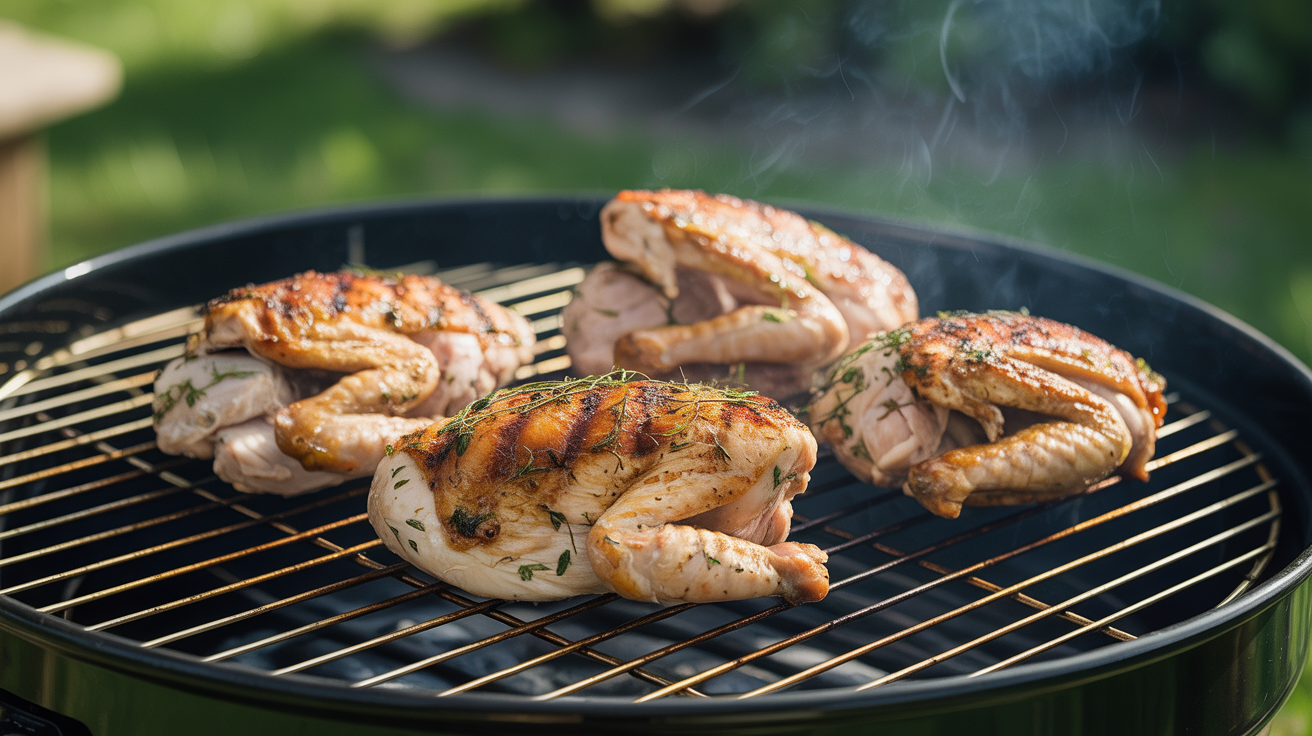
Dry, rubbery chicken is one of the most common grilling complaints, and almost all of it is avoidable. The fixes aren't complicated: a little prep, the right heat setup, and a thermometer. That's the whole game. Here's how to grill chicken that actually tastes good.
Start with a brine (it's worth the time)
Chicken has a moisture problem before it even hits the grill. Lean breast meat, in particular, starts losing water at around 150°F and doesn't stop. The solution is getting more water into the muscle cells before cooking.
A simple wet brine is the most effective approach. Dissolve 1/4 cup of kosher salt and 2 tablespoons of sugar in 4 cups of warm water, then add cold water or ice to bring the total to a quart. Submerge your chicken pieces and refrigerate for 30 minutes to 4 hours. Bone-in pieces can go up to 6 hours; boneless breasts top out at 2 hours or the texture gets a bit spongy.
If you don't have time for a full brine, a dry brine works nearly as well. Salt the chicken generously on all sides and leave it uncovered in the fridge for at least 30 minutes, or up to overnight. The salt draws out surface moisture, then gets reabsorbed, seasoning the meat all the way through.
Pat the chicken completely dry before it goes on the grill. Wet surfaces steam instead of sear, and you lose the browning that adds flavor.
Set up a two-zone fire
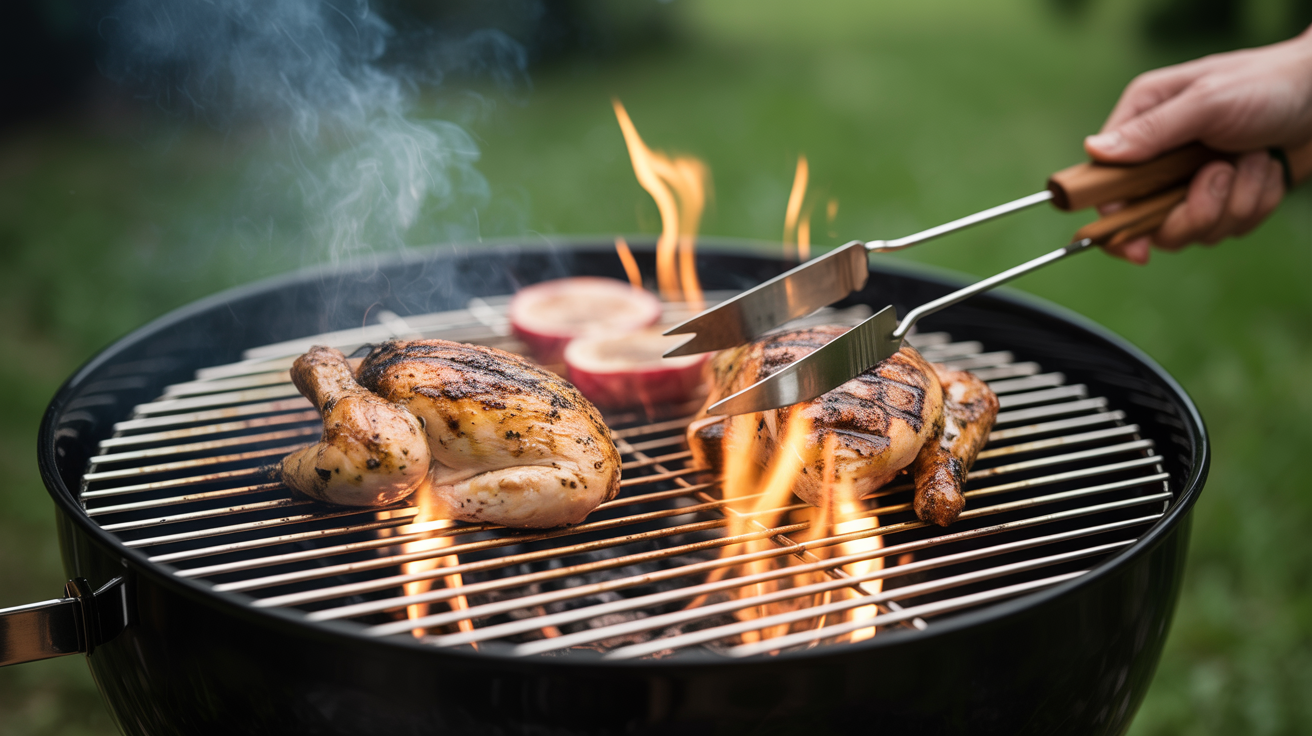
This is the single most important technique for grilling chicken without drying it out. One side of the grill runs hot (your direct heat zone), and the other side has no heat source directly below it (indirect heat).
If you need a refresher on the mechanics, check out Direct vs Indirect Heat Grilling. The short version: direct heat sears and colors the exterior, indirect heat brings the interior up to temperature without charring the outside.
For charcoal, pile your lit coals on one side. For gas, light one or two burners and leave the rest off. Either way, you want the direct zone at around 400-450°F and the indirect zone hovering near 325-350°F.
If you're new to starting a charcoal fire, How to Light a Charcoal Grill covers the process in detail.
Breast vs thigh: they need different treatment
This is where most grilling chicken mistakes happen. Breasts and thighs are not interchangeable on the grill, and treating them the same is a reliable way to ruin at least one of them.
Boneless, skinless chicken breasts are the most unforgiving piece on the grill. They have almost no fat buffer, so the margin between done and dry is narrow. Pound thick breasts to an even 3/4-inch thickness before brining. On the grill, sear over direct heat for 2-3 minutes per side to get color, then move to indirect heat to finish. Don't walk away; check the temperature early.
Bone-in, skin-on breasts are more forgiving because the bone slows heat transfer and the skin acts as a shield. Start them skin-side down over direct heat until the skin is golden and releases cleanly (about 5-6 minutes), then flip and move to indirect heat to finish.
Thighs are a different animal entirely. They're fattier, and that fat keeps them moist even when the temperature climbs well above the minimum safe mark. Boneless thighs work well over direct heat the entire time, flipped every couple of minutes. Bone-in thighs benefit from the same sear-then-indirect approach as bone-in breasts, but they're far more tolerant of a few extra minutes on the grill.
Drumsticks and wings have enough skin and fat to handle mostly direct heat. Watch for flare-ups from the dripping fat, and keep the lid down between flips.
Temperature targets and timing by cut
A thermometer is non-negotiable. Cooking by color or timing alone leads to either undercooked chicken or overcooked chicken, sometimes both in the same batch. Use an instant-read thermometer and pull the chicken just before it hits your target, because carryover cooking will add another 3-5 degrees after it comes off the heat.
The USDA minimum safe internal temperature for chicken is 165°F, a number AmazingRibs' food-safety guide explains in more detail than the label on your thermometer ever will. For breasts, pull at 160°F and let carryover do the rest. For thighs, you can push to 175-185°F; the extra collagen in dark meat converts to gelatin at higher temperatures, which actually makes the texture better.
| Cut | Pull temp | Final resting temp | Approx. grill time |
|---|---|---|---|
| Boneless, skinless breast | 160°F | 165°F | 10-14 min |
| Bone-in breast | 160°F | 165°F | 30-40 min |
| Boneless thigh | 170°F | 175°F | 10-14 min |
| Bone-in thigh | 175°F | 180-185°F | 35-45 min |
| Drumstick | 175°F | 180°F | 30-40 min |
| Wings | 175°F | 180°F | 20-25 min |
Times assume medium-high direct heat or a combination of direct and indirect. Always verify with a thermometer rather than relying on time alone.
Add sauce at the right moment
If you're glazing the chicken with a sauce, especially a sweet barbecue sauce, don't add it until the last 5-7 minutes of cooking. The sugar in most sauces burns quickly over direct heat, turning the exterior black while the interior is still raw. Brush the sauce on during the final minutes over indirect heat, or during the last 2 minutes over direct heat with the lid open and your attention fully on it.
Rest it before you cut
The resting step is skipped constantly, and it's a real mistake. When chicken comes off the grill, the muscle fibers are contracted and the internal moisture is unevenly distributed. Give it 5 minutes to rest on a cutting board, loosely tented with foil, and the juices redistribute throughout the meat.
Cut a breast open immediately after pulling it and the liquid pools on the board. Wait five minutes and it stays in the meat where it belongs. This applies to every cut, but it matters most for breasts.
The same principle applies when you're grilling other proteins. If you've ever let a steak rest properly, you already know how much difference it makes. If not, How to Grill the Perfect Steak covers it in depth.
Common problems and quick fixes
A few things go wrong consistently when grilling chicken, and most of them trace back to heat management.
Chicken sticking to the grate usually means the grate wasn't hot enough or wasn't oiled. Preheat the grill with the lid closed for at least 10-15 minutes, then clean the grates with a brush and wipe them with a folded paper towel dipped in oil.
Flare-ups from dripping fat cause charring on the outside while the interior lags behind. Move the chicken to the indirect zone when flare-ups start, let the fire die down, then return.
Uneven cooking in a mixed batch (breasts and thighs together) happens because the cuts need different temperatures to finish. Either cook them separately or move pieces to indirect heat individually as they hit their target temperatures.
FAQ
Do I need to marinate chicken before grilling? A marinade adds flavor but doesn't do much for moisture, especially not as much as a brine. If you marinate, keep it under 2 hours for boneless pieces; acid (lemon juice, vinegar) in a marinade starts to denature the protein surface if you go longer, leaving a mushy texture on the exterior.
Should I grill chicken with the lid open or closed? Closed, almost always. A closed lid traps heat and cooks the chicken more evenly from all sides, reduces flare-ups, and shortens cooking time. Open the lid when you flip or check temperature, then close it again.
Why does my chicken stick to the grill? Two common causes: the grate wasn't hot enough before you added the chicken, or the chicken wasn't dry on the surface. Preheat properly, pat the chicken dry, and oil the grates (not the chicken directly, which can cause flare-ups).
Can I grill chicken straight from the fridge? You can, but cold chicken takes longer to cook and can end up with an overcooked exterior by the time the center reaches temperature. Let chicken sit at room temperature for 20-30 minutes before grilling to even out the temperature differential.
How do I know when chicken on the grill is done without a thermometer? You don't, reliably. An instant-read thermometer is a $15-25 investment that eliminates guesswork. The "juices run clear" test is imprecise, and pressing the meat to test firmness takes practice and still gives ambiguous results. Get a thermometer.