Grilling Basics
How to Light a Charcoal Grill
Learn how to light a charcoal grill the right way using a chimney starter, get coals ready fast, and set up two-zone heat for better grilling results.
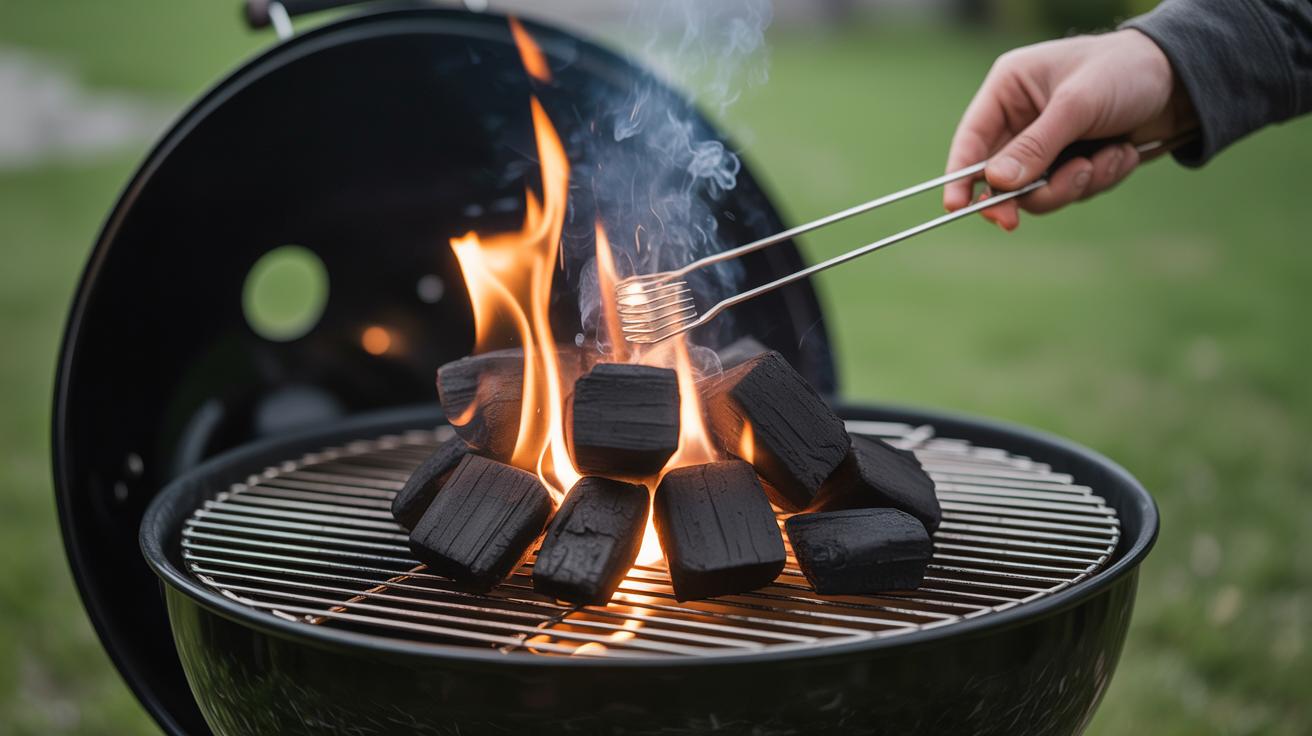
Getting a charcoal fire started is one of those skills that separates okay grilling from great grilling. Do it wrong and you're cooking over petroleum fumes or waiting 45 minutes for coals that never quite get there. Do it right and you have a clean, hot fire ready in 20 minutes with the kind of dry heat that gives food an actual sear instead of a steam.
This guide covers the two main methods for lighting charcoal, how much fuel to use, how to read your coals so you know when the grill is actually ready, and the one safety rule that matters more than any of it.
At a Glance
- A chimney starter gets a full load of coals ash-covered and ready in 15-20 minutes with no lighter fluid.
- Without a chimney, the pyramid method works but takes 25-35 minutes and needs more attention.
- Skip lighter fluid entirely. It taints food and burns unevenly compared to a clean chimney light.
- Coals are ready when they're covered in light gray ash with an orange glow, not the moment they first catch.
- Pour lit coals into two zones (hot side, empty side) instead of spreading them flat.
- Charcoal grills are for outdoor use only. Burning charcoal produces carbon monoxide, and it keeps producing it until the coals are fully out.
The chimney starter method (recommended)
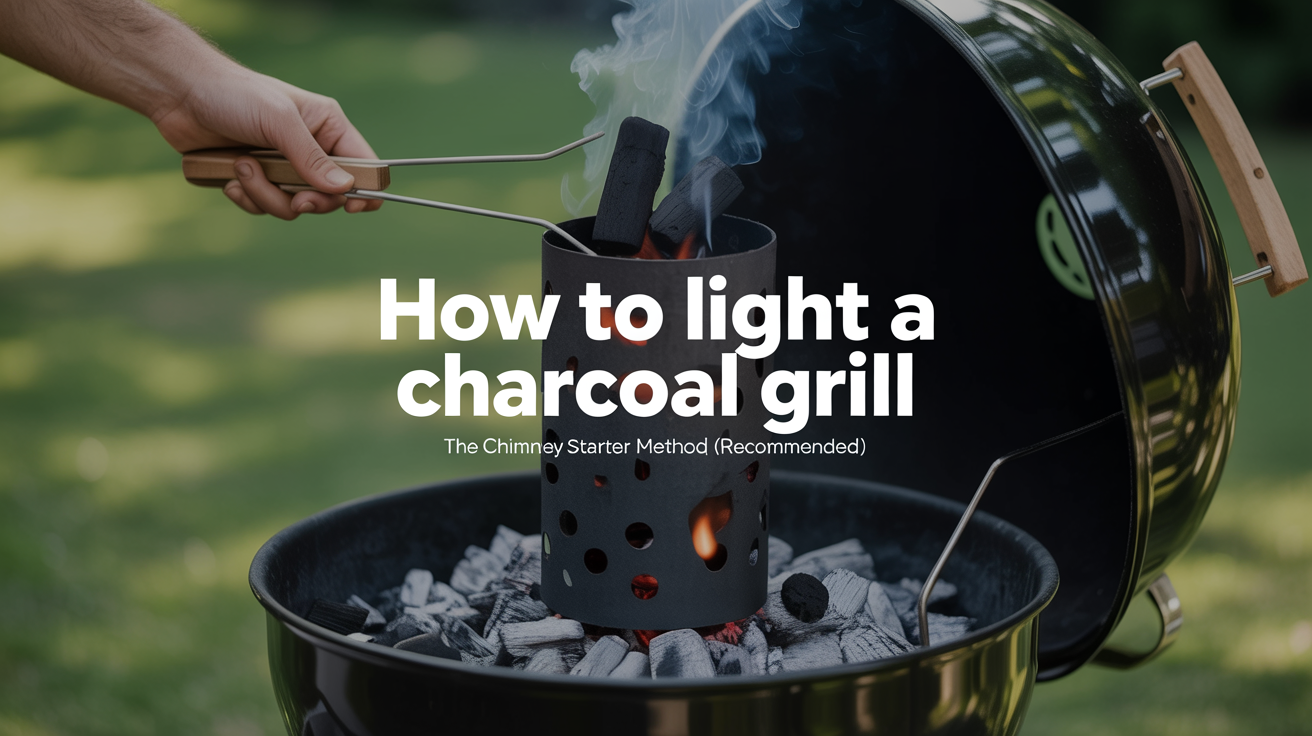
A chimney starter is a steel cylinder with a grate inside and a heat-resistant handle. You fill the top with charcoal, stuff newspaper or fire starters underneath, light the bottom, and in 15 to 20 minutes you have a full load of glowing coals. No lighter fluid, no chemical taste, no waiting around.
Here is the step-by-step process:
- Set the chimney on the lower charcoal grate inside your grill. This protects your work surface and keeps the chimney stable.
- Fill the top chamber with charcoal. For a standard 22-inch kettle grill, that means roughly 100 briquettes or a full chimney of lump charcoal for high-heat cooking. Use half a chimney for lower-heat work.
- Stuff two or three sheets of newspaper into the bottom chamber, or use a paraffin fire starter cube if you want something more reliable in wind or humidity.
- Light the paper or cube from the bottom through the vents. Use a long-handled lighter so you can reach under the chimney without burning your hand.
- Leave the chimney alone for 15 to 20 minutes. You will see flames coming out the top first, then they will die down and smoke will increase briefly, then thin out. That is the signal that the coals are catching properly.
- Watch for the ash-over. The coals are ready when the top ones are covered with a thin layer of gray ash and you can see an orange glow underneath. At that point, the whole load is live and you can pour.
- Pour the coals carefully onto the lower grate by gripping the handle and the top handle together, tilting slowly. Wear a grill mitt.
The chimney starter is worth buying if you do not already own one. A basic model runs $20 to $30 and pays for itself immediately in lighter-fluid savings and better-tasting food.
Reading a Chimney Burn, Minute by Minute
If you've never watched a full chimney light from start to finish, it helps to know what's normal at each stage so you're not second-guessing yourself.
| Time Elapsed | What You'll See | What It Means |
|---|---|---|
| 0-2 min | Flames climbing out the top of the chimney | Paper or starter cube is catching the bottom layer of coals |
| 3-8 min | Flames die down, thick gray smoke increases | Coals are heating through; this is normal, not a sign something's wrong |
| 8-14 min | Smoke thins out, you can see orange glow through the top coals | Combustion is stabilizing across the load |
| 15-20 min | Top coals covered in light gray ash, orange glow underneath | Ash-over; the whole chimney is ready to pour |
| 20-25 min (if you wait) | Ash layer thickens, glow dims slightly | Still usable, but you're losing peak heat; pour soon |
Using newspaper or fire starters without a chimney
If you do not have a chimney starter, you can still light charcoal cleanly without lighter fluid. It takes a bit more patience.
Arrange your charcoal in a tight pyramid shape directly on the lower grate. Tuck two or three fire starter cubes into the gaps at the base of the pyramid, or slide crumpled newspaper underneath. Light the starters or paper, then leave the grill lid off so oxygen can feed the fire. The pyramid shape helps because heat rises into the center of the pile.
This method takes longer, usually 25 to 30 minutes, and you will need to add a few unlit coals around the outside once the center is going. The trick is patience: resist the urge to spread the coals out until they are fully ashed over, or you will interrupt the fire.
Why you should skip lighter fluid
Lighter fluid works, but it leaves a petroleum smell on your food, especially if you start cooking before it burns off completely. Beyond the flavor issue, it is genuinely harder to control. It creates a big flame burst early, which burns out fast, and then you end up with coals that are charred on the outside but not fully lit in the center.
Michigan State University Extension's guidance on smoker fuel echoes the same rule professionals follow: use only approved fire starters, never gasoline or other combustibles, and stick with commercial charcoal briquettes or hardwood for the actual fuel. Lighter fluid isn't a food-safe accelerant, and it's not necessary once you own a chimney.
If someone at a cookout swears lighter fluid is fine, they are probably used to it and not comparing it to anything better. Once you use a chimney starter for a few cooks, going back feels wrong.
A safety note: carbon monoxide
Burning charcoal, whether it's flaming, glowing, or just smoldering under a layer of ash, produces carbon monoxide, an odorless gas you cannot detect without a monitor. The Consumer Product Safety Commission is blunt about this: charcoal grills are for cooking outside with plenty of fresh air only, never in a garage, tent, camper, or any enclosed space, even with the door open. Coals keep producing carbon monoxide for hours after you're done cooking, so don't bring a warm grill indoors to store it, and let it cool fully outside before you deal with the ash.
How much charcoal to use
Getting the fuel amount right matters more than people realize. Too little and you get a fire that fades mid-cook. Too much and you have more heat than you need, which is harder to manage.
| Cooking style | Charcoal amount (22" kettle) |
|---|---|
| Quick cook (burgers, hot dogs) | Half chimney (~50 briquettes) |
| Standard cook (steaks, chicken pieces) | Full chimney (~100 briquettes) |
| Long cook (whole chicken, ribs) | Full chimney plus a handful of unlit coals added later |
| Searing hot (crust on steaks) | Overfull chimney, coals piled high under the cooking grate |
Lump charcoal burns hotter and faster than briquettes. If you switch to lump, use roughly the same volume but expect the fire to peak quicker and fade a bit sooner.
Knowing when the coals are ready
This is the part most people get wrong. If you start cooking the moment the lighter fluid ignites, you are cooking over flame and chemical vapor. If you pour a chimney at the first sign of red glow, you are cooking over coals that are still transitioning and will drop in temperature the second food hits the grate.
The correct signal is the ash-over: coals should be covered with a uniform layer of light gray ash, no black patches, and glowing orange when you look at them from the side. At that point they are at peak heat and stable. You have maybe 30 to 40 minutes of cooking time before they start to drop noticeably.
On a cold or windy day, give the coals an extra five minutes after ash-over before cooking. The grate itself needs to absorb some heat or food will stick.
Setting up two-zone heat for charcoal grill setup
Once your coals are poured and ashed over, do not spread them evenly. Set up two zones instead: a hot side and a cool side. Pile the coals on one half of the lower grate and leave the other half empty.
This is one of the most useful setups in grilling. The hot zone sears. The cool zone finishes thicker cuts without burning the outside. You move food between the two as needed. It also gives you somewhere to put food if flare-ups get out of hand.
For a direct vs indirect heat grilling breakdown of when to use which zone for different foods, that article goes deeper on the logic behind each method.
Two-zone also applies when you are cooking something big, like a whole chicken or thick pork chops. Start over indirect heat with the lid on, then finish over the hot side for a few minutes per side. This is essentially how grilling chicken without drying it out works.
Practical tips for lighting charcoal
- Open all the vents on your grill before lighting. Fire needs oxygen. Closing vents is for controlling a fire that is already going, not for starting one.
- Position the chimney starter out of the wind if possible. Strong wind pushes heat sideways instead of up through the coals.
- Do not use the cooking grate to hold the chimney while it lights. The grate sits too high and you lose the radiant heat from the charcoal grate below.
- Store charcoal in a sealed container or the original bag clipped shut. Charcoal that absorbs moisture is harder to light and burns unevenly.
- If coals start to fade mid-cook, add a few unlit briquettes around the perimeter of the hot zone. They will catch from the existing coals in about ten minutes. Do not add them to the center where food is cooking, or you will get uneven heat and possibly some bitter smoke from the fresh charcoal.
- A grill thermometer mounted in the lid tells you dome temperature, which runs about 50 to 75 degrees cooler than grate-level temperature. Keep that in mind when the recipe says "cook at 450 degrees."
- Once you're done cooking, close all the vents to starve the fire of oxygen if you want to save unused charcoal for next time. Fully closed vents will snuff a charcoal fire out in under an hour.
For anything that requires a precise crust and resting time, like beef, the fundamentals here feed directly into how to grill the perfect steak. Getting the fire right is the first step in that whole process.
Frequently Asked Questions
How long does it take to light a charcoal grill?
With a chimney starter, plan on 15 to 20 minutes from lighting the paper to ash-over. Add five minutes if conditions are cold or windy. Without a chimney starter, using the pyramid method, expect 25 to 35 minutes.
Can I use lighter fluid in a chimney starter?
No. The chimney starter is designed to eliminate the need for lighter fluid entirely. The draft created by the cylinder pulls air up through the coals and keeps the fire feeding itself. Adding lighter fluid would just create a fire hazard and the same chemical smell you were trying to avoid.
What if my coals keep going out?
The most common causes are moisture in the charcoal and not enough airflow. Make sure your bottom vents are fully open. If the coals are from a bag that got wet, they may light slowly and burn unevenly. Fresh, dry charcoal from a sealed bag is the fix. In a pinch, a few strategically placed fire starter cubes at the base of the chimney will push through damp charcoal.
How do I know if my grill is hot enough to cook on?
Hold your hand about five inches above the cooking grate. If you can keep it there for two seconds before it gets uncomfortable, the grill is at medium-high heat, around 400 degrees at grate level. One second means high heat (450 to 500+). Four seconds is medium. Anything longer is low heat or the coals are fading. A grill thermometer is more precise, but the hand test works for everyday cooking.
Is lump charcoal better than briquettes?
Lump burns hotter and cleaner, produces less ash, and lights faster. Briquettes burn more consistently and hold temperature longer. For searing steaks or quick, high-heat cooks, lump has a real edge. For longer cooks where you need a steady temperature over an hour or more, briquettes are easier to manage. Both work. Pick based on what you are cooking.
Is it safe to light a charcoal grill in a garage or on a covered porch?
No, even with the door open. Carbon monoxide from burning charcoal builds up quickly in any partially enclosed space and disperses far more slowly than most people expect. Light and cook on charcoal only in a fully open, outdoor area, away from siding, overhangs, and anything flammable.
Why did my chimney starter flame back up after it seemed to die down?
That's normal in the middle of the burn. The first flame-up is the paper or starter cube catching the bottom coals; it dies down as that fuel is spent. A second, smaller flare can happen as the coals above start to catch fully. As long as you're seeing thinning smoke and eventual ash-over within the 15 to 20 minute window, the chimney is behaving as expected.