Grilling Basics
Direct vs Indirect Heat Grilling
Learn when to use direct vs indirect heat on the grill, how to set up two-zone cooking, and which method suits different foods.
Every grilling mistake traces back to the same root cause: wrong heat for the food. Burgers on low heat turn gray and steam. Thick pork chops over a screaming hot flame char outside before they're safe to eat inside. Understanding direct vs indirect heat is the single skill that fixes most of what goes wrong at the grill.
This isn't complicated once you see the logic. You have two tools: fire directly under food, or fire off to the side. Knowing which to use, and when to switch between them, puts you in control instead of hoping things work out.
At a Glance
- Direct heat means food sits right above the flame or coals; it sears fast and suits thin, quick-cooking foods.
- Indirect heat moves food away from the fire with the lid closed, turning the grill into an oven for thick or delicate cuts.
- Two-zone setups let you use both at once: sear on the hot side, finish on the cool side.
- Rule of thumb: under 10 minutes to cook through, go direct; 20 minutes or more, go indirect.
- Poultry needs to clear 165°F at the thickest point no matter which method gets it there.
- When unsure, sear direct first and finish indirect. It's the safest default for thick cuts.
What direct heat grilling is
Direct heat means the food sits directly above the flame or hot coals. Heat travels upward and hits the food immediately, producing fast, intense cooking.
This is where searing happens. The surface of a steak hits the grate, moisture evaporates rapidly, and the Maillard reaction kicks in within minutes, creating the browned crust most people associate with grilling. Direct heat grilling excels at caramelizing sugars, crisping skin, and building grill marks.
It works because thin or tender foods cook through before the outside burns. A half-inch burger patty at 450°F is fully cooked in about four to five minutes total. The math works in your favor. Crank the heat, flip once, done.
The limitation is obvious: thick cuts need more time than direct heat allows without burning the exterior. A two-inch ribeye over direct heat would be charred before the center reached 130°F. That's where indirect heat enters.
What indirect grilling is
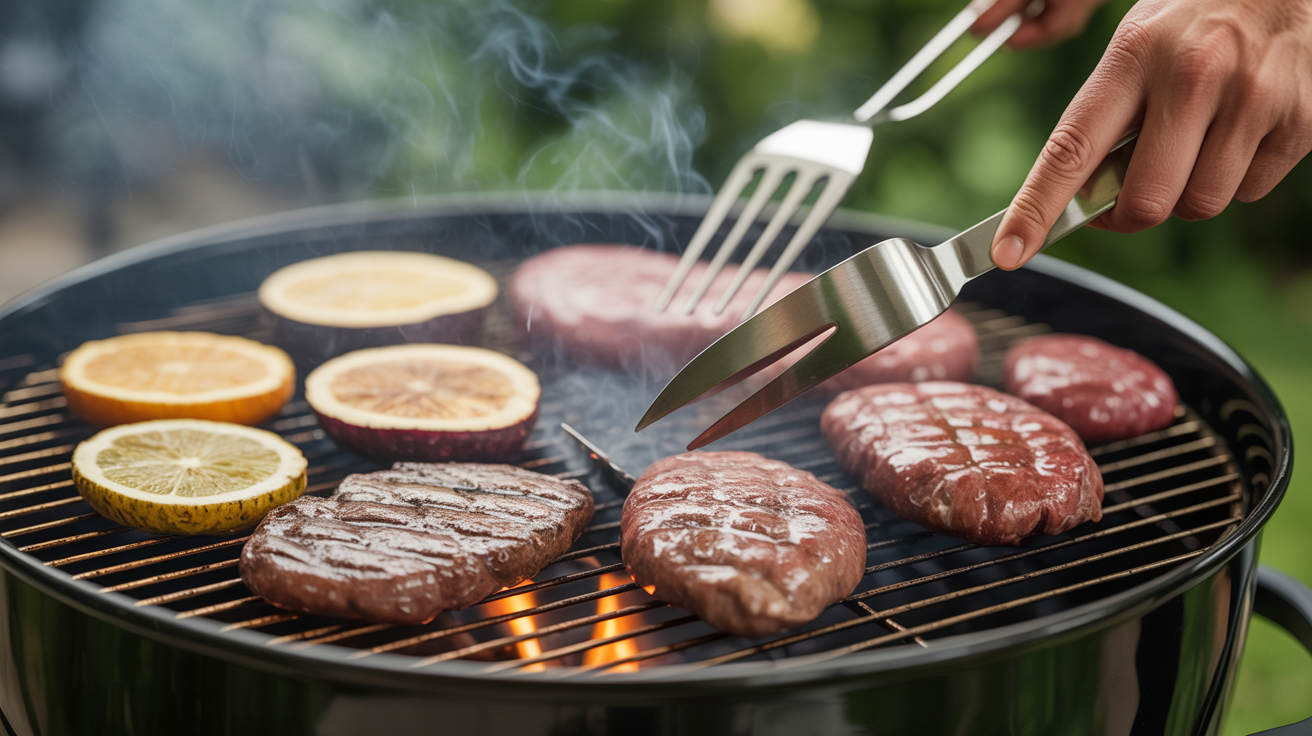
Indirect grilling places food away from the heat source, with the lid closed. The grill becomes an oven. Convective heat circulates around the food, cooking it evenly and slowly without direct flame contact.
Think of it as the difference between holding your hand over a campfire versus sitting inside a warm room. Both transfer heat, but the mechanism and result are different. Indirect cooking can maintain 300-375°F inside a covered grill for as long as you need, giving thick proteins time to cook to a safe internal temperature without scorching.
Whole chickens, pork shoulders, beef roasts, and large fish fillets all need indirect heat. So does anything with high sugar content in its glaze, since sugars burn fast over direct flames.
The closed lid is non-negotiable in indirect grilling. Opening it drops the internal temperature and lets the convective environment collapse. Resist the urge to peek. As a rule, every time the lid comes up for more than a few seconds, you're adding real minutes back onto the cook, not just losing a puff of heat.
Setting up two-zone cooking on a charcoal grill
Two-zone grilling is the practical application of both methods at once. On a charcoal grill, light your coals (here's how to light a charcoal grill if you're new to it), then push all the lit coals to one side of the grill. One side has fire, one side doesn't.
The fire side is your direct heat zone. The empty side is your indirect zone. You can now move food between them as needed.
This setup is especially useful for thicker cuts. Sear a pork tenderloin over coals for a couple of minutes per side, then slide it to the indirect side and close the lid to finish cooking through. You get the crust and the control.
Bank the coals into a pile rather than a single layer to keep direct heat intense. For longer indirect cooks, add a few unlit coals underneath the lit ones so they catch gradually and extend the burn time. A useful gauge: with a full chimney of lit coals banked correctly, you should be able to hold your hand at grate height over the indirect side for a full five to six seconds before it's uncomfortable. Less than that, and the zone is running hotter than a typical 300-375°F target.
Setting up two-zone cooking on a gas grill
Gas grills make two-zone setup easier. Turn the burners on one side to high or medium-high, leave the burners on the other side off. The lit side is direct, the unlit side is indirect.
On a three-burner grill, turn the left burner on high and leave the center and right burners off. This gives you a generous indirect area for larger roasts or whole chickens.
One thing to watch: the indirect zone on a gas grill still gets hot from radiant heat coming off the walls and lid. If you're targeting 325°F for indirect cooking, you may need to run the lit burner at medium rather than high. Use the grill's built-in thermometer or an instant-read probe near the indirect zone to know what you're actually working with; the dial on the lid is often 25-50°F off from the actual grate temperature, especially on grills with the thermometer mounted away from where the food sits.
Which foods need which method
The food itself tells you what it needs. Thin, tender, quick-cooking items want direct heat. Thick, tough, or delicate items want indirect heat, sometimes with a direct-heat finish.
| Food | Method | Approx. grill temp |
|---|---|---|
| Burgers (3/4 inch) | Direct | 450-500°F |
| Hot dogs, brats | Direct | 400-425°F |
| Thin fish fillets | Direct | 400°F |
| Chicken breasts | Direct, then indirect | 400°F → 350°F |
| Bone-in chicken thighs | Indirect, then direct | 350°F → 450°F |
| Whole chicken | Indirect | 350-375°F |
| Pork tenderloin | Sear direct, finish indirect | 450°F → 325°F |
| Pork shoulder / ribs | Indirect | 225-275°F |
| Ribeye (1.5+ inches) | Sear direct, finish indirect | 500°F → 325°F |
| Thick vegetables | Direct | 400-425°F |
A few rules of thumb:
- If it cooks in under 10 minutes, use direct heat.
- If it needs 20 minutes or more to cook through safely, use indirect.
- When in doubt, sear on direct, finish on indirect. Almost nothing goes wrong with that approach.
- Fatty items flare up over direct heat; a moment of inattention causes burns. Keep a cooler zone ready to move food off the flame.
Getting chicken right is where most cooks use this the most. Bone-in thighs started indirect and crisped over direct heat at the end produce juicy meat and crackled skin. The opposite order (direct all the way) gives you burnt skin with pink meat near the bone. Poultry has to clear 165°F at the thickest point no matter which method gets it there. That number isn't arbitrary: it's the USDA safe minimum internal temperature for all poultry, and it's a threshold AmazingRibs' food-safety guide walks through in more detail than most backyard cooks realize. The same source lists whole-muscle beef, pork, veal, and lamb at 145°F with a three-minute rest, which is the number to know if you're finishing a roast or tenderloin indirect and want a safe pull point. For a full breakdown of poultry timing, see how to grill chicken without drying it out.
Steaks deserve their own attention. A well-marbled ribeye benefits from a hard sear over direct heat, then moves to indirect to finish to the right internal temperature. The reverse sear method flips this, starting low and slow on indirect heat, then finishing with a direct-heat sear. Both work; the reverse sear gives more control over final doneness, since you're watching the internal temperature climb slowly instead of guessing how long a hot sear needs to finish the center. How to grill the perfect steak goes deep on which technique fits which cut.
Practical tips for managing both zones
Keep the lid closed during indirect cooking. Every time you open it, you add time to the cook.
A leave-in probe thermometer removes the guesswork. Set it in the thickest part of the meat, close the lid, and watch the temperature climb. You don't need to touch the food until it hits your target.
For two-zone grilling on charcoal, a full chimney of lit coals is enough for most cooks up to two hours. Check the coals at the 45-minute mark if you're doing a longer indirect cook. Add a half-chimney of lit coals on top of any remaining embers to extend the burn.
Wind affects gas grills more than people expect. On a breezy day, the indirect zone cools faster because the lid seal isn't perfect. Dial the lit burner up slightly and give yourself a wider temperature buffer.
A common mistake worth naming directly: setting up two zones correctly, then cooking everything in the direct zone out of habit. The whole point of the setup is to move food between zones as it needs different treatment. If you find yourself never touching the indirect side, you're probably overcooking the outside of everything you grill to get the inside done.
FAQ
Can I use indirect heat on a small grill? Yes, but it's tighter. On a kettle grill under 22 inches, bank coals to one side as usual. The indirect area will be smaller, which limits the size of what you can cook indirectly, but it works for individual pieces of chicken or a small roast.
Do I always need to sear before going indirect? No. Searing first adds crust and color, but some cooks prefer the reverse-sear method, where the food goes indirect first and finishes with a short, high-heat sear. Both produce good results. Choose based on whether you want more crust development or more internal temperature control.
What temperature is best for indirect grilling? Most indirect grilling falls between 275°F and 375°F inside the grill. Low-and-slow barbecue sits at 225-250°F. Roasting a whole chicken is better at 350-375°F for reasonable cook times. The food type and how much time you have both factor in.
How do I know when to move food from indirect to direct? Use a probe thermometer. For most proteins, move to direct heat during the last few degrees before the target temperature. At 125°F for a steak targeting 130°F, sear it direct to crust the outside and hit your final number. For chicken with skin, finish on direct once the internal temperature reads 155-160°F, close enough to the 165°F USDA safe mark that a brief blast of direct heat won't overshoot.
Does indirect heat work with the lid open? No. Open-lid indirect grilling is just cooking far from the coals. The convective environment that makes indirect cooking work requires a closed lid to trap hot air and circulate heat around the food. Always close the lid for indirect cooking.
Why does my indirect zone run hotter than expected on a gas grill? Radiant heat off the lid and side walls is the usual cause. Even with the burner under the food turned off, a three-burner grill with one side lit can push the indirect zone 20-40°F above what you'd expect from air temperature alone, especially on grills with a shallow firebox. If your indirect zone consistently runs hot, drop the lit burner to medium-low and give the grill a few extra minutes to stabilize before you start cooking.
Is charcoal or gas better for two-zone cooking? Both work well. Charcoal gives you a more distinct hot side because the coals are physically banked to one side, so the temperature drop-off between zones is sharper. Gas gives you more repeatable control since the burner dial doesn't drift the way a coal bed does as it burns down. Neither is wrong; it comes down to which grill you own and how much you want to manage fuel during a long cook.