Grilling Basics
How to Grill the Perfect Steak
Learn how to grill steak with the right cut, temp, and timing. Covers searing, doneness, resting, and common mistakes to avoid.
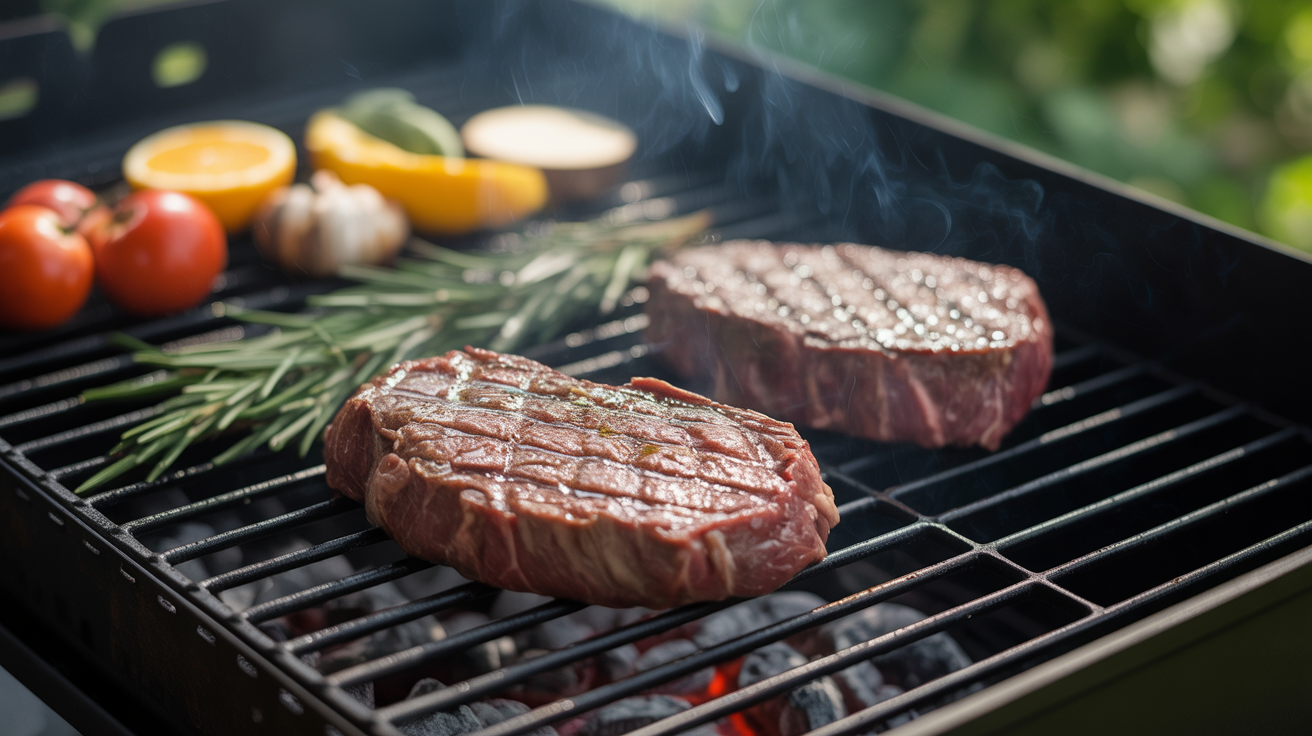
A great steak on the grill is mostly about discipline. Get your fire hot enough, leave the meat alone, rest it properly, and the result almost takes care of itself. The mistakes that wreck steaks are almost always the same: low heat, constant flipping, cutting too soon. This guide walks you through the whole process so you understand why each step matters, not just what to do.
Choosing the right cut
Not every steak behaves the same on a grill. Some cuts are built for high-heat, fast cooking. Others need time and lower temperatures to get there.
Best cuts for direct grilling:
- Ribeye (1–1.5 inches): High fat marbling bastes the meat as it cooks. Hard to overcook in the medium-rare window. Best for beginners.
- New York strip: Less fat than ribeye, slightly firmer texture, clean beefy flavor. Responds well to a hard sear.
- T-bone / Porterhouse: Two cuts in one. The tenderloin side cooks faster than the strip side, so position it farther from direct heat.
- Flank and skirt steak: Thin, lean, and fast-cooking. Must be sliced against the grain after resting or they'll be tough.
- Sirloin: Affordable and reliable. Lower fat content means it dries out faster, so watch your temps carefully.
Thickness matters more than people expect. A 3/4-inch steak will hit the danger zone (overcooked) in the time it takes to get a proper crust. Aim for at least 1 inch, and 1.25 to 1.5 inches if you want a crusty exterior with a pink center.
Prepping the steak before it hits the grill
Salt early or salt at the last second. Both work. Salting 40-plus minutes ahead pulls surface moisture out, which then gets reabsorbed. The result is a drier surface (better crust) and seasoned meat throughout. Salting right before means the moisture stays put, and you get a thinner, crispier crust. Avoid the 5-to-30-minute window. That's when the pulled moisture sits on the surface without reabsorbing, and you steam instead of sear.
Use kosher salt, not table salt. The flakes are easier to distribute evenly and dissolve well.
Pat the steak dry before it goes on the grill. A wet surface creates steam, and steam is the enemy of a proper crust.
For thicker steaks (1.5 inches or more), consider the reverse sear or let the steak come close to room temperature first. Pulling it out of the fridge 30 minutes before grilling takes the cold edge off and promotes more even cooking.
Setting up your grill correctly
The best way to grill steak uses a two-zone fire. One side runs hot (direct heat), the other runs lower (indirect heat). If you haven't set this up before, the method is covered in detail in Direct vs Indirect Heat Grilling.
For charcoal: bank the coals to one side. For gas: crank one or two burners to high, leave the others off or low.
Your direct-heat zone should be around 450-500°F at the grate. Hold your hand 2 inches above the grates; you should only be able to keep it there for 1-2 seconds before it gets uncomfortable. That's the heat you want.
Make sure your grates are clean and oiled before the steak goes on. A wire brush to clear residue, then a paper towel soaked in high-smoke-point oil (canola, grapeseed) wiped across the grates with tongs. This reduces sticking and gives better grill marks.
If you're new to managing charcoal fires, start with How to Light a Charcoal Grill before you fire up for steak night.
Grilling steak: the process
Place the steak directly over high heat. Close the lid.
For a 1-inch steak:
- Sear 2-3 minutes per side for medium-rare
- Flip once (maybe twice if you're watching a flare-up)
- Move to indirect heat if the outside is getting ahead of the inside
For a 1.5-inch steak:
- Sear 3-4 minutes per side, then move to indirect heat
- Finish on indirect until internal temp is 5°F below your target (carryover cooking will close the gap)
Do not press the steak down with a spatula. You're squeezing out moisture for no gain.
Flipping once is fine. Flipping every minute is also fine (some high-end steakhouse cooks prefer it for even cooking). What's not fine is hovering, prodding, and moving the steak around constantly. Let it cook.
Watch for flare-ups from dripping fat. Move the steak temporarily to the indirect side, let the flame die, move it back.
Doneness temperatures
Use an instant-read thermometer. Color is not a reliable guide. Myoglobin, not blood, creates that red color, and it behaves differently depending on the animal's age, diet, and pH level. A thermometer removes the guesswork.
| Doneness | Pull temp (off grill) | Final temp (after rest) |
|---|---|---|
| Rare | 120°F | 125°F |
| Medium-rare | 125-130°F | 130-135°F |
| Medium | 135°F | 140-145°F |
| Medium-well | 145°F | 150°F |
| Well done | 155°F+ | 160°F+ |
USDA recommends a minimum safe internal temperature of 145°F for whole beef cuts. Medium-rare falls below this. That's a personal risk tolerance call, and most restaurants default to medium-rare on a well-sourced steak.
Pull the steak 5°F before your target. The internal temperature continues rising as the steak rests.
Resting and slicing
Rest the steak for at least 5 minutes, up to 10 for thicker cuts. Resting lets the muscle fibers relax and reabsorb juices that migrated to the center during cooking. Cut too soon and those juices pour out onto your board instead of staying in the meat.
Tent it loosely with foil if you want to keep some heat, but don't seal it tightly, or you'll trap steam and soften the crust you worked for.
For whole-muscle cuts like ribeye and strip, slice against the grain. For flank and skirt, this is non-negotiable. Slicing with the grain gives you long, chewy muscle fibers instead of short, tender ones. The grain on a flank steak runs lengthwise, so cut across it at a slight angle.
A compound butter (softened butter mixed with herbs, garlic, or a squeeze of lemon) placed on the resting steak is entirely optional but good.
Common mistakes and how to fix them
Grill wasn't hot enough. Signs: pale gray exterior, no crust, steak sitting in its own steam. Fix: preheat longer, use more coals, or check the gas valve.
Steak went on wet. Signs: steaming instead of searing, no char. Fix: always pat dry before grilling.
Flipped too early. Signs: steak sticking to the grates. A steak releases naturally when it's ready to flip. If it's fighting you, give it another 30-60 seconds.
No thermometer. Guessing by feel or time gets unreliable fast, especially with varying steak thickness, outdoor temperature, and grill variation. A $15 instant-read thermometer solves this completely.
The same principles that fix steak also apply to other proteins. If you want to see how they translate to poultry, How to Grill Chicken Without Drying It Out covers the analogous process.
FAQ
How long does it take to grill a steak? For a 1-inch steak over high direct heat, plan on 4-6 minutes total for medium-rare (2-3 minutes per side). A 1.5-inch steak takes 8-12 minutes, including a finish on indirect heat. Thickness and your grill's actual temperature vary this more than any other factor.
Should I use butter or oil when grilling steak? Oil the grates, not the steak. Butter burns at high grill temps and creates flare-ups. You can finish with butter during the rest period. For flavor during cooking, let the natural fat in the meat do the work.
Is it OK to grill a frozen steak? Yes, though the process is different. Sear the frozen steak directly over high heat for 5-6 minutes per side to build a crust, then finish on indirect until the center hits your target temp. It takes longer, but the exterior doesn't overcook while the center catches up. Thawing first is easier and more forgiving.
What's the best way to tell if a steak is done without a thermometer? The touch test (comparing firmness to parts of your palm) is approximate at best. It varies by hand, by steak thickness, and by how tired your eyes are. A thermometer is faster and more accurate. If you genuinely don't have one, cut a small slit near the thickest part and check the color. Imperfect but functional.
Can I grill steak on a gas grill the same way as charcoal? The process is the same. Gas runs cleaner and gives you faster temperature control. Charcoal can run hotter and adds a faint smokiness. Both produce excellent steak when the setup is right. The two-zone fire principle applies to both.