Fire & Fuel
Gas vs Charcoal vs Pellet: Flavor and Heat
Gas vs charcoal vs pellet: a plain breakdown of smoke flavor, heat output, and temperature control to help you pick the right fuel for how you cook.
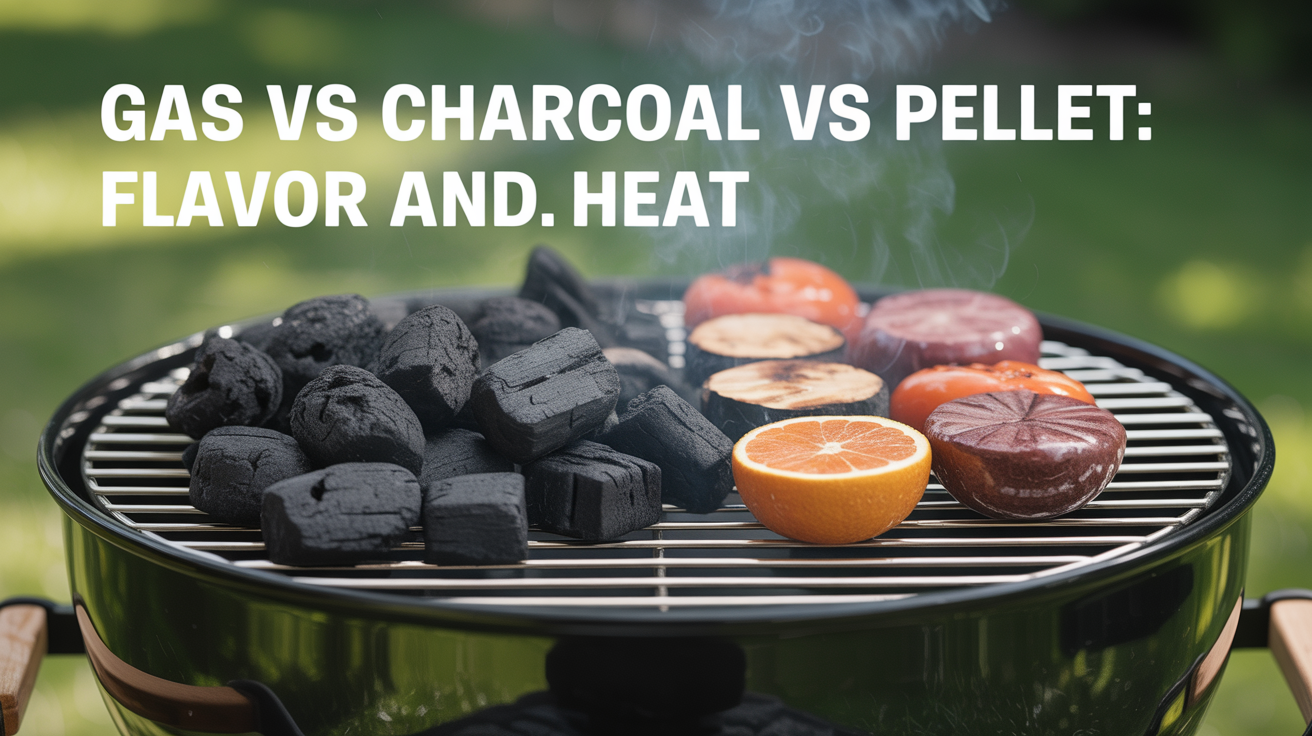
Gas is convenient. Charcoal gets hot and adds real smoke flavor. Pellets split the difference with wood smoke and automated temperature control. Those three sentences cover the basics, but they don't tell you which fuel fits how you actually cook or what you're willing to deal with on a Saturday afternoon. Here's the honest grill fuel comparison.
What Each Fuel Is Actually Doing
Before comparing outputs, it helps to understand what combustion looks like for each option.
Gas (propane or natural gas) burns clean. You get radiant heat from the burners, convective heat from the air inside the lid, and conductive heat through the grates. There are no combustion byproducts that add flavor. What you taste is the Maillard reaction on the meat's surface, plus whatever fat vaporizes off the flavorizer bars and rises back up.
Charcoal produces combustion gases, ash, and a small amount of volatile compounds as it burns. That's where the smoke flavor comes from. Lump charcoal and briquettes behave differently. Lump burns hotter and cleaner with a more neutral smoke. Briquettes are more consistent in size and burn time but produce more ash and a slightly different flavor profile. For a closer look at that split, see lump charcoal vs briquettes.
Pellets are compressed hardwood. They combust fairly cleanly at high temperatures, but the flavor comes from the wood species you're burning. Oak tastes different from hickory, which tastes different from apple. That adjustability is something gas and charcoal don't offer without extra steps.
Flavor: What You Actually Get
This is where most people's opinions get firm, so here's a plain breakdown.
Gas Grills
Gas grills don't add smoke flavor on their own. What you taste from a burger or steak cooked over gas comes from the meat itself, plus the fat that drips onto the heat deflectors and vaporizes back up. That dripping fat does contribute a faint char flavor, but it's subtle. For high-heat grilling where you want a clean sear, gas is fine. Some cooks actually prefer it for beef because nothing competes with the meat.
If you want smoke on a gas grill, you have to add it manually. A foil pouch of wood chips, a smoker box, or a chunk placed directly over a burner all work. The smoke is real, but it adds setup time and attention.
Charcoal Grills
Charcoal gives you genuine smoke flavor without extra effort. A well-lit charcoal fire, fully ashed-over coals, no lighter fluid residue, contributes a faint smoky undertone even for quick cooks like chicken thighs or sausages. That character deepens with longer cooks.
The tradeoff is variability. Charcoal flavor depends on whether your coals are fully lit, how much fat is dripping, whether you're using lump or briquettes, and where your vents are sitting. That variability is part of the appeal for some people and a source of frustration for others.
Pellet Grills
Pellet grills in the typical smoking range (225 to 325°F / 107 to 163°C) produce a steady, mild smoke from the combusting wood pellets. It's less aggressive than an offset smoker running full logs, but more consistent than charcoal. The wood species you choose matters here: fruitwoods like apple or cherry are mild and slightly sweet; hickory and mesquite are stronger and earthier.
At high temps (450°F / 232°C and above, in sear mode on models that have it), pellets burn almost completely and produce very little smoke. In that range, you're close to the gas grill experience: decent sear, minimal smoke. For specifics on choosing wood flavor, see best wood for smoking different meats.
Heat Output and Temperature Control
Flavor is personal. Heat behavior is more measurable.
Peak Temperatures
Most three-burner gas grills reach 500 to 550°F (260 to 288°C) with the lid closed. High-output models push toward 600°F (316°C). Reliable and repeatable.
A well-built charcoal fire can hit 600 to 700°F (316 to 371°C) or higher. That extra headroom is why charcoal remains the standard for searing thick steaks, cooking pizza, or anything where you want a real char at the surface.
Most pellet grills top out around 450 to 500°F (232 to 260°C), though newer models advertise higher. In practice, the sear you get from a pellet grill is softer than charcoal. Fine for most cooks, but if a hard crust matters deeply (smash burgers, dry-aged steaks), charcoal has a clear edge.
Temperature Stability
Pellet grills win on stability. A PID controller reads an internal probe and feeds pellets automatically to hold 225°F (107°C) within a few degrees for hours. You set it, walk away, check the probe occasionally.
Gas is also stable once you dial in the burner knobs. The main vulnerability is lid-open time and wind, both of which bleed heat fast.
Charcoal requires active management. Vent adjustments, adding fuel when a long cook demands it, dealing with ash buildup over time. Learning to control grill temperature is a real skill on charcoal in a way it just isn't with gas or pellets.
Preheat Time
- Gas: 10 to 15 minutes.
- Charcoal: 20 to 30 minutes for a full chimney to ash over properly.
- Pellets: 10 to 20 minutes depending on starting temp.
Gas wins on weeknight convenience. That time difference matters when you're hungry and it's 6 p.m.
Side-by-Side Summary
| Factor | Gas | Charcoal | Pellet |
|---|---|---|---|
| Smoke flavor | None without additions | Mild to moderate | Mild to moderate, wood-dependent |
| Peak heat | 500-600°F (260-316°C) | 600-700°F+ (316-371°C+) | 450-500°F (232-260°C) |
| Temp control | Manual, reliable | Requires active management | Automated, very consistent |
| Preheat time | 10-15 min | 20-30 min | 10-20 min |
| Best for | Quick cooks, everyday grilling | Searing, versatile cooking | Low-and-slow, set-and-forget |
| Learning curve | Low | Medium | Low to medium |
Which Fuel Makes Sense for You
There's no universal answer here. It depends on what and how you cook.
Gas is the right pick if you grill three to five times a week, care most about speed, or are new to grilling and want limited variables. It's the most forgiving starting point for everyday cooking.
Charcoal is the right pick if searing heat is a priority, you enjoy managing a fire, or you do a mix of direct and indirect cooking. Charcoal is the most versatile fuel in raw cooking-style range, from a 45-second blister on a thin steak to a 6-hour rib session.
Pellets are the right pick if most of your cooking skews low-and-slow (brisket, pulled pork, ribs), you want wood smoke flavor without babysitting a fire, or you want one cooker that handles both tasks decently. Pellet grills are good all-rounders for the patient cook.
A lot of serious backyard cooks end up with two. Gas for weeknights, charcoal or pellets for weekend projects. That's not excess; it's recognizing that each tool does something the other doesn't.
Frequently Asked Questions
Do gas grills really produce zero smoke flavor?
Mostly yes. The one exception is vaporized drippings: fat hitting hot grates or flavorizer bars does produce a small amount of smoky flavor. But it's minor compared to charcoal or wood combustion. If smoke flavor matters to you on a gas grill, add a smoker box with hardwood chips or a foil packet over a burner.
Is charcoal actually better than pellets for flavor?
It depends on the cook and the person. For long, slow smokes, many competition pitmasters prefer charcoal for its specific smoke character and the way it interacts with the fire. For controlled, repeatable results with wood-specific flavor, pellets are hard to match. Neither is objectively superior. They're different tools making different flavors.
Can a pellet grill replace a charcoal grill for everything?
For most home cooks, yes. A pellet grill handles smoking and everyday grilling adequately. What you'll give up is extreme searing heat. If you regularly cook things where 650 to 700°F (343 to 371°C) at the grate matters (very thick steaks, smash burgers), a kettle or kamado on the side makes sense.
Does lighter fluid actually affect the flavor of food?
Yes, if it hasn't burned off completely before you start cooking. The solution is simple: use a chimney starter. No fluid needed, faster preheat, no off-flavor risk.
Which fuel costs least to run long term?
Charcoal is typically the lowest cost per cook for occasional grilling. Propane prices vary widely by region, but a natural gas line hookup is usually the most economical for high-volume cooking. Pellets run roughly $1 to $2 per pound, and a 12-hour brisket can burn 6 to 10 pounds. Factor that into your math if you plan to smoke regularly.