Smoking & Low-and-Slow
How Long to Smoke Different Meats
A practical guide to smoking times and temperatures for every cut, from brisket to salmon. Includes a quick reference chart.
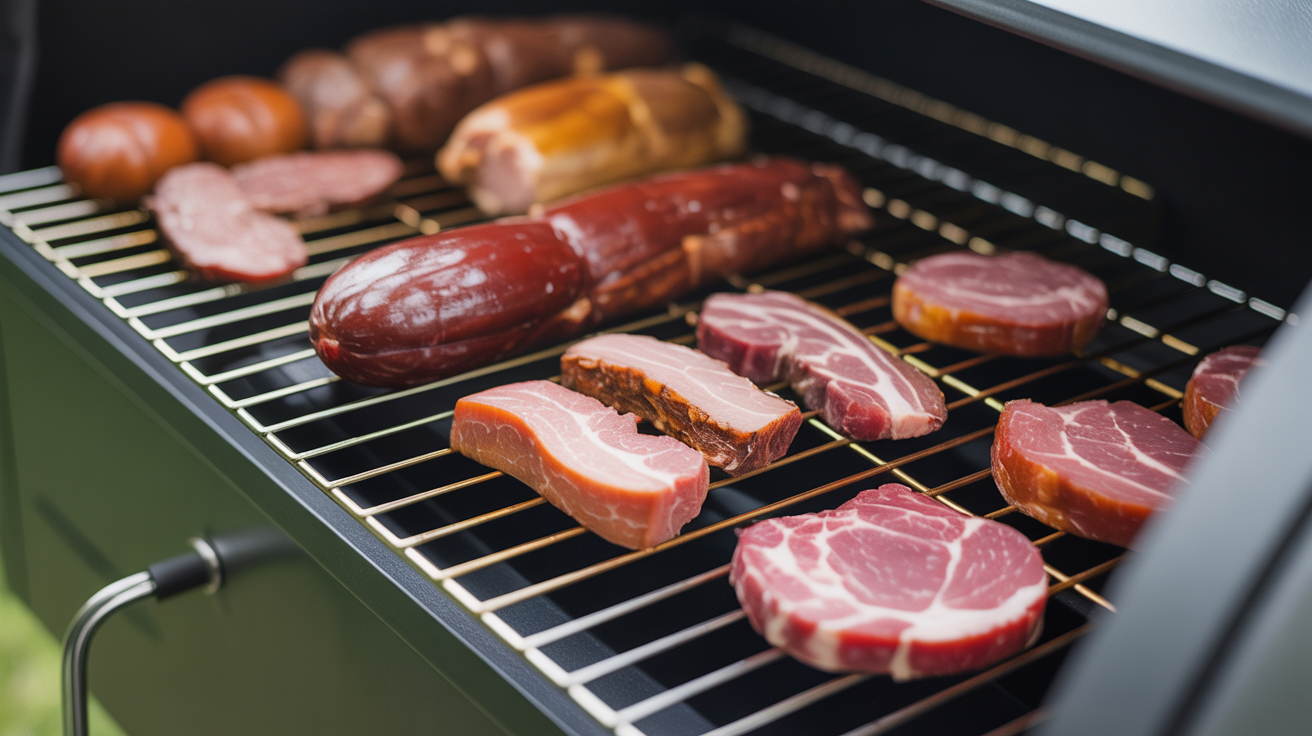
Smoking times depend on three things: the cut, its weight, and the temperature you're running your smoker. Most low-and-slow cuts (brisket, pork butt, ribs) need anywhere from 4 to 16 hours at 225-250°F (107-121°C), while faster proteins like chicken and fish are done in 2 to 4 hours. The numbers below are reliable starting points, but internal temperature is always the actual finish line.
At a Glance
- Time-per-pound is a planning tool, not a finish line. Smoke to internal temperature, always.
- Brisket and pork butt: 12-16 hrs at 225-250°F (107-121°C), pulled at 200-205°F (93-96°C).
- Ribs: 4-7 hrs depending on baby back vs spare, judged by bend and probe feel more than a single number.
- Poultry needs a hotter chamber (275-300°F / 135-149°C) than red meat, or the skin never renders.
- Safe minimum internal temperatures don't move regardless of smoker type: 145°F (63°C) whole cuts of beef/pork/lamb, 160°F (71°C) ground meats, 165°F (74°C) poultry.
- Internal temperature keeps rising after you pull the meat off. Plan your pull temp with that carryover in mind.
Why Smoking Times Vary So Much
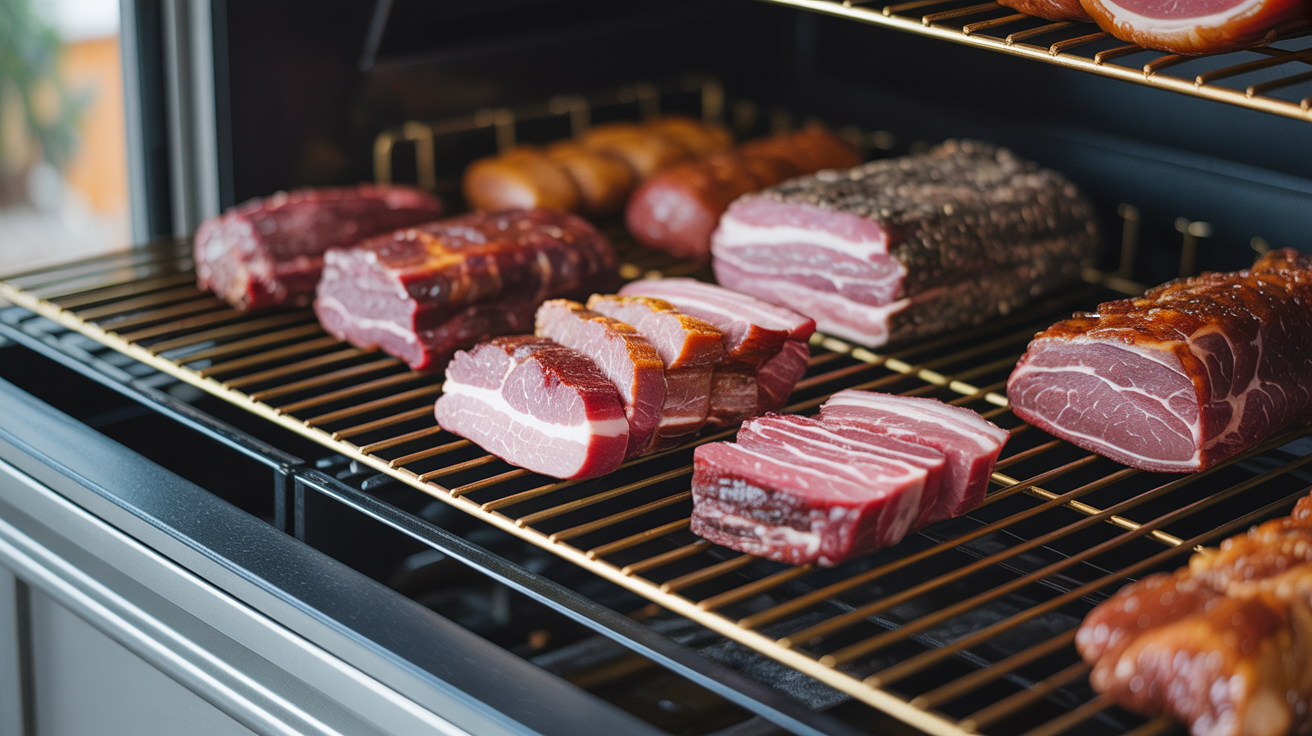
Time-per-pound estimates get passed around a lot, and they're useful for rough planning. But two briskets of the same weight can finish an hour apart because of differences in fat cap thickness, how the meat was aged, even ambient temperature outside. A cold, windy day can add an hour or more to a long cook.
The honest answer is that you smoke to temperature, not to time. A probe thermometer is not optional for this kind of cooking. That said, time estimates help you plan your day, so both are worth knowing.
One other variable: smoker type matters. Offset smokers run a bit hotter at the grate than the dial suggests. Pellet grills hold temperature consistently but tend to run 10-15°F cooler than set. A kamado can hold 225°F (107°C) for 18 hours on a single load of charcoal. Account for your equipment when using the numbers below.
Smoking Times and Temperatures at a Glance
This table covers the most common cuts. Temperatures are smoker-chamber target temperatures. Internal temps are the pull-off (or close-to-pull-off) targets.
| Meat | Smoker Temp | Approx. Time | Pull Temp |
|---|---|---|---|
| Brisket (whole packer, 12-14 lb) | 225-250°F (107-121°C) | 12-16 hrs | 200-205°F (93-96°C) |
| Pork shoulder/butt (8-10 lb) | 225-250°F (107-121°C) | 12-16 hrs | 200-205°F (93-96°C) |
| Baby back ribs (2-3 lb rack) | 225-250°F (107-121°C) | 4-5 hrs | 195-203°F (91-95°C) |
| Spare ribs / St. Louis (3-4 lb rack) | 225-250°F (107-121°C) | 5-7 hrs | 195-203°F (91-95°C) |
| Beef short ribs (plate ribs) | 250-275°F (121-135°C) | 8-10 hrs | 200-205°F (93-96°C) |
| Whole chicken (4-5 lb) | 275-300°F (135-149°C) | 3-4 hrs | 165°F (74°C) |
| Chicken thighs/drumsticks | 275°F (135°C) | 2-2.5 hrs | 175°F (79°C) |
| Whole turkey (12-14 lb) | 250-275°F (121-135°C) | 6-8 hrs | 165°F (74°C) |
| Salmon fillet (1-2 lb) | 180-225°F (82-107°C) | 1-3 hrs | 145°F (63°C) |
| Pork sausage links | 225-250°F (107-121°C) | 1.5-2 hrs | 160°F (71°C) |
| Pork belly (3-4 lb slab) | 225°F (107°C) | 4-5 hrs | 165°F (74°C) |
| Lamb leg (bone-in, 6-7 lb) | 225-250°F (107-121°C) | 6-8 hrs | 145-165°F (63-74°C) |
Those pull temps line up with the food-safety floor for each protein category. Michigan State University Extension's smoker-safety guidance sets the same baseline: 145°F for whole cuts of beef, pork, lamb, and veal, 160°F for ground meats, and 165°F for all poultry, with a chamber temperature held between 225°F and 300°F throughout the cook. The higher pull temps in the table above (200-205°F for brisket and pork butt, for instance) aren't a food-safety requirement; they're well past the safety floor and are there for texture, so the collagen has time to fully render into gelatin.
Long Cooks: Brisket, Pork Butt, and Beef Ribs
These are the signature low-and-slow cuts. They need time to break down tough connective tissue into gelatin, which is what makes the meat pull apart and stay moist.
Brisket
A whole packer brisket (flat and point together) runs 12 to 16 hours at 225-250°F (107-121°C). Plan on roughly 1 to 1.25 hours per pound as a rough guide, but trust your probe over the clock. Pull it when the point and flat both read 200-205°F (93-96°C) and the probe slides in with almost no resistance.
The stall is real. Around 155-170°F (68-77°C), the brisket can sit at the same internal temperature for 2 to 4 hours while surface moisture evaporates and cools the meat. Wrapping in butcher paper or foil at 165°F (74°C) pushes through the stall faster without steaming the bark too much. For the full process, see the how to smoke a brisket guide.
Pork Shoulder (Pork Butt)
An 8-10 lb bone-in pork butt needs 12-16 hours at the same 225-250°F (107-121°C). Pull temp is 200-205°F (93-96°C), at which point the bone slides out clean and the meat shreds easily. Some cooks pull at 195°F (91°C) if they want a bit more texture in the finished pulled pork. For a full walkthrough, the how to smoke pulled pork guide covers the whole process including resting and pulling.
The stall hits pork shoulder too, usually between 150-165°F (66-74°C). Same approach applies: either wait it out or wrap.
Beef Short Ribs (Plate Ribs)
These big beef dino ribs run at a slightly higher temperature, 250-275°F (121-135°C), and take 8 to 10 hours. Pull around 200-205°F (93-96°C). They don't need wrapping as often as brisket since the generous fat cap self-bastes the meat.
Ribs: Baby Backs vs. Spare Ribs
Ribs are a little different because there's no single internal temperature that works as cleanly as with brisket. Connective tissue in ribs needs time to render, and the meat-on-bone structure makes probe placement tricky.
Baby Back Ribs
Baby backs are smaller and leaner, so they finish in 4 to 5 hours at 225-250°F (107-121°C). A good doneness check: pick up the rack with tongs at the center, and if the ends flop down and the bark cracks a bit, they're done. Probe temp will be around 195-203°F (91-95°C) between the bones.
Spare Ribs and St. Louis Cut
Spare ribs are bigger and fattier, which means more flavor but more time: 5 to 7 hours. St. Louis cut (spares with the rib tips and sternum removed) falls in the same range. If you're following the 3-2-1 method for smoking ribs, the timing works out naturally through the unwrapped, wrapped, and sauced stages.
Faster Smokes: Poultry and Fish
Not everything on the smoker needs 12 hours. Poultry and fish are quicker but need just as much attention on temperature.
Whole Chicken
Run chicken hotter than you'd run brisket. At 225°F (107°C), chicken skin turns rubbery and never renders properly. Run your smoker at 275-300°F (135-149°C) and a whole bird is done in 3 to 4 hours. Pull it when the thickest part of the thigh reads 165°F (74°C). If you want crispier skin, run it at 325°F (163°C) for the final 30 minutes.
Spatchcocking (removing the backbone and flattening the bird) cuts cook time by 30-45 minutes and helps everything cook more evenly.
Chicken Thighs and Drumsticks
Thighs and drumsticks at 275°F (135°C) are done in about 2 to 2.5 hours. Pull thighs at 175°F (79°C) rather than the 165°F (74°C) safe minimum. The extra few degrees of internal temp lets the dark meat fat render fully and gives a much better texture.
Whole Turkey
Budget 6 to 8 hours for a 12-14 lb turkey at 250-275°F (121-135°C). Pull it at 165°F (74°C) in the thigh. Spatchcocking also helps here, dropping the time to 4-5 hours and avoiding the dry-breast problem that comes from waiting for the dark meat to finish.
Salmon and Fish
Fish smokes at a lower temperature than meat. For salmon, run your smoker at 180-225°F (82-107°C). A 1-2 lb fillet takes 1.5 to 3 hours depending on thickness. Pull at 145°F (63°C). At these temperatures, the smoke flavor is mild and the texture stays silky. Going higher than 225°F (107°C) will cook it faster but dry out thinner sections.
Sausage and Pork Belly
Sausage Links
Fresh sausage links need 1.5 to 2 hours at 225-250°F (107-121°C). Pull at 160°F (71°C) for pork. Poultry sausage pulls at 165°F (74°C). Sausage benefits from a rest off the smoker to let the casing settle before cutting.
Pork Belly
A 3-4 lb pork belly slab runs 4 to 5 hours at 225°F (107°C). Pull around 165°F (74°C). The fat renders and the slices hold together without being greasy. If you're making smoked bacon from a cured belly, same target applies.
Getting Accurate Results Every Time
A few habits make a real difference:
Use a leave-in probe thermometer. Set it, walk away, and let the alarm tell you when to check. Lifting the lid to check slows down the cook more than most people realize.
Rest the meat properly. Brisket and pork butt benefit from a long rest: 1 to 2 hours wrapped in butcher paper and held in a cooler (with a towel on top for insulation). Ribs and chicken need 10-15 minutes.
Account for carryover. The internal temperature doesn't stop rising the second you pull the meat. The University of Wyoming Extension's guidance on resting meat explains why: the exterior of the meat is still hotter than the center when you pull it, and that heat keeps migrating inward until the temperatures even out. How much it climbs depends on mass:
| Cut | Typical Pull Temp | Carryover Rise | Final Resting Temp |
|---|---|---|---|
| Chicken thigh/breast | 160-165°F (71-74°C) | 3-5°F (2-3°C) | 165-170°F (74-77°C) |
| Pork chop / steak | 140-145°F (60-63°C) | 3-6°F (2-3°C) | 145-150°F (63-66°C) |
| Whole chicken | 160°F (71°C) | 5°F (3°C) | 165°F (74°C) |
| Pork shoulder / butt | 195-200°F (91-93°C) | 3-5°F (2-3°C) | 200-205°F (93-96°C) |
| Whole packer brisket | 198-200°F (92-93°C) | 3-5°F (2-3°C) | 202-205°F (94-96°C) |
The bigger and denser the cut, the more residual heat it's holding, and the more it carries over. This is exactly why you pull a brisket a few degrees under its final target: it'll close the gap on its own while it rests.
Write down what you observe. Smoking is repeatable once you know how your specific cooker behaves. Log the weight, time on, time off, and final temp for each cook. You'll build a reliable picture of how your equipment runs over a few sessions.
Frequently Asked Questions
Does more smoke mean longer cook time?
No. Smoke flavor is absorbed most in the first few hours, while the surface is still moist. After the bark sets, the meat doesn't take on much more smoke regardless of how long it cooks. Running more wood late in a cook mainly adds bitterness.
Should I always wrap my meat?
Wrapping is a choice, not a requirement. It speeds up the cook through the stall and can result in more tender meat, but it also softens the bark. Some pitmasters never wrap brisket; others always do. Try both ways and decide what finish you prefer.
Can I smoke frozen meat?
You can, but it adds significant cook time and changes how the surface takes smoke early on. Thawing fully in the refrigerator first gives more predictable results.
What internal temperature do I target for pulled pork?
200-205°F (93-96°C) is the range where pork shoulder breaks down enough to shred easily. Pulling at 190°F (88°C) will give you sliceable pork, which is a different (also good) result. The pull test also works: grab a bone and twist; if it releases cleanly, you're there.
Why does my smoker temperature matter so much?
Chamber temperature determines how quickly moisture evaporates from the surface and how fast collagen renders in tough cuts. Running too hot rushes the outside without giving connective tissue time to break down. Running too cool extends the cook without necessarily improving the result. The ranges in this guide are practical targets, not dogma, but they're where most cooks get consistent results.
My smoker thermometer and my meat probe disagree with each other. Which one do I trust?
Trust the meat probe for doneness and the chamber thermometer for fire management, and don't expect them to agree on anything except being roughly in their target ranges. Chamber thermometers built into smoker lids can read 25-50°F (14-28°C) off from actual grate temperature depending on placement, so a separate oven-safe thermometer clipped near the grate is worth the ten-dollar investment if you're chasing precision.
How much time should I add for a cold or windy day?
Budget an extra 45 minutes to 1.5 hours for a long cook (brisket, pork butt) if it's under 40°F (4°C) or consistently windy. Faster cooks like chicken or ribs usually only lose 15-20 minutes to weather since they spend less total time exposed. A windbreak, even a couple of sheets of plywood propped up around the smoker, cuts the fuel and time penalty significantly.