Gear & Grills
How to Choose a Pellet Grill
A practical pellet grill buying guide covering hopper size, PID controllers, cooking area, build quality, and budget tiers to help you choose right.
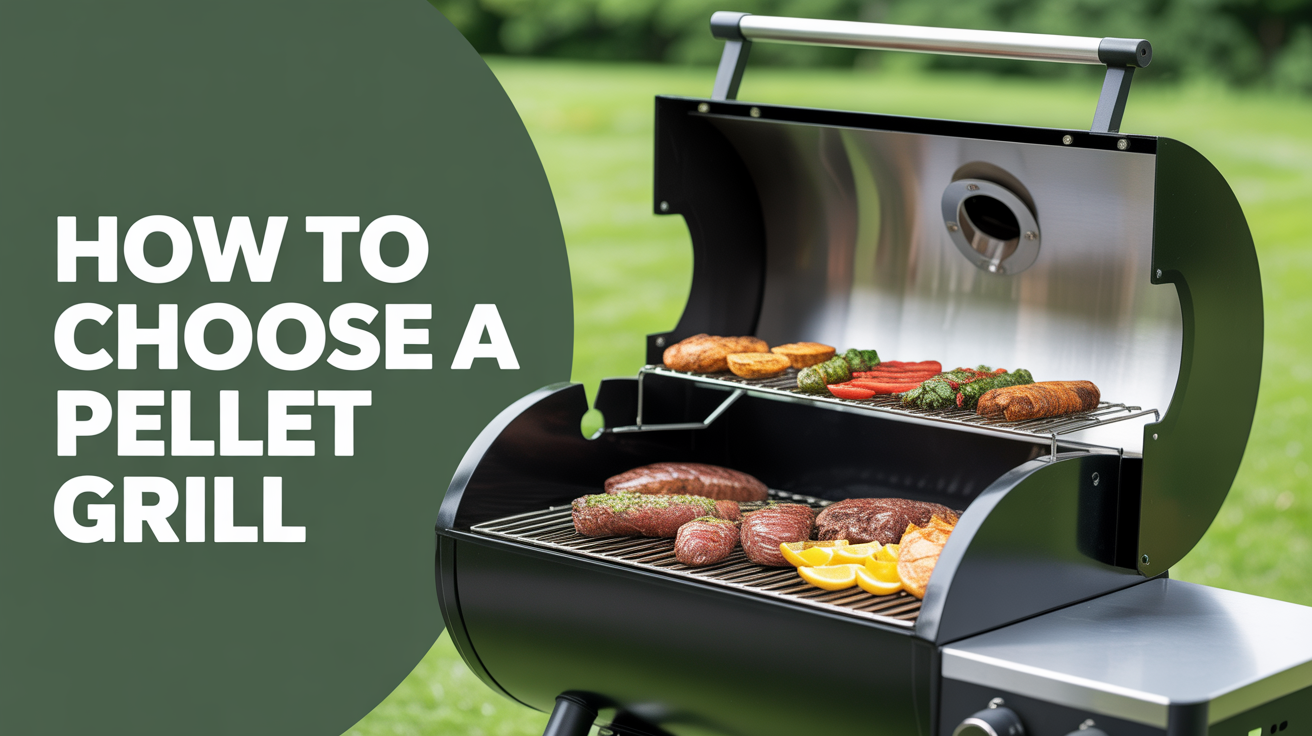
Pellet grills have a way of turning skeptics into converts. Set your temperature, load the hopper, and walk away. The grill feeds itself fuel, maintains heat, and produces smoke without you babysitting a firebox. But "pellet grill" covers a wide range of machines, from entry-level weekend cookers to near-commercial rigs that cost more than some used cars. Before you land on the best pellet grill for your situation, it helps to understand what separates a thoughtful purchase from an expensive regret.
How a pellet grill actually works
A pellet smoker is part grill, part oven, part automated smoker. Wood pellets (compressed hardwood sawdust, no binders) sit in a hopper on the side. An auger (a screw-drive conveyor) pulls pellets into a fire pot at a rate controlled by the grill's digital board. A hot rod ignites the pellets; a fan pushes airflow to maintain combustion. The controller reads a temperature probe in the cooking chamber and speeds up or slows down the auger to hit your set point.
That's the core loop. Every other feature (Wi-Fi, multiple probes, sear zones, direct-flame access) is built on top of it. When you're comparing models, trace every claimed advantage back to that loop and ask whether the implementation is solid.
Hopper and auger: the fuel system
The hopper is the fuel reservoir. A 20-pound hopper sounds generous until you realize a long brisket cook at 225°F can burn through 1–2 pounds of pellets per hour. That's 10–20 hours of capacity on a full load, which is usually enough, but a cramped 10-pound hopper forces mid-cook refills at inconvenient hours.
Check the auger design while you're at it. On cheaper units, a jammed auger (caused by wet or poorly made pellets that swell and bind) can kill a cook. Better grills use a larger-diameter auger tube and include a purge or cleanout mode. Some designs place the fire pot directly under the grill grates; others route heat through a diffuser plate that separates direct flame from the cooking surface. Both work, but they produce different results: diffuser setups are better for low-and-slow smoking; grills with a direct-flame zone can sear at higher temps.
Temperature range and PID controllers
The advertised temperature range of a pellet grill tells you a lot about its intended use. A unit that maxes out at 450°F is a smoker first and a griller second. One that claims 650°F is trying to compete with gas grills. Reality check: most pellet grills perform best between 225°F and 400°F. Above that, maintaining consistent heat across the grate gets harder, and smoke flavor drops off because pellets burn faster and cleaner at high temperatures.
More important than the ceiling is how accurately the grill holds temperature. This is where PID controllers matter. A PID (proportional-integral-derivative) controller uses an algorithm to anticipate temperature drift and make small adjustments before the grill swings too far off target. Basic bang-bang controllers just toggle the auger on or off when a threshold is crossed, which produces temperature swings of ±25°F or more. A PID-equipped grill typically holds within ±5–10°F, which is the difference between a consistent bark on a brisket and an unpredictable one.
When you're reading specs, look for "PID controller" explicitly. "Digital controller" doesn't mean PID. If the spec sheet is vague, check owner forums, where community members typically run temperature logs.
Cooking area: how much grate space do you need?
Cooking area is listed in square inches. A 500-square-inch grill is generally enough for two racks of ribs, a couple of chickens, or a packer brisket if you position it right. Below 400 square inches, you're feeding a household; above 700 square inches, you're cooking for parties.
Two practical things often go unmentioned in reviews. First, the upper rack (if there is one) typically runs hotter than the main grate because it's closer to the top of the cooking chamber. Good for warming; less predictable for a primary cook. Second, heat distribution across the main grate is rarely even. The area closest to the hot spot (usually center-rear above the fire pot) runs warmer. On better-built grills with thick steel and well-designed heat diffusers, the variance is manageable. On thin-walled budget units, you may need to rotate food mid-cook.
For most households cooking 2–4 times per week, something in the 500–650 square inch range hits the practical sweet spot. Bigger than you think you need is usually right.
Build quality and what it predicts
Gauge steel matters more than it shows in photos. Thin-gauge steel (think 14–16 gauge) heats up fast and leaks heat fast too. Thicker steel (12 gauge or heavier) holds heat better, makes the grill more efficient in cold weather, and resists warping over years of use. You can feel the difference when you open the lid: a quality build has a lid that closes with a satisfying, weighted thud. A cheap build rattles.
Grate material follows the same pattern. Porcelain-coated grates resist rust and clean up easily but can chip. Stainless grates are durable and won't chip but require more seasoning to prevent sticking. Cast iron grates retain heat well and produce good sear marks, but they need regular oiling and will rust if neglected.
Look at the fit of panels, the quality of the gasket around the lid, and how the hopper attaches to the body. Gaps and loose fit mean heat and smoke loss. Also consider the grease management system: pellet grills produce significant drippings, and a poorly designed drain that channels grease toward the fire pot is a grease fire waiting to happen.
Pair any grill purchase with a reliable thermometer. Your grill's built-in probe is a reference point, not a precision instrument. See The Best Meat Thermometer for Grilling for what to look for in a dedicated probe.
Budget tiers: what your money actually buys
| Tier | Typical price range | What you get |
|---|---|---|
| Entry | Under $400 | Basic PID or bang-bang controller, thin steel, limited warranty, smaller hopper |
| Mid-range | $400–$800 | PID controller, 16-gauge or better steel, Wi-Fi app, larger cooking area |
| Upper-mid | $800–$1,200 | Heavier-gauge construction, direct-flame access or sear zone, better temp consistency |
| Premium | $1,200+ | Thick steel, precise airflow management, long warranty, commercial-grade auger and fire pot |
Entry-level grills are a reasonable way to learn whether pellet cooking fits your style before committing. But they have real limitations in cold weather performance, temperature consistency, and longevity. If you already know you want a pellet smoker and will cook on it weekly, the mid-range tier offers the best combination of capability and value. Premium units earn their price through durability and temperature precision, but the cooking results between a well-run mid-range and a premium unit are often closer than the price difference suggests.
Before assuming a pellet grill replaces everything else, read through Kamado vs Offset vs Kettle Smokers. Each style makes real trade-offs in smoke flavor intensity, temperature ceilings, and fuel flexibility.
Practical buying checklist
Before you commit to any model, work through these:
- Does the grill have a PID controller, or does the spec sheet just say "digital"?
- What is the minimum temperature? (Below 180°F is useful for cold smoking or very long holds.)
- How large is the hopper, and does it have a pellet cleanout port?
- What gauge is the main cooking chamber steel?
- Is there a direct-flame zone, or is cooking entirely convective?
- What does the warranty cover, and for how long? (Auger and fire pot are the most failure-prone parts.)
- Are replacement parts and pellets available locally or from multiple suppliers?
- If Wi-Fi control matters to you: does the app work without a cloud subscription, or will it brick if the company folds?
Also consider the accessories that make day-to-day use cleaner. A cover, a grease bucket liner, and a few basic probes go a long way. Grilling Tools Worth Owning covers the non-obvious picks.
FAQ
How often do I need to clean a pellet grill? After every 2–3 cooks, empty the grease bucket and wipe the diffuser plate. Every 5–10 cooks, vacuum ash out of the fire pot, since buildup restricts airflow and makes ignition unreliable. A deep clean of the cooking chamber every season or two keeps the interior from becoming a fire risk from accumulated grease.
Can a pellet grill replace a charcoal grill? For low-and-slow cooking and hands-off convenience, yes. For high-heat searing with a true char, most pellet grills fall short unless they have a dedicated direct-flame or sear zone. If you grill steaks over direct heat regularly, you may still want a charcoal grill or gas grill alongside the pellet cooker.
Do pellet grills work in cold weather? They work, but they work harder. Cold air and wind cause heat loss through the cooking chamber walls, so the grill burns more pellets and struggles to reach maximum temperatures. Thicker-gauge steel mitigates this significantly. In very cold climates, a thermal blanket designed for your specific model can help.
What kind of pellets should I buy? Start with 100% hardwood pellets from a recognized supplier. Blended pellets (hardwood plus fillers like oak or alder) are cheaper but produce less distinct smoke flavor. Hickory and cherry are versatile starting points. Avoid pellets stored in humid conditions; swollen or soft pellets jam augers.
Is Wi-Fi control worth paying for? If you do long overnight cooks, remote monitoring is genuinely useful: you can check cook temp and probe readings without going outside. The question is whether the app is well-maintained and whether it requires an ongoing cloud connection. Some manufacturers have shut down app infrastructure, leaving connected features inoperable. Check the app's review history before treating Wi-Fi as a selling point.