Smoking & Low-and-Slow
How to Smoke a Whole Chicken
Learn how to smoke a whole chicken with crispy skin, the right wood, and exact target temps. Includes spatchcock tips, brining, and step-by-step instructions.
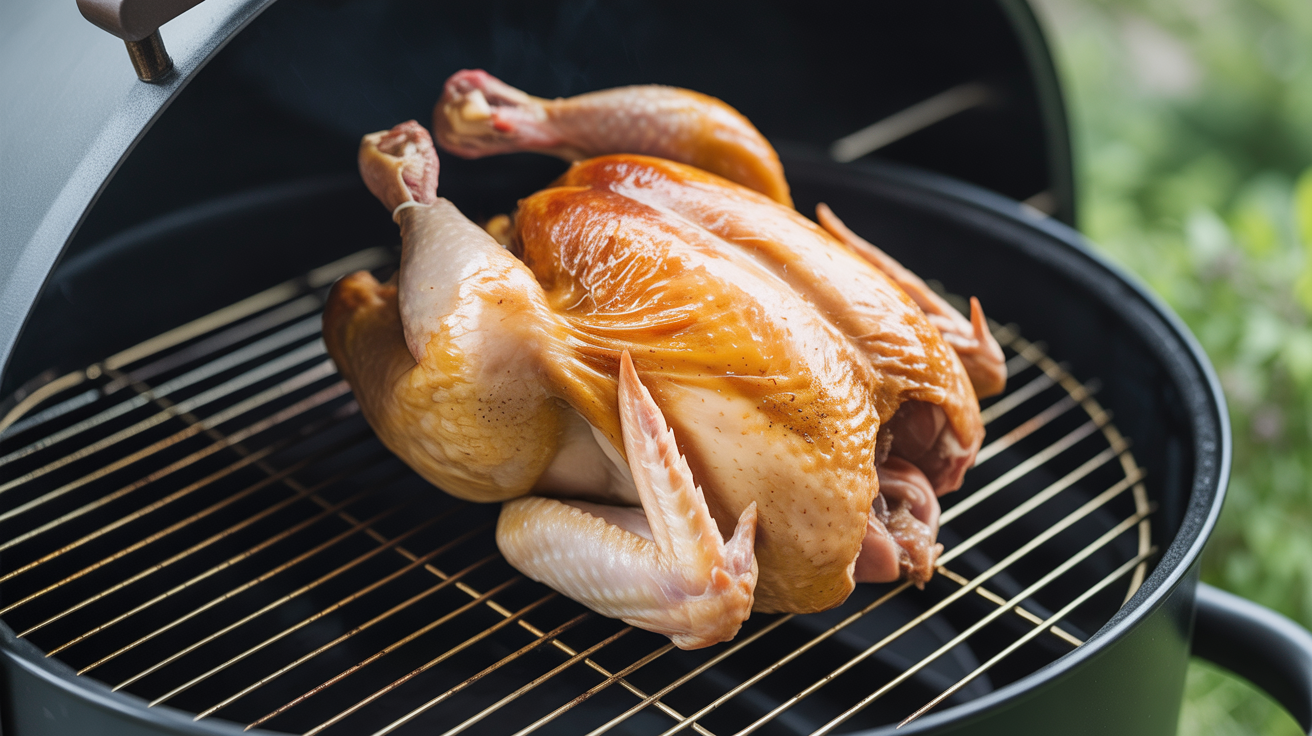
Smoked whole chicken is one of the most rewarding cooks you can do on a weekend. It's forgiving enough for beginners, fast enough to finish the same day, and produces results that outclass anything from a grocery store rotisserie. The challenge most people run into is rubbery skin and uneven doneness. Both are fixable, and this guide covers exactly how.
Spatchcock or leave it whole?
You have two options before the bird ever touches smoke.
Leaving the chicken whole gives you the classic presentation and slightly more even moisture throughout the breast, since the bones act as a buffer. The downside: it takes longer, and the thighs and breast hit their target temperatures at different rates. You need to manage that gap.
Spatchcocking (removing the backbone so the bird lies flat) solves the uneven cook problem. The thighs and breast are now at roughly the same height above the heat, so they finish closer together. Skin coverage is also better because everything faces up. If you have kitchen shears and don't care about presentation, spatchcock it. If you want the whole bird on the table, read the section below on temp management.
For a first cook, spatchcocking is the easier path.
Dry brine for crispy skin
This step separates a good smoked chicken from a great one. Wet brines add moisture but also introduce surface water, which is the enemy of crispy skin. Dry brining draws moisture out initially, then pulls it back in, and in the process it dissolves some of the skin proteins so the skin tightens and renders better in the smoke.
The method is simple. Rub the chicken all over, including under the breast skin, with kosher salt at a rate of about half a teaspoon per pound. Set it on a wire rack over a sheet pan and refrigerate uncovered for 4 to 24 hours. Longer is better. When you pull it out, the surface should look dry. That dryness is what you want going into the smoker.
Pat it one more time with a paper towel if there's any visible moisture.
Seasoning and rub
After the dry brine, apply your rub. Keep it simple for chicken: black pepper, garlic powder, onion powder, smoked paprika, a little cayenne if you want heat. The salt is already in. Coat everything evenly, including the cavity.
If you want extra flavor, tuck half a lemon, a few garlic cloves, and fresh thyme into the cavity. It will not dramatically perfume the meat, but the steam helps.
Smoker temperature: the skin problem explained
This is where most smoked chicken recipes go wrong. Low-and-slow is ideal for brisket and ribs using the 3-2-1 method, but chicken skin at 225°F turns out pale, soft, and unpleasant. The fat in the skin needs higher heat to render fully.
Run your smoker at 275 to 325°F for chicken. That range still gives you meaningful smoke penetration and a gradual enough cook that the breast doesn't dry out before the thighs finish, but it gets the skin crispy. If your smoker can't easily hold above 275°F, plan to crank the heat or transfer the bird to a hot grill for the last 10 to 15 minutes to finish the skin.
A three to four pound chicken at 300°F takes roughly 1.5 to 2 hours. At 275°F, expect 2 to 2.5 hours. Time is a reference point. Temperature is the actual target.
Wood choice
Chicken is mild and takes on smoke quickly, so lighter woods work better here than the heavy smoke you'd use for brisket. Cherry and apple are both excellent choices: fruit woods produce a slightly sweet, mild smoke and give the skin a rich mahogany color. Pecan is a good middle ground, a bit nuttier, less aggressive than hickory.
Avoid mesquite for a whole chicken. It burns hot and produces acrid smoke at the volumes needed for a long cook. A little goes a long way with any wood; two to three chunks or a small handful of chips added at the start is enough for a bird this size.
Step-by-step smoking process
- Dry brine the chicken 4 to 24 hours ahead and refrigerate uncovered.
- Pull the chicken from the fridge 30 minutes before cooking to take the chill off.
- Preheat your smoker to 300°F and add your chosen wood.
- Apply the rub evenly over the whole bird, including under the breast skin.
- Place the chicken breast-side up (or flat if spatchcocked) directly on the grate.
- Insert a probe thermometer into the thickest part of the breast, not touching bone.
- Smoke at 275 to 325°F until the breast reads 160 to 165°F and the thighs read 175°F.
- If the skin is not yet crispy, increase smoker temp to 375°F for the final 10 minutes or transfer to a hot grill.
- Rest the chicken uncovered for 10 to 15 minutes before carving.
Target temperatures by part
| Part | Target internal temp |
|---|---|
| Breast | 160-165°F |
| Thigh | 175°F |
| Drumstick | 175°F |
| Wings | 170°F |
Chicken is technically safe at 165°F throughout, but thighs and legs have more collagen and connective tissue. They benefit from reaching 175°F, where that tissue breaks down and the meat becomes tender rather than just safe. Breast meat at 165°F is at the high end of where it stays juicy, so pull it when the breast hits 160°F and carry-over will finish it during the rest.
Resting and carving
Resting is not optional. Ten to fifteen minutes uncovered lets the juices redistribute without steaming the skin you worked to crisp. Tent loosely with foil only if the kitchen is cold; otherwise, leave it open on a cutting board.
To carve, remove the legs first by cutting through the joint where the thigh meets the body. Separate the drumstick from the thigh. Then slice along either side of the breastbone and remove the breast halves whole before slicing. This gives you clean cuts instead of tearing.
The drippings in the drip pan are worth saving. They make an excellent base for chicken stock or a pan sauce.
Smoked whole chicken alongside other long cooks
If you're already firing up the smoker for a multi-protein cook, a whole chicken fits well at the end of a session with pulled pork. Pork shoulder runs at 225 to 250°F for the bulk of its cook. Once it's wrapped and resting, bump the smoker temp to 300°F and add the chicken for its 1.5 to 2-hour window. The chicken benefits from the residual smoke flavor already in the cooker.
FAQ
Why is the skin on my smoked chicken rubbery? Almost always a temperature issue. Chicken skin needs 275°F minimum to render the fat and crisp up. At 225°F, the skin steams rather than crisps. Raise your smoker temp or finish over direct high heat for 10 minutes at the end.
Do I need to brine a whole chicken before smoking? Not strictly, but a dry brine for 4 to 24 hours produces noticeably better skin and more seasoned meat throughout. If you're short on time, even a 2-hour dry brine helps.
How long does it take to smoke a whole chicken? At 300°F, a 3.5 to 4 pound bird takes roughly 1.5 to 2 hours. Variables include your smoker's actual temp, how often you open the lid, and the starting temperature of the chicken. Use a probe thermometer and cook to temp, not time.
Can I smoke a frozen chicken? No. The USDA advises against smoking or slow-cooking poultry from frozen because the outer layers spend too long in the danger zone (40 to 140°F) while the center thaws. Always thaw fully in the refrigerator first.
What internal temp is safe for smoked chicken? The USDA minimum is 165°F throughout. For thighs and legs, cooking to 175°F produces better texture without any food safety concern. For breast meat, pull at 160 to 165°F and let carry-over finish it during the rest.