Rubs, Sauces & Marinades
The Difference Between a Rub, Marinade, and Brine
Rub vs marinade vs brine: what each one actually does to meat, when to use which, and how to combine them for better results.
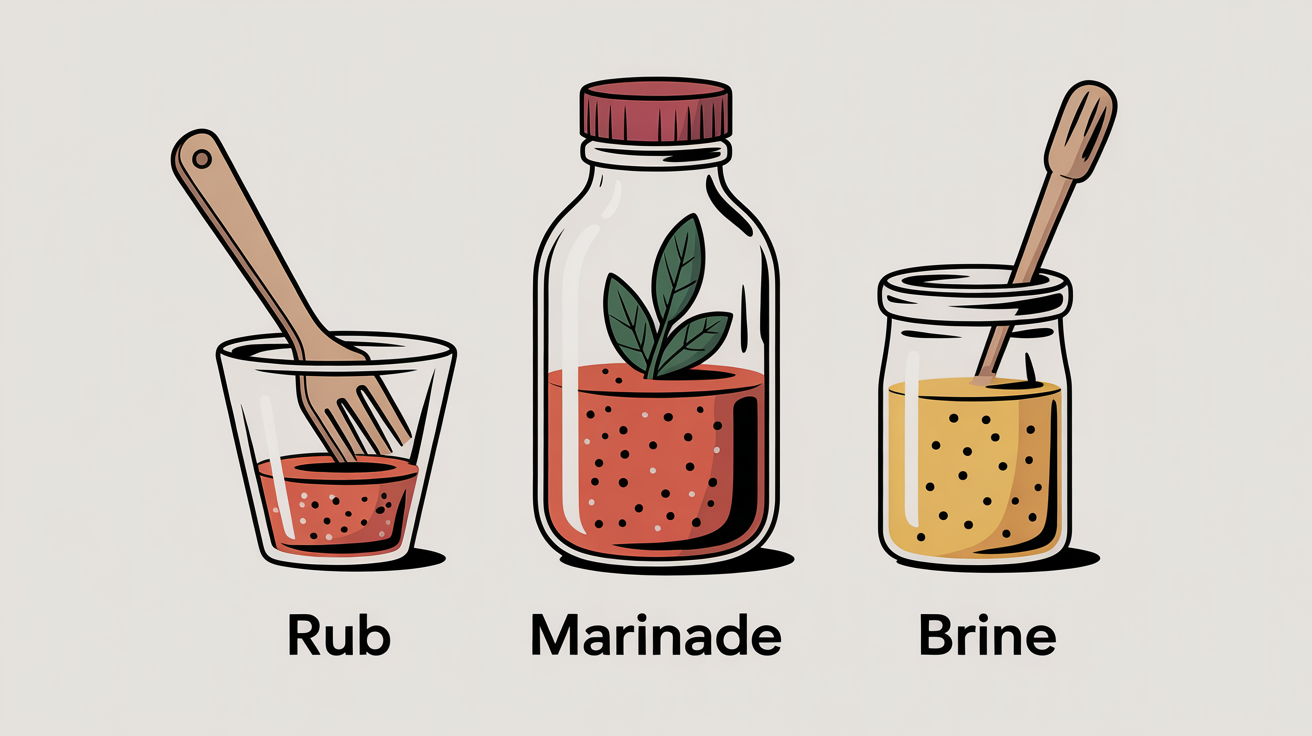
Before you light the coals or fire up the gas, you face a decision that shapes everything that follows: how are you going to season this meat? Three methods dominate backyard BBQ, rubs, marinades, and brines, and each one does something fundamentally different. Pick the wrong one and you get chicken that's seasoned on the outside but bland at the bone, or brisket with a wet surface that refuses to develop a crust.
Here's how each method actually works, when to reach for it, and how they can work together.
What each method does
Dry rub is a blend of dry spices and seasoning applied directly to the surface of meat. That's it. No liquid, no soaking time required. You press the rub into the surface, and it forms a spice coating that, under heat, becomes bark, that firm, deeply flavored exterior you see on competition brisket or well-smoked ribs.
The rub isn't penetrating the meat. Salt from the rub will migrate inward over time (more on that in a moment), but the spices themselves stay on the surface. Their job is to build flavor and texture on the outside. A rub that's heavy on sugar will caramelize. A pepper-forward rub will char slightly at high temps. The bark on a smoked brisket is essentially a rub that's been slowly transformed by hours of heat and smoke. If you want to understand the building blocks, start with a classic formula.
Marinade is a liquid seasoning that you soak meat in before cooking. A functional marinade has three components: an acid (vinegar, citrus juice, buttermilk, yogurt), oil, and aromatics (garlic, herbs, spices). The acid doesn't tenderize meat the way people think, it actually denatures the proteins at the surface, which makes the outer layer mushier if you over-marinate. What a marinade really does is deliver surface flavor. It coats every crevice of the meat, seasons the exterior thoroughly, and the aromatics infuse into the very outside layer of the flesh.
Marinades don't penetrate deep. The practical limit is maybe a few millimeters into the surface. That's fine, it's enough to make a real difference in flavor, especially on cuts with a lot of surface area relative to mass (chicken thighs, skirt steak, pork tenderloin). For technique on getting the most out of it, see how to marinate meat for the grill.
Brine is a saltwater solution. Wet brining means fully submerging meat in salted (sometimes also sugared) water. Dry brining means applying a generous coat of salt directly to the meat and letting it rest, which draws out a small amount of moisture that then gets reabsorbed as a natural brine.
What brining does is unique. Salt is small enough to actually travel into the muscle tissue over time. It dissolves and denatures some proteins, which loosens the muscle structure so it can hold onto more water during cooking. The result: meat that stays juicier at finished temperature. A brined chicken breast cooked to 165°F will be noticeably more moist than one that wasn't brined, because it retained more of its own liquid. Brining also seasons from the inside out rather than just on the surface.
How each method works on the meat
Think of it as three different depths of impact.
A rub works on the surface only. Apply it generously, press it in, let it sit if you have time (30 minutes to overnight). Salt from the rub will pull a little moisture to the surface, dissolve, and slowly draw back in, this is essentially a light dry brine happening inside the rub application. The spices and sugars stay put.
A marinade works on the outer few millimeters. It's best suited to cuts that cook relatively quickly over direct heat, where that surface flavor is most prominent in the final bite. Thick roasts don't benefit much because the interior is too far from the marinated exterior.
A brine works throughout the muscle. Given enough time, a few hours for chicken breasts, 12 to 24 hours for a whole turkey, salt has genuinely moved into the interior of the meat. Brining matters most for lean proteins that tend to dry out: chicken breast, pork chops, turkey, shrimp. Fattier cuts like pork shoulder and ribeye are naturally more forgiving and less in need of brining.
Comparison at a glance
| Method | What it does | Best for | Time needed |
|---|---|---|---|
| Dry rub | Surface flavor and bark formation | Brisket, ribs, pork shoulder, anything smoked | 30 min to overnight |
| Marinade | Surface flavor and moisture coating | Chicken thighs, skirt steak, pork tenderloin, vegetables | 2 to 12 hours |
| Wet brine | Moisture retention, seasoned throughout | Chicken breast, pork chops, turkey, shrimp | 2 to 24 hours |
| Dry brine | Concentrated seasoning + moisture retention | Same as wet brine, also works on steaks | 1 hour to overnight |
When to use which
Use a rub when you're smoking or doing low-and-slow cooking. The extended time and indirect heat develop the bark, and a marinade would just steam away and leave nothing. Brisket, pork ribs, and pork shoulder are rub territory, the bark is part of the experience.
Use a marinade when you're grilling over direct heat and working with cuts that have a lot of exposed surface. Chicken thighs that get 15 minutes over a hot grill benefit enormously from a well-seasoned marinade because the surface is where most of the flavor lives in a quick cook. Skirt steak, flank steak, and chicken wings are prime marinade candidates. A good marinade also works as a glaze base, reduce it and brush it on during the final minutes of cooking for a sticky, layered finish. That's the logic behind a well-built BBQ sauce used as a finishing layer.
Use a brine when you're working with lean proteins that you're worried about drying out. If you're smoking a whole chicken, a 12-hour brine before applying your rub will make a measurable difference at the table. Pork chops on the grill are another classic brine scenario. If you're short on time, a dry brine (salt only, no liquid) for an hour before cooking beats nothing.
Can you combine them?
Yes, and for certain cooks it's the right move.
Brine then rub is standard for whole birds. Brine the chicken overnight, pat it dry thoroughly, then apply your rub. The brine works the interior; the rub builds the exterior. Pat-dry is critical, you want a dry surface for the rub to adhere and for the skin to crisp.
Marinade then rub doesn't usually make sense, because the wet surface from a marinade prevents a rub from adhering properly and defeats bark formation.
Marinade and sauce works for grilled cuts. Marinate the meat, grill it, then glaze with sauce in the final few minutes. The marinade seasons the exterior during cooking; the sauce adds another flavor layer at the end.
The one thing to avoid: using the same liquid you marinated raw meat in as a sauce or baste without cooking it first. Bring it to a full boil for several minutes, or just make a separate sauce batch.
Practical steps for each method
For a dry rub: mix your spices, apply generously to all surfaces, press in firmly. Cover and refrigerate at least 30 minutes, up to overnight for large cuts.
For a marinade: whisk together acid, oil, and aromatics. Submerge the meat in a zip-top bag or non-reactive container. Refrigerate 2 to 12 hours. Pat lightly dry before cooking.
For a wet brine: dissolve 1 tablespoon of kosher salt per cup of water. Add sugar and spices if you like. Submerge the meat and refrigerate. Times vary, 2 hours for chicken breasts, 12 to 24 hours for a whole turkey.
For a dry brine: apply kosher salt generously to all surfaces (about 1/2 teaspoon per pound). Place uncovered on a rack in the refrigerator. Minimum 1 hour; overnight gives noticeably better results on chicken and large pork cuts.
FAQ
Can I use a marinade instead of a brine for chicken? You can, but they do different things. A marinade seasons the surface; a brine changes the interior moisture. If you marinate a chicken breast and then grill it, you get good surface flavor. If you brine it first, you get a more evenly seasoned, juicier result throughout. For grilled chicken thighs, a marinade is often enough. For smoked chicken breast where moisture loss over a long cook is a real concern, brine.
Does marinating meat overnight make it more tender? Not meaningfully, no. Acid in a marinade does affect the proteins on the very outer surface, but extended marinating (more than 12 hours in a high-acid marinade) can turn the exterior mushy without affecting the interior at all. For actual tenderizing, mechanical methods (pounding, needling, slicing against the grain) work. Brining loosens the muscle structure internally, which improves perceived tenderness, mostly because the meat retains more moisture.
What is a dry rub exactly? A dry rub is a blend of dry spices and seasonings applied to the surface of meat before cooking. Common ingredients include salt, pepper, paprika, garlic powder, onion powder, and cayenne, though the ratios and additions vary enormously by style. The rub clings to the surface and transforms during cooking, building the crust (or bark) that defines good BBQ.
How long should you leave a dry rub on? Minimum 30 minutes. At 30 minutes, the surface is well-coated and you'll get good flavor and bark development. Overnight in the refrigerator is better for larger cuts like brisket or pork shoulder, because the salt from the rub has time to draw into the outer layer of the meat. There's no meaningful benefit beyond 24 hours.
Do you rinse off a brine before cooking? For wet brines, yes, give the meat a quick rinse and then pat it very dry. This removes the excess surface salt and helps the skin or exterior dry out for better browning. For dry brines, don't rinse. The surface will look slightly tacky or moist after resting, but that moisture gets reabsorbed. Pat lightly dry and cook. Rinsing a dry brine would wash away much of what you just applied.