Fire & Fuel
Wood Chips vs Chunks vs Pellets
Wood chips vs chunks vs pellets: which smoking wood format fits your grill, cook time, and setup. A plain-spoken breakdown.
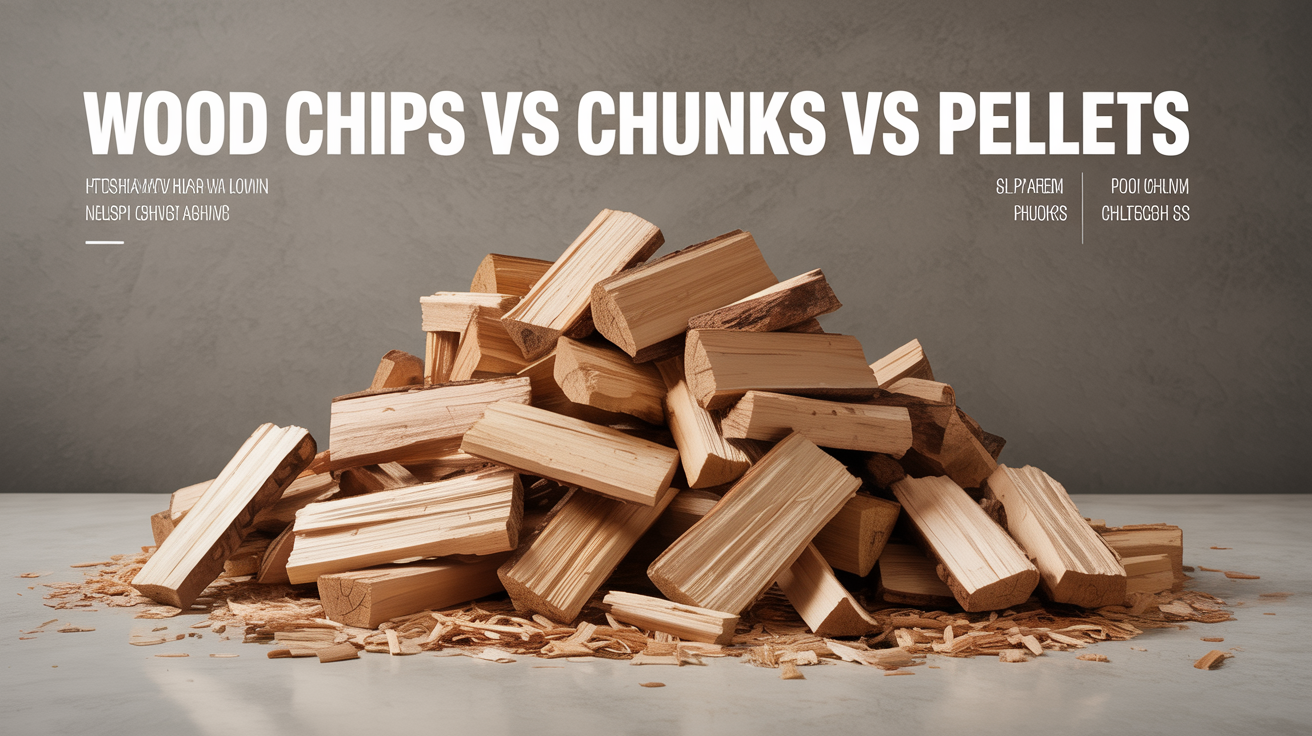
Chips burn fast and are gone in under 30 minutes. Chunks burn slow and can carry smoke through a four-hour rib cook without any reloading. Pellets are purpose-built for pellet grills and do very little on any other cooker. Which one you need is mostly determined by what kind of grill you own and how long your cook runs.
At a Glance
- Chips: fast smoke, gone in 15-25 minutes. Best for cooks under 45 minutes or gas-grill smoker boxes.
- Chunks: slow, steady smoke for 45-90+ minutes per piece. The standard fuel for anything longer than an hour.
- Pellets: only work in a pellet grill's auger-fed firepot. They jam or fail to combust properly in any other setup.
- Soaking chips in water delays smoke onset by 10-20 minutes and doesn't increase total smoke output; it's rarely worth it.
- Match format to cooker type first, cook length second. A gas grill can't reliably ignite chunks; an offset firebox is too big for chips to matter.
- Two to three chunks is the right starting dose for most backyard smokes. More isn't better.
What Each Format Actually Is
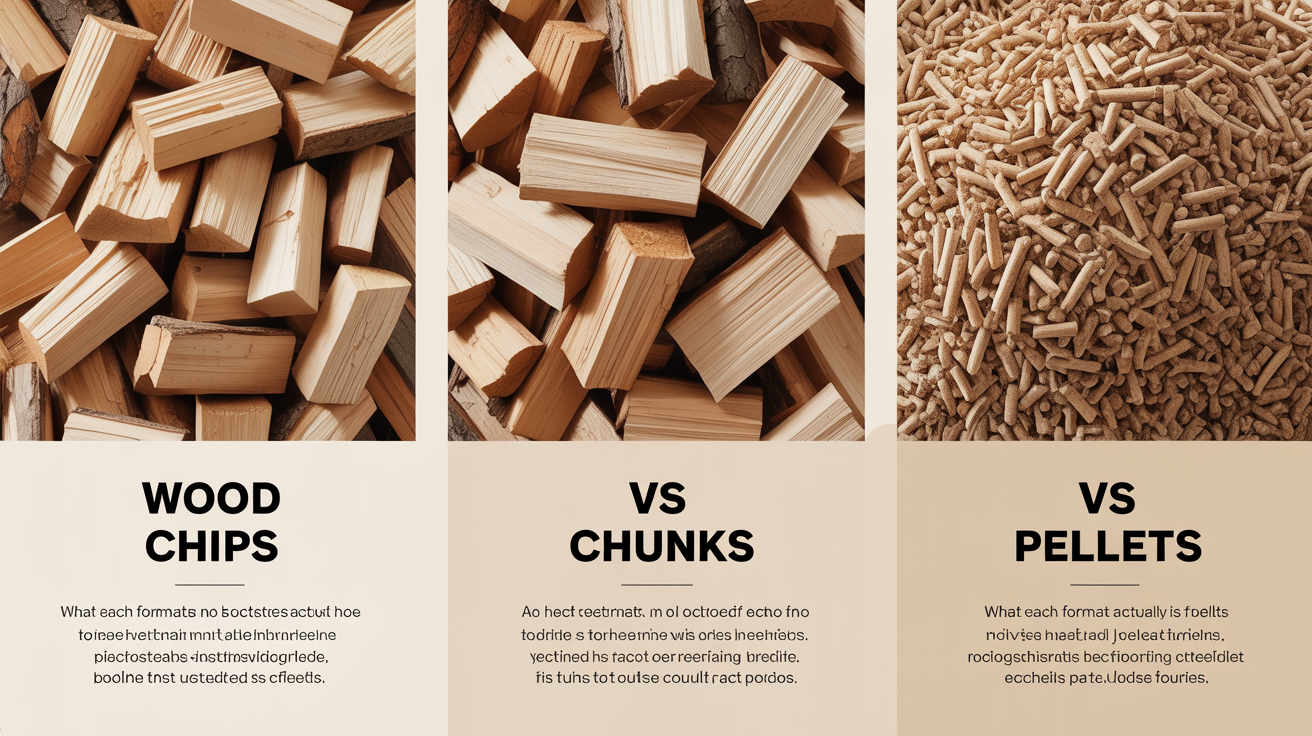
It helps to start with what you're actually buying, because the names get used loosely at hardware stores and big-box retailers.
Wood chips are small, irregular pieces of hardwood, roughly the size of a quarter or a postage stamp. They catch fire quickly from hot coals and start producing smoke almost immediately. The downside is that they burn out just as fast. A handful of smoking wood chips on a charcoal grill will give you maybe 15 to 25 minutes of smoke before they've fully combusted. For a quick sear or a fast cook, that's fine. For a pork shoulder, you'd be refilling the grill every half hour.
Wood chunks are bigger pieces, roughly fist-sized, though you'll see them sold anywhere from golf-ball to softball size depending on the brand. Because of their mass, they ignite more slowly but burn far longer, typically 45 minutes to well over an hour per piece at standard smoking temperatures. Wood chunks for bbq setups are the go-to format for long low-and-slow cooks. Nestle a couple into your charcoal bed and they'll keep releasing smoke while you focus on temperature and hydration instead of constantly tending the fire.
Pellets are compressed sawdust formed into small cylinders about 1/4 inch (6mm) across and roughly an inch long. They're engineered to feed through the hopper and auger system of a pellet grill, which meters them into a firepot at a rate controlled by a thermostat. Outside of that system, pellets either flare up too fast or just smolder uselessly. They're not a substitute for chips or chunks on a charcoal or gas grill.
This split isn't just a backyard convention. The USDA Forest Service's Forest Products Laboratory tracks cooking wood as a commercial product category, and its market breakdown of the flavorwood industry draws the same line the rest of this guide does: chips are sold and used mainly in conjunction with charcoal, while chunks are marketed as a standalone fuel source for smokers. The formats were never meant to be interchangeable.
Choosing Based on Your Cooker
The format question is mostly settled by the cooker you're running. Here's how it breaks down by type.
Charcoal Kettles and Smaller Charcoal Grills
For anything under 30 minutes, a handful of dry chips tossed directly onto hot coals gives you a quick burst of smoke. Salmon fillets, burgers, and chicken breasts all fall into this window. Drop the chips in once the coals are fully lit and glowing gray, and you'll have smoke through the first part of the cook, which is when the meat is most receptive to it anyway.
For longer cooks, switch to chunks. Two or three fist-sized chunks placed alongside your lit coals (not buried under them, where airflow is restricted) will smoke steadily for the majority of the cook. You don't need to babysit them the way you do with chips.
Offset Smokers and Vertical Cabinet Smokers
A dedicated offset smoker that runs on wood fires needs actual splits, not chips or chunks. The firebox is too large for either format to do much. If you're running an offset on charcoal and adding wood for flavor, chunks are your tool. A couple of chunks on a charcoal base will contribute real smoke in that smaller-fire context.
Vertical cabinet smokers (the kind with a firebox below and a smoke chamber above) usually run on charcoal with a wood chip or chunk tray. Check your model, but chunks typically outperform chips in these setups because the cook times tend to run longer.
Pellet Grills
Pellets only. The auger system requires consistent pellet size to meter fuel correctly. Dropping chips into a pellet hopper will jam the mechanism. Adding chunks won't feed at all. Stick to the fuel format the grill was designed for. The wood species you choose matters more than the brand, and that's where to focus your attention.
Gas Grills
Gas grills don't produce the sustained radiant heat that lights chunks reliably. Chips in a cast-iron or stainless smoker box, placed directly over a burner, is your best bet. The box contains the chips, lets smoke escape through holes or vents, and keeps the chips from falling into the burner tubes. You'll get maybe 15 to 20 minutes of smoke per load. That's enough for a chicken thigh, a steak, or vegetables. Don't expect the depth of smoke you'd get from charcoal or a dedicated smoker.
The Soaking Wood Chips Debate
Ask five pitmasters whether you should soak wood chips in water before using them and you'll get five different answers. Here's the straightforward version.
Soaking chips in water before use does not make them smoke more. It makes them steam first, and then smoke. The water has to evaporate before any combustion and real smoke can happen, which delays your smoke onset by 10 to 20 minutes. On a 25-minute cook, you've lost most of your smoke window to steaming.
The total smoke output over the full burn is roughly the same whether you soak or not. The smoke just starts later with wet chips.
There are two narrow situations where a brief soak (15 minutes, not the 30 to 60 minutes often recommended) can be useful, and they line up with why official guidance still mentions soaking at all. Michigan State University Extension's smoker-safety guidance recommends soaking wood chips beforehand specifically to prevent flare-ups, not to boost smoke output, which matches what actually happens at the chemistry level:
When chips keep catching fire instead of smoldering. On very hot setups with a lot of airflow, dry chips sometimes ignite fully rather than smoldering. Slightly damp chips slow the combustion just enough to keep them in the smoke zone longer.
Foil pouches on a gas grill. If you're wrapping chips in foil, poking holes in the packet, and sitting it over a burner, slightly damp chips will hold longer without burning through the packet.
For most backyard charcoal cooks, use dry chips and just add more if needed. Wood chunks don't need soaking at all. Their mass handles slow combustion on their own.
Burn Time at a Glance
Here's a rough guide to what each format delivers at a typical smoking temperature range of 225 to 275°F (107 to 135°C):
| Format | Smoke Onset | Smoke Duration |
|---|---|---|
| Chips, dry | 1 to 3 minutes | 15 to 25 minutes |
| Chips, briefly soaked | 10 to 20 minutes | 20 to 40 minutes |
| Chunks | 5 to 12 minutes | 45 to 90+ minutes |
| Pellets (in pellet grill) | Continuous | As long as the hopper lasts |
Hotter fires and more airflow burn everything faster. If you're fighting to hold a steady 225°F (107°C), your chunks will last closer to the higher end of that range. Running hotter speeds things up across the board. How well you dial in and hold your grill temperature is what determines whether you need to add wood mid-cook or whether two chunks carry you to the finish.
Common Mistakes by Format
A few problems show up over and over depending on which format someone's using. Here's what to watch for.
| Format | Common Mistake | What Actually Happens | Fix |
|---|---|---|---|
| Chips | Dumping a big handful in at once | Smoke spikes early then disappears for the rest of the cook | Add smaller amounts in 2-3 stages instead of one large load |
| Chips | Using them for a 4+ hour smoke | Constant reloading, inconsistent smoke, lid opened too often | Switch to chunks for anything past about an hour |
| Chunks | Burying them directly under the coals | Airflow gets restricted, chunks smolder poorly or go out | Nestle chunks beside or on top of the lit coal bed |
| Chunks | Using too many at once | Thick white/gray smoke, bitter or acrid flavor | Start with 2-3 chunks; add more only if smoke thins out early |
| Pellets | Mixing in chips or chunks | Auger jams or feed rate becomes unreliable | Use pellets exclusively in a pellet grill's hopper |
| Pellets | Storing an open bag in a humid garage | Pellets absorb moisture, swell, and clog the auger | Keep pellets sealed and dry; discard any that have started to crumble |
Matching Format to Cook Length
Here's a simple rule of thumb:
- Under 45 minutes (steaks, chicken breasts, fish, thin chops, vegetables): chips are fine. One small handful is usually enough. You mostly want smoke in the first 20 to 30 minutes anyway.
- 45 minutes to 3 hours (whole chicken, spare ribs on a faster cook, pork tenderloin, bone-in chicken pieces): two or three chunks, or chips replenished in stages. Chunks are easier because you're not opening the lid as often.
- 3 hours and beyond (brisket, pork shoulder, full racks of baby backs on the 3-2-1 method): chunks only, or a pellet grill. Chips are the wrong tool for the job. A good charcoal base with lump or quality briquettes under two or three chunks will carry most 4- to 6-hour cooks without reloading wood.
Frequently Asked Questions
Can I use wood chunks on a gas grill?
It's difficult. Gas grills don't generate the kind of radiant heat from a coal bed that chunks need to ignite properly. Chunks will just sit there, possibly charring on the outside without ever catching. Stick to chips in a smoker box on a gas grill.
How many wood chunks do I need for a long smoke?
Start with two or three. More is not better with smoking wood. You want thin, pale blue smoke, not thick white or gray smoke, which can make food taste acrid and bitter. If you see smoke tapering off significantly after the first hour or two, add one more chunk. Most long cooks absorb most of their smoke in the first two to three hours anyway.
Do pellets work on a charcoal grill?
Not well. On charcoal they tend to either catch too fast and flare, or sit without doing much. They don't have the mass to smolder the way chunks do, and they burn unpredictably without the controlled environment of a pellet grill's firepot. Chips or chunks are the right call for charcoal.
What wood species should I use?
That depends on what you're cooking. Mild fruit woods like apple and cherry suit poultry and pork without overpowering them. Hickory and oak pair well with beef. Mesquite is intense and better used sparingly. There's a full breakdown by cut and species here if you want the longer answer.
Is the smoke flavor different between chips, chunks, and pellets?
With the same wood species, the flavor should be similar regardless of format. Some cooks feel pellets produce slightly cleaner smoke because of how they combust in a controlled firepot. In practice, the species choice and the quantity of smoke you put on the meat will affect flavor far more than the format. Get the species right for your protein and keep the smoke thin and blue, and the format becomes secondary.
Can I turn chunks into chips myself to save money?
You can, with a hatchet or a table saw, but it's rarely worth the effort or the safety risk of hand-splitting hardwood into small pieces. Chunks and chips are usually priced close enough per pound that the labor isn't worth it, and a chunk that's been split down still won't burn as evenly as chips cut for that purpose. If you want to stretch a bag of chunks, it's easier to just use fewer, smaller pieces than to reprocess them.
How long do unused chips or chunks keep once I open the bag?
Indefinitely, as long as they stay dry. Reseal the bag tightly or move the wood into a sealed bin, and keep it somewhere it won't pick up ambient moisture, like a damp garage floor. Wood that's absorbed moisture from the air will light more slowly and smoke less cleanly, but it isn't unsafe to use once it's fully seasoned again.