Smoking & Low-and-Slow
Wrapping Meat: Butcher Paper vs Foil
Butcher paper vs foil for smoking: learn which wrap preserves bark, fights the stall, and suits brisket, ribs, and pulled pork best.
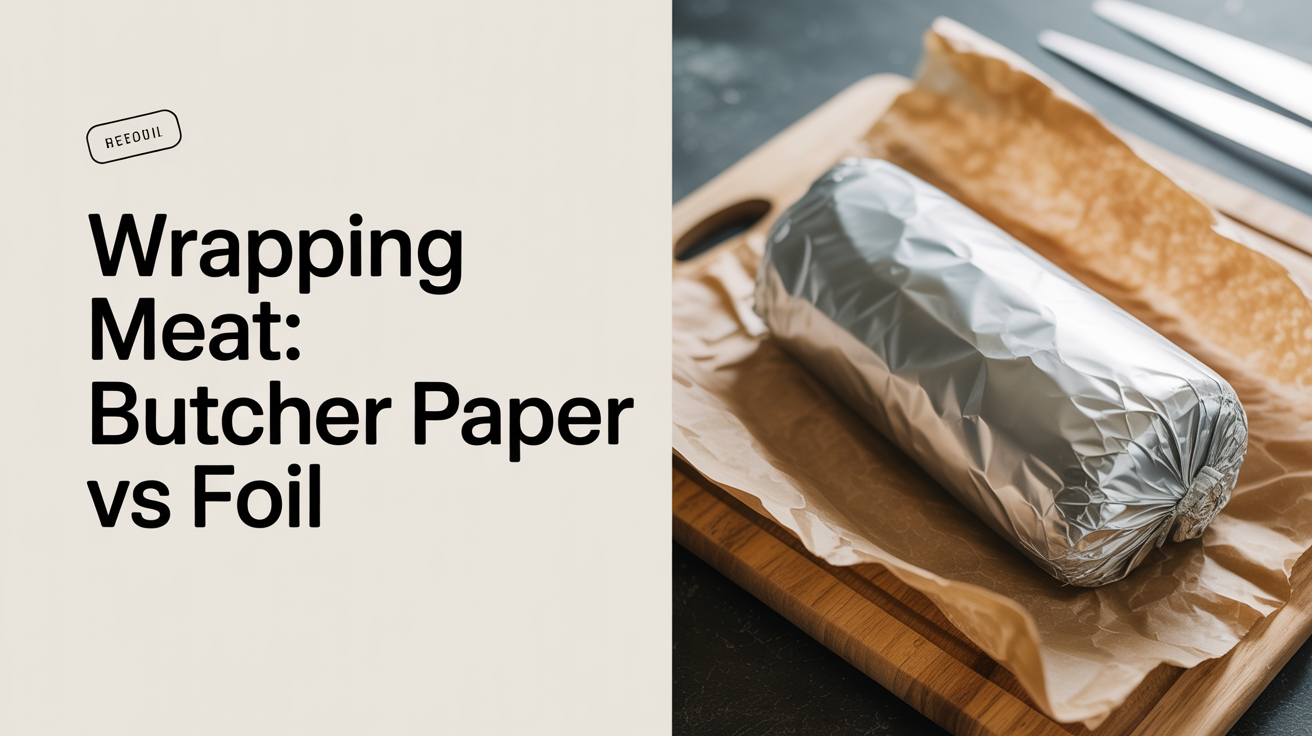
Butcher paper gives you a better bark; foil gets meat to the finish line faster. That's the short answer, and it holds up across pretty much every cut. Which one you reach for depends on what you're cooking, how much time you have, and how much bark you actually care about.
Both materials solve the same core problem: the stall. When large cuts of meat hit roughly 150-165°F (65-74°C), evaporative cooling drags the internal temp to a halt for hours. Wrapping traps moisture and heat so the meat pushes through instead of sitting stuck on the smoker.
At a Glance
- Butcher paper preserves bark texture; foil braises the meat and softens the crust.
- Foil breaks the stall faster because it's fully sealed; paper is breathable and adds 30-60 minutes.
- Brisket and beef ribs favor paper; ribs on a time-based method and pulled pork favor foil.
- Wrap once bark is set, typically 160-165°F (71-74°C) internal, never earlier.
- Smoke absorption is basically finished by the time you wrap, so the wrap material won't change smoke flavor much.
- Rest the meat still wrapped. It doubles as an insulating layer while the internal temperature climbs a few more degrees.
What the Stall Actually Is (and Why Wrapping Fixes It)
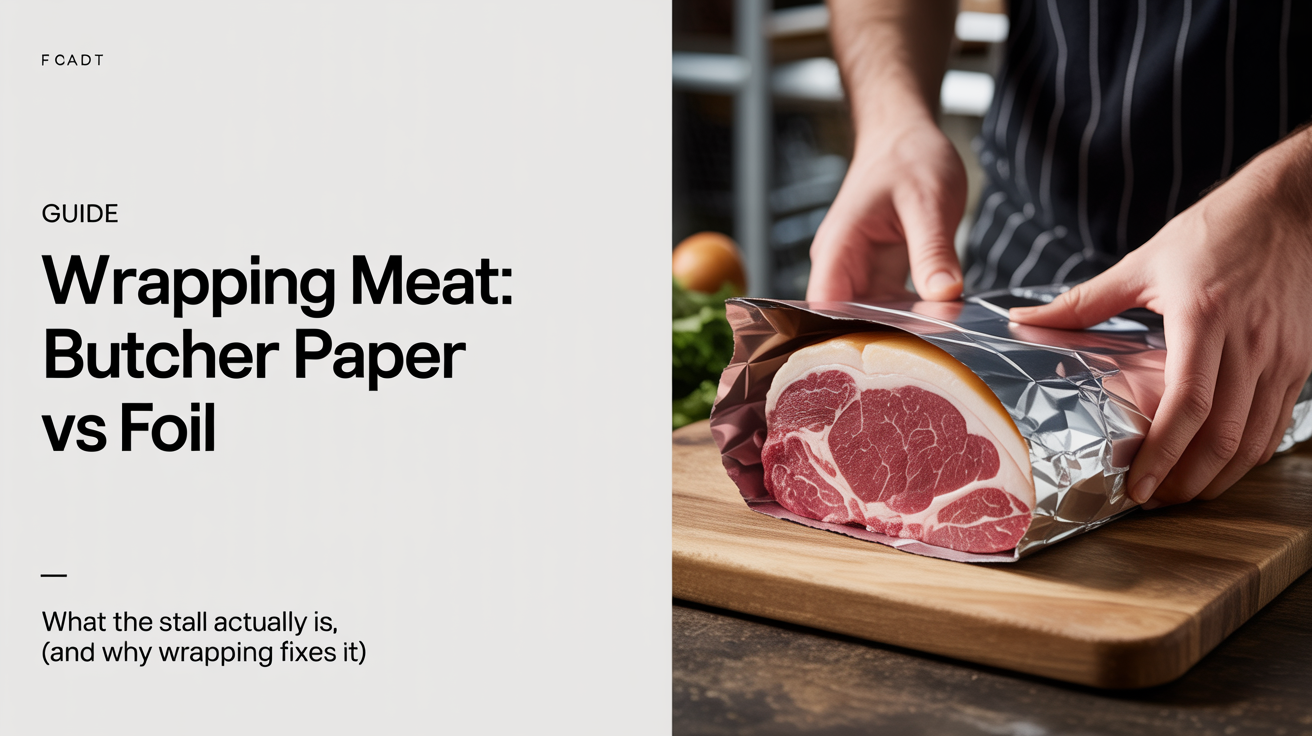
Collagen-rich cuts like brisket and pork shoulder contain a lot of water. As the meat heats up, that water migrates toward the surface and evaporates. The evaporation cools the surface at roughly the same rate the smoker is adding heat, so the internal temperature stops climbing. You're not doing anything wrong. The meat is just doing what meat does.
Texas A&M University's Meat Science program has demonstrated this directly during its Camp Brisket sessions: the plateau you see near the end of a long cook is evaporative cooling, the same mechanism that cools your skin when you sweat. Briskets can lose close to half their starting weight to moisture loss over a full cook, and most of that loss happens right around the stall.
Wrapping stops the evaporation. Once the surface is sealed off, the moisture stays in the package, humidity around the meat spikes, and the stall breaks. The two wrap options handle that moisture differently, and that difference is what changes the texture of the finished crust.
Butcher Paper: What It Does Well
Unbleached, food-grade butcher paper (the pink or peach variety common in Texas barbecue) is breathable. It lets some moisture vapor escape while still trapping enough heat to push through the stall. The result is a bark that stays firm rather than turning soft and steamed.
Peach paper smoking became widely popular through Central Texas brisket traditions, where bark texture is taken seriously. The paper holds the brisket tight enough to baste it in its own drippings, but the slight breathability means the outer crust doesn't turn into a wet paste.
Best uses for butcher paper
- Brisket (the most common application, especially the flat)
- Pork shoulder / Boston butt when you want a slightly crispier pulled-pork bark
- Beef ribs that you want to serve with a defined crust
Paper does take slightly longer than foil. You might add 30-60 minutes to a cook, depending on the size of the meat and your smoker temp. If you're working at 225°F (107°C) and wrapping a 12-pound packer brisket around 165°F (74°C), expect the wrap phase to run 3-4 hours before you probe-tender.
One practical note: butcher paper soaks through if the drippings pool in the wrap. Fold and seal the paper tight, keep the seam side up (fat cap up for brisket), and you'll reduce the soggy-bottom problem significantly.
See the how to smoke a brisket guide for full timing and temp details on managing a packer brisket from trim to slice.
Foil: When Speed and Moisture Win
Aluminum foil creates a fully sealed, non-breathable environment. Moisture stays trapped completely, so the stall breaks faster and the meat braises in its own juices. That braising action has a trade-off: bark softens.
With brisket, a foil wrap (often called the "Texas Crutch") can produce a point and flat that are extremely moist, almost pot-roast tender, with a darker, softer exterior. Some pitmasters intentionally shoot for this. It's also popular for competition cooking where judges eat one bite and move on; that juiciness scores well even if bark texture takes a hit.
Where foil makes more sense
- Ribs using time-based methods, where a steamed-soft exterior is acceptable or preferred
- Pulled pork when you're cooking for a crowd and need the butt to finish on time
- Any cook where you're running late and need to speed up the back half
Adding liquid to a foil wrap amplifies the braising effect. Butter, brown sugar, apple juice, or a thin layer of BBQ sauce all get used inside foil packets, especially for ribs. The meat picks up those flavors as it steams. Butcher paper doesn't lend itself to adding liquids the same way since it'll just soak through.
For the 3-2-1 rib method where the middle phase is specifically designed to tenderize with steam, foil is the standard choice. Check the full breakdown in the smoking ribs the 3-2-1 method guide.
Butcher Paper vs Foil: Side-by-Side
| Factor | Butcher Paper | Aluminum Foil |
|---|---|---|
| Bark texture | Stays firm, crust intact | Softens, can turn pasty |
| Cook speed | Slower (adds ~30-60 min) | Faster (breaks stall hard) |
| Moisture retention | High but breathable | Very high, fully sealed |
| Added liquids | Not practical | Works well |
| Smoke penetration | Minimal after wrap | None after wrap |
| Best for | Brisket, beef ribs | Ribs, pulled pork, time-pressed cooks |
| Cost | Slightly higher | Very low |
One thing both materials share: smoke penetration stops once the meat is wrapped. The smoke ring and surface flavor are already set by the time you wrap at 150-165°F (65-74°C). Wrapping earlier than that will limit your smoke color.
A Worked Example: 12-Pound Brisket, Two Ways
Numbers make this easier to plan around than general rules do. Here's the same 12-pound packer brisket, run at a steady 225°F (107°C), taken through both wrap methods from the moment it hits the stall.
| Stage | Butcher Paper | Aluminum Foil |
|---|---|---|
| Time to stall (approx. 160°F internal) | ~7 hrs | ~7 hrs |
| Time spent stalled before wrap | 30-45 min (confirm bark is set) | 15-20 min (wrap sooner is fine) |
| Time from wrap to 200°F pull temp | 3-4 hrs | 2-2.5 hrs |
| Total cook time | ~11-11.5 hrs | ~9.5-10 hrs |
| Rest (still wrapped, in a cooler) | 1-2 hrs | 1-2 hrs |
| Bark at slicing | Firm, mahogany, holds a clean edge | Softer, darker, slightly steamed |
The gap adds up to roughly an hour and a half over the course of the cook. That's the real cost of the better bark: not dramatic, but enough to matter if you're timing a brisket to be sliced at a specific hour for a crowd.
Choosing Based on the Cut
Brisket
Paper is the stronger choice for brisket. The flat is lean enough that it benefits from moisture retention without needing a full steam bath, and you'll get a cleaner slice with bark that holds up. If you're cooking overnight and purely need the brisket done by noon the next day, foil will get you there faster.
For how to smoke pulled pork, either wrap works, but paper gives you a better outer layer if you're serving it pulled but plated (not sandwiched), where texture variation matters more.
Pork Shoulder
This cut is forgiving. It has enough intramuscular fat that either wrap will produce tender, juicy pulled pork. Use paper if bark matters to you. Use foil if you need to hit a serving time and you're running 30-60 minutes behind.
Ribs
Foil is standard for ribs, particularly if you're following a time-based method. Ribs have far less mass than a brisket or shoulder, so the stall isn't the main problem; the goal is collagen conversion and tenderness. Foil wrapping with a small amount of liquid accelerates that connective tissue breakdown.
If you prefer a drier, snappier rib, skip the wrap entirely or wrap briefly in paper at the very end to hold temp without steaming.
Practical Tips Before You Wrap
A few things that will improve your results regardless of which material you use:
Wrap tight. Loose wraps trap air pockets, which slow the heat transfer you're trying to speed up. Pull the paper or foil snug around the meat before folding the seams.
Don't wrap too early. You want a good bark set before the wrap goes on. For most cuts at 225-250°F (107-121°C), that means waiting until 160-165°F (71-74°C) internally. Wrapping at 145°F (63°C) means wrapping a meat surface that's still pale and soft.
Rest in the wrap. After the meat hits its target temp, the wrap can double as an insulating layer during the rest, and it also buys you carryover. Per the University of Wyoming Extension's guidance on resting meat, internal temperature keeps climbing for a stretch after the meat leaves heat because the hot exterior continues driving heat toward the cooler center. A brisket rested 1-2 hours still wrapped will carry through better than one unwrapped on a cutting board, and the wrap also holds in the juices that would otherwise run out onto the board.
Buy the right paper. Generic white butcher paper contains bleaches and coatings that aren't food-safe for direct contact with cooking meat. Pink/peach unbleached, untreated food-grade paper is what you want. It's widely available online and at restaurant supply stores.
Hold at a safe temperature if you're not slicing right away. If the rest runs long, keep the wrapped meat above 140°F (60°C) rather than letting it drift down through the danger zone. A cooler lined with towels will hold a wrapped brisket well above that mark for a couple of hours.
Frequently Asked Questions
Can I use parchment paper instead of butcher paper?
Parchment is coated with silicone and rated for oven temps up to around 420-450°F (215-232°C). For most low-and-slow smoking at 225-250°F (107-121°C), it's technically fine, but it handles differently from butcher paper. It doesn't conform to the meat as well, and the silicone coating makes it less breathable. It's a workable emergency substitute but not a direct replacement.
Does wrapping always speed up the cook?
Foil always speeds it up significantly. Butcher paper speeds it up less so. If you're cooking unwrapped the whole way (the "no wrap" or "naked" approach), expect a longer cook and a darker, thicker bark. Some pitmasters prefer this for beef ribs where the thick plate rib has enough intramuscular fat to keep the surface from drying out.
When should I skip wrapping entirely?
Smaller or thinner cuts don't need it. Chicken pieces, pork chops, fish, and most steaks don't stall the way large roasts do. Wrapping those just adds steam you don't want. For big cuts like brisket and pork butt, skipping the wrap is a valid choice if you have time and are chasing maximum bark, but you'll add 1-2 hours to most cooks.
What temperature should I pull the meat out of the wrap?
Don't unwrap based on temperature alone. Probe feel matters more. A brisket is done when a probe or skewer slides into the thickest part of the flat with no resistance, typically around 200-205°F (93-96°C). Pulling it at 200°F (93°C) because that's the number you read somewhere will sometimes get you an under-done flat. Trust the probe feel.
Will the meat pick up more smoke flavor if I use paper instead of foil?
Not really. By the time you wrap, smoke absorption has already leveled off. The surface is saturated and the meat's internal moisture has migrated. The difference between paper and foil on final smoke flavor is minimal. You'll get a slightly different bark color (paper tends to produce a deeper mahogany, foil can darken the crust differently through steaming), but the actual smoke ring and flavor depth are set before the wrap goes on.
Can I reuse the same butcher paper or foil for the rest?
Yes, and you generally should. Unwrapping to check the bark, then rewrapping in the same paper for the rest, keeps the juices that collected during the cook right where they'll do the most good. Just make sure the paper hasn't torn through; a soaked-out seam won't hold heat as well during a long rest.