Grilling Basics
How to Prevent Dangerous Flare-Ups When Grilling Fatty Cuts
Learn to prevent grill flare ups on fatty cuts like burgers and thighs: build a two-zone fire, trim smart, and stop a grease fire before it starts.
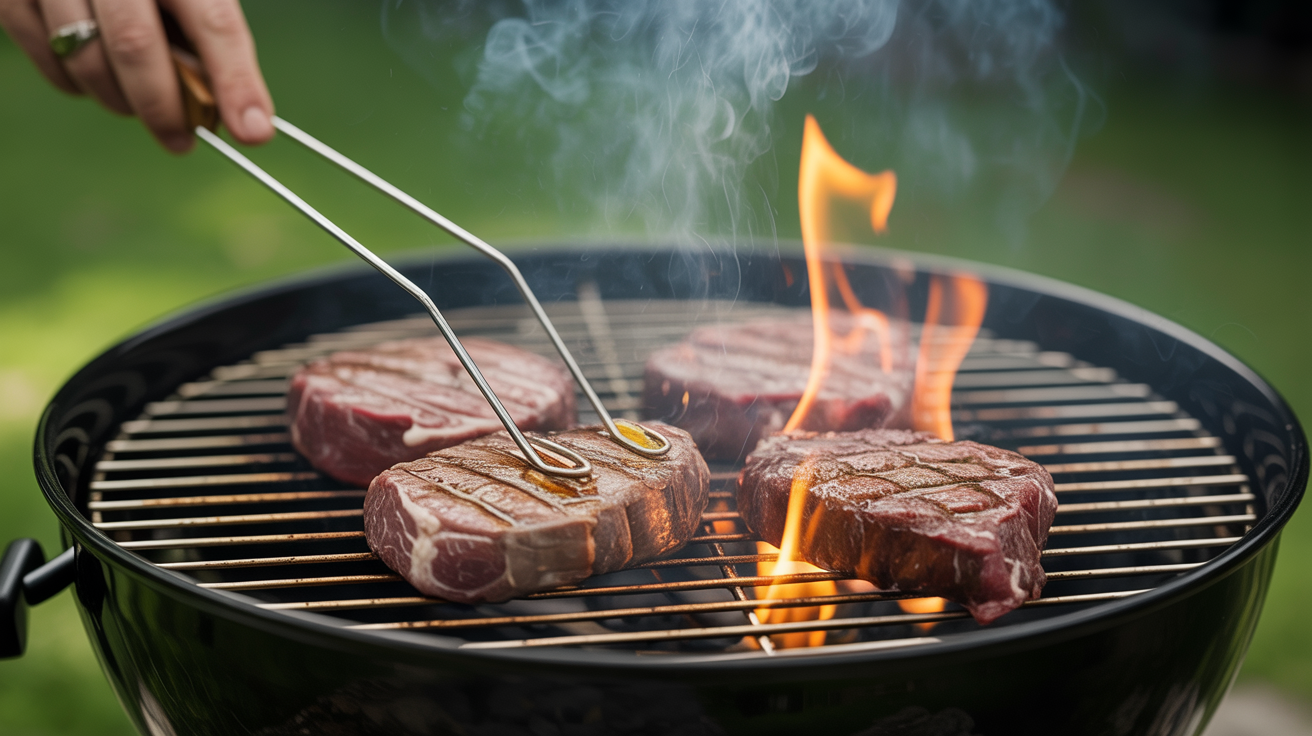
Every griller has a story about the night a burger or a chicken thigh turned into a small bonfire. You lift the lid to check on dinner, and the whole grate is wearing a crown of flame. Learning to prevent grill flare ups is less about luck and more about understanding what's dripping onto your fire and giving yourself a way out before things get out of hand.
Flare-ups aren't a sign you're a bad cook. They're a sign you're cooking something with fat in it, which is most of the good stuff: burgers, chicken thighs, sausages, ribeyes with a nice cap. The goal isn't to eliminate every lick of flame. It's to keep flare-ups small and under control instead of finding out the hard way that dinner has become a grease fire.
Why Flare-Ups Happen
A flare-up is just fat and marinade oil hitting something hot enough to ignite it. On a charcoal or wood grill, that's glowing coals. On a gas grill, it's the burner flame or a hot flavor bar. As the fat renders out of a burger patty or a chicken thigh, it runs off the meat, drips down, and vaporizes the instant it touches that heat source. That vapor is flammable, and it lights.
This happens constantly in small, harmless doses. A tongue of flame licking up around a burger for two or three seconds and dying back down is completely normal. The problem starts when there's more fat dripping than the fire can burn off quickly, so the flames keep climbing and start scorching whatever is sitting above them.
Cuts with rendered fat are the usual suspects: fatty ground beef, chicken thighs and wings with the skin on, sausages, pork belly, a well-marbled steak. Marinades with oil in them add fuel too. None of that means you should avoid these cuts. It means you should expect some flame and plan for it.
Flash Flare vs. a Real Grease Fire
There's a meaningful difference between a normal flash flare-up and an actual grease fire, and knowing which one you're looking at changes what you do next.
A flash flare-up is quick. Flames jump up around the food for a few seconds, maybe curl over the edge of the grate, and then settle back down once the dripping fat that caused it burns off. Your food might pick up a little extra char in that spot, but it's not dangerous and it's not spreading. This happens on almost every cook involving fatty meat and it's simply part of grilling.
A real grease fire looks and behaves differently. The flames don't settle back down. They keep growing, often climbing well above the grate, sometimes with visible black smoke pouring off burning fat rather than the clean blue-gray smoke of normal cooking. A grease fire can catch grease trap buildup, drip trays, or the interior of the grill on fire, and on a gas grill it can threaten the hoses and regulator near the tank. If you see flames that are climbing rather than settling, treat it as a real fire and act immediately rather than waiting to see if it calms down on its own.
Build a Fire You Can Escape From
The single best habit for handling flare-ups is one you set up before you ever put meat on the grate: a two-zone fire. Push your coals to one side of the kettle, or leave one or two burners off on a gas grill, so you have a hot direct zone and a cooler indirect zone with no flame directly underneath. If you haven't set this up before, our guide on direct vs. indirect heat grilling walks through exactly how to lay it out for charcoal and gas.
With a two-zone setup, a flare-up under your burger patty stops being a crisis. Slide the food over to the indirect side for thirty seconds to a minute, let the flames die down over the empty part of the grate, and slide it back once things have settled.
Keeping your fire at a sane temperature also matters here. A fire that's running hotter than it needs to be will ignite dripping fat more aggressively and keep flames going longer. If your grill runs hot no matter what you do, read up on how to control grill temperature so you're not fighting both heat management and flare-ups at once.
Trim Before You Light Anything
A lot of flare-up trouble gets solved before the grill is even lit. Trimming excess fat off a steak, cutting back the skin overhang on chicken thighs, and not overdoing the oil in a marinade all reduce how much fuel is available to drip and ignite.
You don't need to trim a cut bare. A thin, even fat cap on a steak renders slowly and bastes the meat as it cooks, which is what you want. What causes trouble is thick pockets of fat, loose flaps of skin, or a marinade that's more oil than seasoning. Trim the excess and pat marinated meat dry before it hits the grate so it isn't dripping oil straight onto the fire.
What to Do the Moment Flames Jump
Move the food to indirect heat
This is your first move almost every time. Slide whatever is flaring up over to the cool side of your two-zone fire. No flame directly underneath means no fuel for the fire to feed on, and it usually settles within a minute.
Reach for the spray bottle, carefully
A spray bottle of water is a classic tool for knocking down small flames on a charcoal grill, and it works fine for that. What it should never touch is an actual grease fire. Water hitting burning grease can cause the fat to splatter and throw burning droplets outward, which makes things worse, not better. Use the spray bottle only for small, contained flare-ups, a quick mist to knock the flame back down, not as your answer to a fire that's climbing and spreading.
Close the lid and starve it of oxygen
If flames are more than a quick lick and moving the food isn't cutting it, close the lid and shut the vents most of the way. Fire needs oxygen, and a closed grill with restricted airflow will smother a flare-up or a small grease fire in well under a minute. This works on both charcoal and gas grills. If closing the lid doesn't calm things down quickly, turn off the gas at the tank, or worst case, step back and let a fire extinguisher or a heavy blanket handle it rather than working over an open flame.
Quick Do and Don't List
Do:
- Set up a two-zone fire before you start cooking anything fatty
- Trim heavy fat and loose skin, and pat marinated meat dry
- Keep a lid nearby and be ready to close it fast
- Move food to indirect heat at the first sign of climbing flames
Don't:
- Don't use water on a real grease fire
- Don't walk away from the grill while cooking fatty cuts
- Don't crowd the grate so tightly that you can't slide food to a cool zone
- Don't panic and lift the lid repeatedly, which just feeds fresh oxygen to the flames
Most of the mistakes that turn a normal flare-up into a scare are avoidable, and they overlap with other bad grilling habits worth knowing. If you want the fuller list, check out common grilling mistakes and how to avoid them. And if flare-ups keep showing up specifically on burger night, our guide to burgers that stay juicy covers fat content and patty shaping choices that also happen to cut down on dripping.
Frequently Asked Questions
Is it normal for a grill to flare up every time I cook burgers?
Yes. Ground beef with any real fat content will drip as it cooks, and a brief flare here and there is a normal part of grilling burgers, not a sign of a problem. What you're watching for is flames that keep growing instead of settling back down after a few seconds.
Can I just leave the lid open and watch the flare-up until it burns out?
For a small flash flare, that's often fine, especially if you're standing right there and can move the food if needed. For anything bigger, closing the lid is faster and safer than waiting it out with the lid open, since an open lid keeps feeding the flames fresh air.
Why does my gas grill flare up more than my charcoal grill?
It can go either way depending on the grill, but gas grills with flavor bars or heat plates sitting close under the grate can trap dripping fat and reignite it repeatedly. Keeping those plates clean and free of built-up grease reduces this a lot.
Should I use a drip pan to stop flare-ups entirely?
A drip pan under indirect-zone food catches fat before it reaches any heat source, which helps a lot for low-and-slow cooking. For direct-heat grilling like burgers or steaks, you generally want some contact with the fire for good char, so a two-zone setup with quick moves to indirect heat is more practical than trying to catch every drop.
What should I do if a grease fire spreads beyond the grill itself?
Turn off the gas supply at the tank if it's a gas grill, close the lid and vents to cut oxygen, and keep a Class B or all-purpose fire extinguisher within reach for exactly this situation. If a fire is spreading beyond the grill body itself, step back and call for help rather than trying to fight it with kitchen tools.